Mus musculus
The house mouse is a small mammal of the rodent family Muridae, characteristically having a pointed snout, large rounded ears, and a long and almost hairless tail. It is one of the most abundant species of the genus Mus. Although a wild animal, the house mouse has benefited significantly from associating with human habitation to the point that truly wild population are significantly less common than the synanthropic populations near human activity.

Unknown author Unknown author (original) / Ilmari Karonen (editing) · Public Domain · via Wikipedia/Commons. May be a photograph of a specimen, or an artist’s reconstruction — an interpretation of a skeleton, since colour and soft tissue are almost never preserved.
On record
Recorded, not inferred- Also called
- house mousePBDB
- Sits inside
- MusPBDB
- Diet
- herbivore, insectivorePBDB, for Muridae
- Life habit
- ground dwellingPBDB, for Muridae
- Motility
- actively mobilePBDB, for Osteichthyes
- Environment
- terrestrialPBDB, for Eutheria
Time the record covers
At least 117 thousand years on record.
The record covers at least 129 ka to 11.7 ka. No occurrence read is dated outside 2.58 Mya to 0 Mya.
31 occurrences of Mus musculus on record. The Paleobiology Database records this as a living group. Bar height is expected occurrences, not a count: each fossil is spread across the span it is dated to, so a tall narrow bar means tight dating and a low wide one means loose.
When
31 occurrences- Pleistocene35%
- Holocene65%
These are dates about fossils, not the animal: the record can only begin after it arose and end before it died out, so either end may reach further. Shares are expected occurrences: a fossil dated to a span is counted partly in each period it straddles. More on what this infers.
Found in the same rock
518 taxa- Rattus exulans11 sites
- Cyanoramphus10 sites
- Hoplodactylus maculatus9 sites
- Rattus rattus9 sites
- Aegotheles novaezealandiae8 sites
- Rhipidura fuliginosa8 sites
- Coenocorypha aucklandica7 sites
- Coturnix novaezelandiae7 sites
- Passer domesticus7 sites
- Miniopterus6 sites
- Mystacina robusta6 sites
- Petroica australis6 sites
- Sturnus vulgaris6 sites
- Carduelis carduelis5 sites
- Gerygone igata5 sites
- Hoplodactylus duvaucelii5 sites
- Meriones5 sites
- Oligosoma lineoocellatum5 sites
- Petroica macrocephala5 sites
- Prosthemadera novaeseelandiae5 sites
- Rattus5 sites
- Spalax5 sites
- Sphenodon5 sites
- Turnagra capensis5 sites
The Paleobiology Database records 31 sites for Mus musculus, and this reads all of them. The number is how many of those sites it was catalogued from too. The 24 sharing the most are listed.
This is not a list of everything alive at the time. It is only what has come out of the same ground as this animal and been written down.
Entered from
17 references- Quaternary fossil fauna of South Canterbury, South Island, New Zealand10
- Holocene Vertebrate Fossils from Isla Floreana, Galapagos3
- Subfossil lemur discoveries from the Beanka Protected Area in western Madagascar2
- The microvertebrates of Qesem Cave: A comparison of the two concentrations2
- New findings at Andrahomana Cave, southeastern Madagascar2
- Squamates, rodents, and birds from Holocene deposits of the Illa Grossa Island (Columbretes Islands, Castellón, Spain): an unexpected diverse assemblage1
- Faunal extinction and human habitation in New Caledonia: initial results and implications of new research at the Pindai Caves1
- Analysis of a late Quaternary deposit and small mammal fauna from Nettle Cave, Jenolan, New South Wales1
- Taphonomy of two holocene microvertebrate deposits, Takaka Hill, Nelson, New Zealand, and identification of the avian predator responsible1
- Le site paleontologique et archeologique de DoukkalaII:premier jalon en Afrique du Nord dun comportement humain assimilable a un charongnage controle et actif1
- Barro Colorado Island and Tropical Biology1
- Studies on Fossil and Extant Vertebrates from San Salvador (Watling's) Island, Bahamas1
Each of the 31 occurrences read was entered from one of these publications, ordered by how many each accounts for. This is not a search for papers mentioning the name. 5 further references are not listed. Entries link to doi.org where the Paleobiology Database holds an identifier, and to its own record where it does not. Relayed as the Paleobiology Database holds them, not checked against what they resolve to.
Media and terms
Media content1
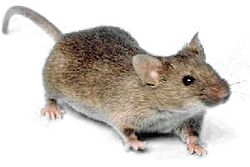
Picture of Mus musculus
- Source
- Wikipedia/Commons
- Credit
- Unknown author Unknown author (original) / Ilmari Karonen (editing)
- Licence
- Public Domain
- Commercial use
- the licence allows it
No repository was searched for a 3D scan: the genus name is too short to search on without matching most of the record.
The description on this site
- Source
- Wikipedia, “House mouse”
- Licence
- CC BY-SA 4.0
This is what the site found, which is not the same as what exists.
Keep going
What may have been alongside itMus through timeThe world it lived on
Occurrence data from the Paleobiology Database, CC BY 4.0. Linnaeus 1758