Muroidea
The Muroidea are a large superfamily of rodents, including mice, rats, voles, hamsters, lemmings, gerbils, and many other relatives. Although the Muroidea originated in Eurasia, they occupy a vast variety of habitats on every continent except Antarctica. Some authorities have placed all members of this group into a single family, Muridae, due to difficulties in determining how the subfamilies are related to one another. Many of the families within the Muroidea superfamily have more variations between the families than between the different clades. A possible explanation for the variations in rodents is because of the location of these rodents; these changes could have been due to radiation or the overall environment they migrated to or originated in. The following taxonomy is based on recent well-supported molecular phylogenies.

Unknown author Unknown author (original) / Ilmari Karonen (editing) · Public Domain · via Wikipedia/Commons. May be a photograph of a specimen, or an artist’s reconstruction — an interpretation of a skeleton, since colour and soft tissue are almost never preserved.
On record
Recorded, not inferred- Also called
- mousePBDB
- Sits inside
- MyomorphiPBDB
- Diet
- herbivorePBDB, for Rodentia
- Life habit
- ground dwellingPBDB, for Rodentia
- Motility
- actively mobilePBDB, for Osteichthyes
- Environment
- terrestrialPBDB, for Eutheria
Time the record covers
At least 45 million years on record.
The record covers at least 45.9 Mya to 11.7 ka. No occurrence read is dated outside 56 Mya to 0 Mya.
9,526 occurrences of Muroidea on record, most of them in the Pleistocene. The Paleobiology Database records this as a living group. Bar height is expected occurrences, not a count: each fossil is spread across the span it is dated to, so a tall narrow bar means tight dating and a low wide one means loose.
When
9,526 occurrencesThese are dates about fossils, not the animal: the record can only begin after it arose and end before it died out, so either end may reach further. Shares are expected occurrences: a fossil dated to a span is counted partly in each period it straddles. More on what this infers.
Found in
370 formations
- Hsanda Gol Formation170
- Alfambra Formation137
- "unnamed sandstone" Formation102
- Glenns Ferry Formation98
- Lower Manchar Formation93
- Palm Spring Formation88
Loading coastlines…
The named rock units Muroidea has been recovered from, largest first. Drawn where the rock is now, not where it formed. 346 further formations hold fewer occurrences each and are not listed. 6,360 occurrences have no formation on record, which is common for older literature.
Muroidea and its relatives
PleistoceneWhere Muroidea and its relatives were recorded in the Pleistocene.
Found in the same rock
2,066 taxa- Archaeolaginae33 sites
- Mylagaulidae32 sites
- Copemys31 sites
- Copemys longidens28 sites
- Camelidae26 sites
- Eumys elegans26 sites
- Geomyoidea25 sites
- Leptomeryx evansi25 sites
- Marmotini25 sites
- Teleoceras23 sites
- Soricidae22 sites
- Merycoidodontidae21 sites
- Castoridae20 sites
- Parvericius montanus20 sites
- Talpidae20 sites
- Herpetotherium fugax19 sites
- Tayassuidae19 sites
- Canidae18 sites
- Cricetidae18 sites
- Eumys18 sites
- Hipparionini18 sites
- Ischyromys typus18 sites
- Palaeolagus burkei18 sites
- Palaeolagus haydeni18 sites
The Paleobiology Database records at least 744 sites for Muroidea, and this reads 240 of them. The number is how many of those sites it was catalogued from too. The 24 sharing the most are listed.
This is not a list of everything alive at the time. It is only what has come out of the same ground as this animal and been written down.
Entered from
1,306 references- Pleistocene vertebrate faunas of Hungary316
- Synonymies and reidentifications of North American fossil mammals307
- I giacimenti Quaternari di vertebrati fossili nell'Italia Nord-Orientale224
- Biochronology of the Pleistocene deposits at Betfia (Bihor, Romania)177
- Mittelpleistozane Saugetierfaunen aus Mitteleuropa - der Versuch einer biostratigraphischen Zuordnung171
- Rodent faunas of the Mio-Pliocene continental sediments of the Teruel-Alfambra region, Spain124
- Quaternary vertebrate localities of Virginia and their avian and mammalian fauna120
- Die Obere Süßwassermolasse in Bayern und der Ostschweiz: bio- und lithostratigraphische Korrelationen (Upper Freshwater molasse in Bavaria and Eastern Switzerland: bio- and lithostratigraphic correlations)108
- Miocene rodent evolution and migration. Muroidea from Pakistan, Turkey and Northern Africa93
- A review of the biostratigraphy of Pliocene and Pleistocene sediments in the Elsinore Fault Zone, Riverside County, California93
- The Villafranchian mammalian faunas and biochronology of Greece89
- Rodent stratigraphy of some Miocene fissure fillings in Gargano (prov. Foggia, Italy)87
Each of the 9,526 occurrences read was entered from one of these publications, ordered by how many each accounts for. This is not a search for papers mentioning the name. 1,294 further references are not listed. Each entry links to the Paleobiology Database's own record for the work.
Media and terms
Media content1
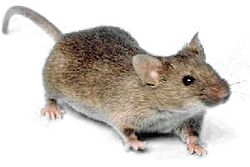
Picture of Muroidea
- Source
- Wikipedia/Commons
- Credit
- Unknown author Unknown author (original) / Ilmari Karonen (editing)
- Licence
- Public Domain
- Commercial use
- the licence allows it
No 3D scan of Muroidea was found in MorphoSource and Sketchfab.
Smithsonian Open Access was not reached for this taxon, so this list is what the others held rather than everything there is.
The description on this site
- Source
- Wikipedia, “Muroidea”
- Licence
- CC BY-SA 4.0
This is what the site found, which is not the same as what exists.
Keep going
What may have been alongside itMyomorphi through timeFormations of the PleistoceneThe world it lived on
Occurrence data from the Paleobiology Database, CC BY 4.0. Illiger 1811