Mortoniceras
Mortoniceras is an ammonoid genus belonging to the superfamily Acanthocerataceae, named by Meek in 1876, based on Ammonites vespertinu, named by Morton in 1834.

H. Zell · CC BY-SA 3.0 · via Wikipedia/Commons. May be a photograph of a specimen, or an artist’s reconstruction — an interpretation of a skeleton, since colour and soft tissue are almost never preserved.
On record
Recorded, not inferred- Sits inside
- MortoniceratinaePBDB
- Diet
- carnivorePBDB, for Ammonoidea
- Life habit
- nektonicPBDB, for Ammonoidea
- Motility
- fast-movingPBDB, for Ammonoidea
- Vision
- well-developedPBDB, for Cephalopoda
- Environment
- marinePBDB, for Cephalopoda
Time the record covers
At least 9.6 million years on record.
The record covers at least 110.1 Mya to 100.5 Mya. No occurrence read is dated outside 113.2 Mya to 93.9 Mya.
302 occurrences of Mortoniceras on record, most of them in the Early Cretaceous. Bar height is expected occurrences, not a count: each fossil is spread across the span it is dated to, so a tall narrow bar means tight dating and a low wide one means loose.
When
302 occurrencesThese are dates about fossils, not the animal: the record can only begin after it arose and end before it died out, so either end may reach further. Shares are expected occurrences: a fossil dated to a span is counted partly in each period it straddles. More on what this infers.
Found in
31 formations
- Grès verts helvétiques Formation32
- Hilo Formation · Villeta Group28
- Weno Formation · Washita Group9
- Catumbela Formation9
- La Puya Formation8
- Haida Formation6
Loading coastlines…
The named rock units Mortoniceras has been recovered from, largest first. Drawn where the rock is now, not where it formed. 7 further formations hold fewer occurrences each and are not listed. 148 occurrences have no formation on record, which is common for older literature.
Mortoniceras and its relatives
Early CretaceousWhere Mortoniceras and its relatives were recorded in the Early Cretaceous.
Found in the same rock
716 taxa- Hamites26 sites
- Anisoceras24 sites
- Puzosia (Puzosia) mayoriana24 sites
- Anisoceras perarmatum22 sites
- Desmoceras (Desmoceras) latidorsatum22 sites
- Holaster22 sites
- Beudanticeras beudanti19 sites
- Goodhallites aguilerae18 sites
- Discoides17 sites
- Hysteroceras17 sites
- Prohysteroceras16 sites
- Anisoceras armatum15 sites
- Hysteroceras orbignyi15 sites
- Hemiaster14 sites
- Hysteroceras andinum14 sites
- Birostrina13 sites
- Oxytropidoceras (Venezoliceras) karsteni13 sites
- Idiohamites12 sites
- Ostlingoceras puzosianum12 sites
- Scaphites (Scaphites) hugardianus11 sites
- Mariella (Mariella) bergeri10 sites
- Puzosia10 sites
- Scaphites10 sites
- Stomohamites virgulatus10 sites
The Paleobiology Database records 183 sites for Mortoniceras, and this reads all of them. The number is how many of those sites it was catalogued from too. The 24 sharing the most are listed.
This is not a list of everything alive at the time. It is only what has come out of the same ground as this animal and been written down.
Entered from
45 references- On Cretaceous Ammonoidea from Angola, collected by Professor J. W. Gregory, D.Sc., F.R.S51
- Les grès verts helvétiques (Aptien moyen-Albien supérieur) de Haute-Savoie, Valais et Vaud (Alpes occidentales franco-suisses)43
- Chronology, relative sea-level history and a new sequence stratigraphic model for basinal Cretaceous facies of Colombia28
- Geologie de Madagascar I. Les Terrains Sedimentaires23
- The Cretaceous Ammonoidea of southern Nigeria and the southern Cameroons21
- Die geologische Entwicklung von Süd-Mozambique seit der Unterkreide und die Ammoniten-Fauna von Unterkreide und Cenoman10
- The Vernay Collection of Cretaceous (Albian) ammonites from Angola10
- The Upper Albian ammonite succession in the Montlaux section, Hautes-Alpes, France9
- Ammonites from the Weno Limestone (Albian) in Northeast Texas9
- Renz, 19828
- Upper Albian and Lower Cenomanian ammonites from the Main Street Limestone, Grayson Marl and Del Rio Clay in northeast Texas6
- Ammonoids of the lower Cretaceous sandstone member of the Haida Formation, Skidgate Inlet, Queen Charlotte Islands, western British Columbia6
Each of the 302 occurrences read was entered from one of these publications, ordered by how many each accounts for. This is not a search for papers mentioning the name. 33 further references are not listed. Entries link to doi.org where the Paleobiology Database holds an identifier, and to its own record where it does not. Relayed as the Paleobiology Database holds them, not checked against what they resolve to.
Media and terms
Media content2
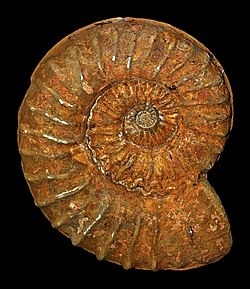
Picture of Mortoniceras
- Source
- Wikipedia/Commons
- Credit
- H. Zell
- Licence
- CC BY-SA 3.0
- Commercial use
- the licence allows it
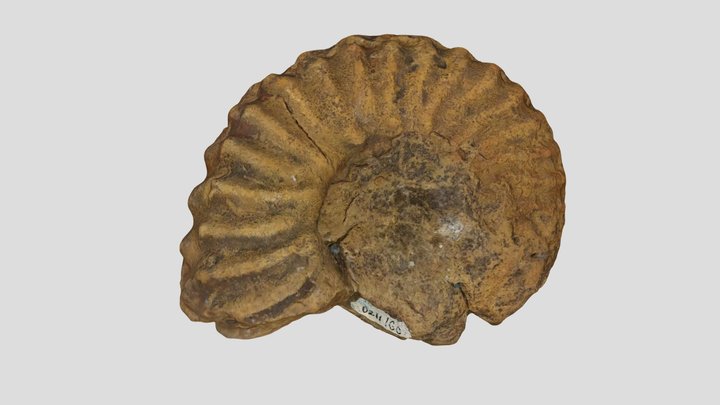
3D model
- Source
- Sketchfab
- Credit
- IGC_UFMG_Paleontology
- Licence
- CC Attribution
- Commercial use
- cannot be read from the licence given — check the record
MorphoSource was not reached for this taxon, so this list is what the others held rather than everything there is.
The description on this site
- Licence
- CC BY-SA 4.0
This is what the site found, which is not the same as what exists.
Keep going
What may have been alongside itMortoniceratinae through timeFormations of the Early CretaceousThe world it lived on
Occurrence data from the Paleobiology Database, CC BY 4.0. Meek 1876