Liopleurodon
Liopleurodon is an extinct genus of carnivorous pliosaurid plesiosaurs that lived from the Callovian stage of the Middle Jurassic to the Kimmeridgian stage of the Late Jurassic period. The type species is L. ferox, which is probably the only valid species. Some studies also include the second species L. pachydeirus, but this latter is considered as a probable junior synonym of L. ferox due to its lack of viable diagnosis. Fossils attributed to Liopleurodon, including some skeletons, are mainly known from Europe, with one occurrence reported in Mexico. As the holotype specimen of L. ferox consists of a single tooth preserving questionable distinctive features, recent studies therefore recommend the necessary identification of a neotype in order to preserve its validity. Other additional species were even proposed, but these are currently seen as coming from other pliosaurid genera.

Ghedoghedo · CC BY-SA 3.0 · via Wikidata/Commons. May be a photograph of a specimen, or an artist’s reconstruction — an interpretation of a skeleton, since colour and soft tissue are almost never preserved.
On record
Recorded, not inferred- Sits inside
- ThalassophoneaPBDB
- Diet
- carnivorePBDB, for Pliosauroidea
- Life habit
- nektonicPBDB, for Pliosauroidea
- Motility
- actively mobilePBDB, for Pliosauroidea
- Environment
- marinePBDB, for Pliosauroidea
- Length
- 6 mWikidata
- Mass
- 1.7 tonneWikidata
Time the record covers
At least 18 million years on record.
The record covers at least 161.5 Mya to 143.1 Mya. No occurrence read is dated outside 165.3 Mya to 137.05 Mya.
13 occurrences of Liopleurodon on record. Bar height is expected occurrences, not a count: each fossil is spread across the span it is dated to, so a tall narrow bar means tight dating and a low wide one means loose.
When
13 occurrencesThese are dates about fossils, not the animal: the record can only begin after it arose and end before it died out, so either end may reach further. Shares are expected occurrences: a fossil dated to a span is counted partly in each period it straddles. More on what this infers.
Found in
7 formations
- Oxford Clay Formation · Ancholme Group5
- Ornatenton Formation · Braunjura Group3
- Oxford Clay Formation · Ancholme Group1
- Ampthill Clay Formation1
- Vaca Muerta Formation1
- Marnes de Dives Formation1
Loading coastlines…
The named rock units Liopleurodon has been recovered from, largest first. Drawn where the rock is now, not where it formed.
Found in the same rock
68 taxa- Peloneustes philarchus6 sites
- Muraenosaurus leedsii4 sites
- Steneosaurus3 sites
- Thalattosuchus superciliosus3 sites
- Cryptoclidus eurymerus2 sites
- Dakosaurus2 sites
- Lepidotus macrocheirus2 sites
- Metriorhynchus brachyrhynchus2 sites
- Metriorhynchus moreli2 sites
- Neosteneosaurus edwardsi2 sites
- Ophthalmosaurus icenicus2 sites
- Pliosauridae2 sites
- Steneosaurus durobrivensis2 sites
- Ammonitida1 site
- Ankylosauria1 site
- Aspidorhynchus euodus1 site
- Asteracanthus ornatissimus1 site
- Belemnitida1 site
- Belemnopsis hastata1 site
- Bivalvia1 site
- Brachiopoda1 site
- Camptosauridae1 site
- Caturus porteri1 site
- Caypullisaurus bonapartei1 site
The Paleobiology Database records 12 sites for Liopleurodon, and this reads all of them. The number is how many of those sites it was catalogued from too. The 24 sharing the most are listed.
This is not a list of everything alive at the time. It is only what has come out of the same ground as this animal and been written down.
Entered from
9 references- Lydekker, 18894
- Mesozoische Reptilien aus Nordrhein-Westfalen [Mesozoic reptiles from Nordrhein-Westfalen]2
- A new megalosaurid theropod dinosaur from the late Middle Jurassic (Callovian) of north-western Germany: Implications for theropod evolution and faunal turnover in the Jurassic1
- Jurassic marine reptiles of the Neuquen Basin: records, faunas, and their palaeobiogeographic significance1
- Catalogue des Reptiles Jurassiques du Boulonnais [Catalogue of Jurassic reptiles from the Boulonnais]1
- Andrews, 19131
- Beiträge zur Kenntnis der Organisation und der Anpassungserscheinungen des genus Metriorhynchus1
- Notes sur les reptiles fossiles1
- Seeley, 18691
Each of the 13 occurrences read was entered from one of these publications, ordered by how many each accounts for. This is not a search for papers mentioning the name. Entries link to doi.org where the Paleobiology Database holds an identifier, and to its own record where it does not. Relayed as the Paleobiology Database holds them, not checked against what they resolve to.
Media and terms
Media content2
Picture of Liopleurodon
- Source
- Wikidata/Commons
- Credit
- Ghedoghedo
- Licence
- CC BY-SA 3.0
- Commercial use
- the licence allows it
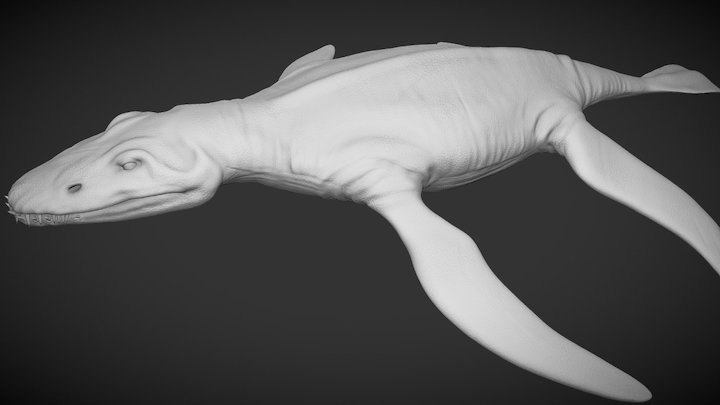
3D model
- Source
- Sketchfab
- Credit
- The Insomniac
- Licence
- CC Attribution
- Commercial use
- cannot be read from the licence given — check the record
Smithsonian Open Access was not reached for this taxon, so this list is what the others held rather than everything there is.
The description on this site
- Licence
- CC BY-SA 4.0
This is what the site found, which is not the same as what exists.
Keep going
What may have been alongside itThalassophonea through timeThe world it lived on
Occurrence data from the Paleobiology Database, CC BY 4.0. Sauvage 1873