Kogia
Kogia is a genus of toothed whales within the superfamily Physeteroidea comprising two extant and two extinct species from the Neogene:Pygmy sperm whale, Kogia breviceps Dwarf sperm whale, Kogia sima †Kogia pusilla, Italy, Middle Pliocene †Kogia danomurai Pisco Formation, Peru, latest Miocene

This illustration was made by Citron You must credit this : Citron / CC-BY-SA-3.0 · CC BY-SA 3.0 · via Wikipedia/Commons. May be a photograph of a specimen, or an artist’s reconstruction — an interpretation of a skeleton, since colour and soft tissue are almost never preserved.
On record
Recorded, not inferred- Sits inside
- KogiinaePBDB
- Diet
- carnivorePBDB, for Odontoceti
- Life habit
- aquatic, depth=surfacePBDB, for Cetacea
- Motility
- actively mobilePBDB, for Cetacea
- Environment
- marine,freshwaterPBDB, for Odontoceti
Time the record covers
At least 5.3 million years on record.
The record covers at least 5.333 Mya to 11.7 ka. No occurrence read is dated outside 23.04 Mya to 0 Mya.
33 occurrences of Kogia on record. The Paleobiology Database records this as a living group. Bar height is expected occurrences, not a count: each fossil is spread across the span it is dated to, so a tall narrow bar means tight dating and a low wide one means loose.
When
33 occurrencesThese are dates about fossils, not the animal: the record can only begin after it arose and end before it died out, so either end may reach further. Shares are expected occurrences: a fossil dated to a span is counted partly in each period it straddles. More on what this infers.
Found in
2 formations
- Yorktown Formation · Chesapeake Group2
- Pisco Formation1
Loading coastlines…
The named rock units Kogia has been recovered from, largest first. Drawn where the rock is now, not where it formed. 30 occurrences have no formation on record, which is common for older literature.
Found in the same rock
591 taxa- Delphinidae5 sites
- Delphinus4 sites
- Mesoplodon4 sites
- Physeter macrocephalus4 sites
- Ziphiidae4 sites
- Balaena3 sites
- Balaenopteridae3 sites
- Grampus griseus3 sites
- Otodus megalodon3 sites
- Stenella3 sites
- Tursiops3 sites
- Alca ausonia2 sites
- Balaenoptera acutorostrata2 sites
- Balaenoptera musculus2 sites
- Balaenula2 sites
- Carcharodon carcharias2 sites
- Cheloniidae2 sites
- Etruridelphis giulii2 sites
- Eubalaena australis2 sites
- Hemisyntrachelus2 sites
- Hemisyntrachelus cortesii2 sites
- Hyperoodon2 sites
- Isurus oxyrinchus2 sites
- Kogiidae2 sites
The Paleobiology Database records 29 sites for Kogia, and this reads all of them. The number is how many of those sites it was catalogued from too. The 24 sharing the most are listed.
This is not a list of everything alive at the time. It is only what has come out of the same ground as this animal and been written down.
Entered from
15 references- Preliminary estimates of the abundance of cetaceans along the U.S. west coast: 1991-200110
- Marine mammal strandings in the New Caledonia region, Southwest Pacific8
- Pygmy sperm whales (Kogia) in the Italian Pliocene2
- Catalog of Living Whales2
- Nasal compartmentalization in Kogia (Cetacea, Physeteroidea): Insights from a new Late Miocene dwarf sperm whale from the Pisco Formation1
- Pygmy sperm whales (Odontoceti, Kogiidae) from the Pliocene of Florida and North Carolina1
- Le collezioni a cetacei fossili del Museo di Storia Naturale dell’Università di Pisa1
- Fossil Pinnipedia and Cetacea1
- Neogene Cetacea of the Lee Creek Phosphate Mine, North Carolina1
- Kogia pusilla from the middle Pliocene of Tuscany (Taly) and a phylogenetic analysis of the family Kogiidae (Odontoceti, Cetacea)1
- Cetacans of Isla de Guadalupe, Baja California, Mexcico1
- A list of fossil cetaceans in Japan1
Each of the 33 occurrences read was entered from one of these publications, ordered by how many each accounts for. This is not a search for papers mentioning the name. 3 further references are not listed. Entries link to doi.org where the Paleobiology Database holds an identifier, and to its own record where it does not. Relayed as the Paleobiology Database holds them, not checked against what they resolve to.
Media and terms
Media content2
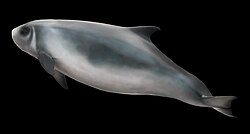
Picture of Kogia
- Source
- Wikipedia/Commons
- Credit
- This illustration was made by Citron You must credit this : Citron / CC-BY-SA-3.0
- Licence
- CC BY-SA 3.0
- Commercial use
- the licence allows it
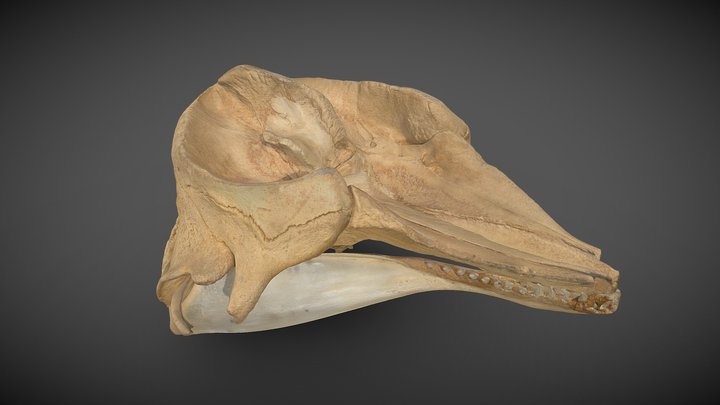
3D model
- Source
- Sketchfab
- Licence
- CC Attribution-NonCommercial-NoDerivs
- Commercial use
- the licence does not allow it
Smithsonian Open Access and MorphoSource were not reached for this taxon, so this list is what the others held rather than everything there is.
The description on this site
- Source
- Wikipedia, “Kogia”
- Licence
- CC BY-SA 4.0
This is what the site found, which is not the same as what exists.
Keep going
What may have been alongside itKogiinae through timeThe world it lived on
Occurrence data from the Paleobiology Database, CC BY 4.0. Gray 1846