Ischyodus dolloi
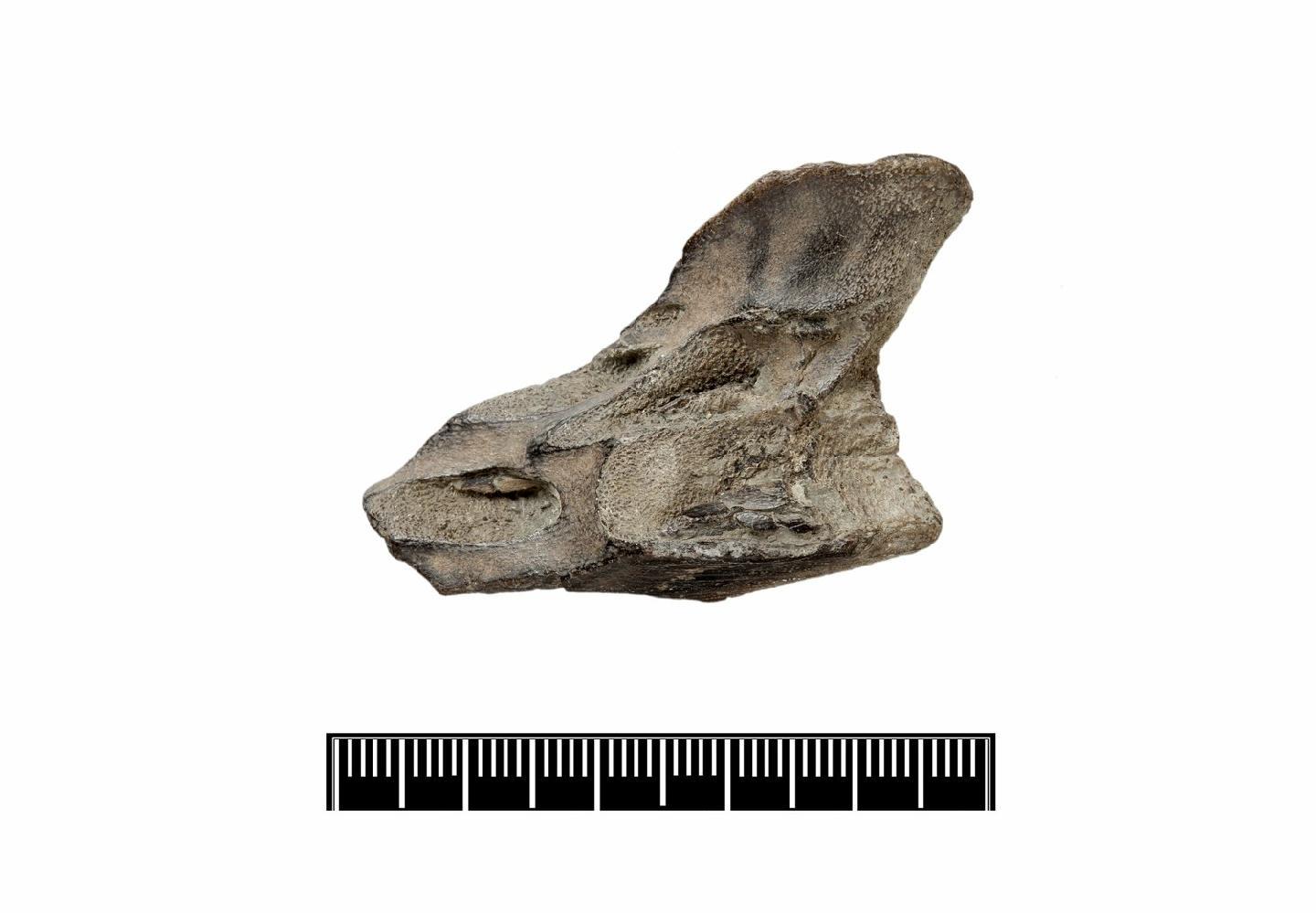
via GBIF · CC0 · via GBIF. May be a photograph of a specimen, or an artist’s reconstruction — an interpretation of a skeleton, since colour and soft tissue are almost never preserved.
On record
Recorded, not inferred- Sits inside
- IschyodusPBDB
- Diet
- carnivorePBDB, for Chimaeriformes
- Life habit
- nektobenthicPBDB, for Chimaeriformes
- Motility
- actively mobilePBDB, for Chimaeriformes
Time the record covers
At least 56 million years on record.
The record covers at least 61.66 Mya to 5.333 Mya. No occurrence read is dated outside 72.2 Mya to 3.6 Mya.
18 occurrences of Ischyodus dolloi on record, most of them in the Eocene. Bar height is expected occurrences, not a count: each fossil is spread across the span it is dated to, so a tall narrow bar means tight dating and a low wide one means loose.
When
18 occurrences- Late Cretaceous3%
- Paleocene19%
- Eocene61%
- Miocene6%
- Pliocene11%
These are dates about fossils, not the animal: the record can only begin after it arose and end before it died out, so either end may reach further. Shares are expected occurrences: a fossil dated to a span is counted partly in each period it straddles. More on what this infers.
Found in
10 formations
- La Meseta Formation9
- Grange Burn Formation1
- Black Rock Sandstone Formation1
- Whaler's Bluff Formation1
- Loreto Formation1
- Nanafalia Formation · Wilcox Group1
Loading coastlines…
The named rock units Ischyodus dolloi has been recovered from, largest first. Drawn where the rock is now, not where it formed.
Ischyodus dolloi and its relatives
EoceneWhere Ischyodus dolloi and its relatives were recorded in the Eocene.
Found in the same rock
274 taxa- Squatina8 sites
- Striatolamia macrota8 sites
- Myliobatis7 sites
- Pristiophorus laevis6 sites
- Brachycarcharias lerichei4 sites
- Eodalatias austrinalis4 sites
- Palaeohypotodus rutoti4 sites
- Squalus weltoni4 sites
- Balaenoptera3 sites
- Carcharodon carcharias3 sites
- Carcharodon hastalis3 sites
- Delphinidae3 sites
- Odontaspis winkleri3 sites
- Otodus megalodon3 sites
- Physeteridae3 sites
- Rhinoptera3 sites
- Spheniscidae3 sites
- Squalus woodburnei3 sites
- Abdounia2 sites
- Antarctodolops dailyi2 sites
- Antarctodolops mesetaense2 sites
- Aves2 sites
- Balaenidae2 sites
- Carcharias cuspidatus2 sites
The Paleobiology Database records 18 sites for Ischyodus dolloi, and this reads all of them. The number is how many of those sites it was catalogued from too. The 24 sharing the most are listed.
This is not a list of everything alive at the time. It is only what has come out of the same ground as this animal and been written down.
Entered from
8 references- Chimaeroid fish remains from Seymour Island, Antarctic Peninsula5
- Middle Eocene chondrichthyan fauna from Antarctic Peninsula housed in the Museo de La Plata, Argentina3
- Paleocene chimaeroid fishes (Chondrichthyes: Holocephali) from the eastern United States, including two new species of Callorhinchus3
- Ultimate Eocene (Priabonian) chondrichthyans (Holocephali, Elasmobranchii) of Antarctica2
- A review of the Tertiary fossil Cetacea (Mammalia) localities in Australia2
- The fossil record of chimaeras (Chondrichthyes, Holocephali) in Argentina1
- A Late Eocene age proposal for the Loreto Formation (Brunswick Peninsula, southernmost Chile), based on fossil cartilaginous fishes, paleobotany and radiometric evidence1
- Pliocene marine mammals from the Whalers Bluff Formation of Portland, Victoria, Australia1
Each of the 18 occurrences read was entered from one of these publications, ordered by how many each accounts for. This is not a search for papers mentioning the name. Entries link to doi.org where the Paleobiology Database holds an identifier, and to its own record where it does not. Relayed as the Paleobiology Database holds them, not checked against what they resolve to.
Media and terms
Media content1
Picture of Ischyodus dolloi
- Source
- GBIF
- Credit
- via GBIF
- Licence
- CC0
- Commercial use
- the licence allows it
No 3D scan of Ischyodus dolloi was found in MorphoSource and Sketchfab.
Smithsonian Open Access was not reached for this taxon, so this list is what the others held rather than everything there is.
This is what the site found, which is not the same as what exists.
Keep going
What may have been alongside itIschyodus through timeFormations of the EoceneThe world it lived on
Occurrence data from the Paleobiology Database, CC BY 4.0. Leriche 1902