Icaronycteris
Icaronycteris is an extinct genus of microchiropteran (echolocating) bat that lived in the early Eocene, approximately 52.2 million years ago, making it the earliest bat genus known from complete skeletons, and the earliest known bat from North America.

T.B. Rietbergen et al., with acknowledgement "Mike Eklund and Mick Ellison for additional photographs". · CC BY 4.0 · via Wikipedia/Commons. May be a photograph of a specimen, or an artist’s reconstruction — an interpretation of a skeleton, since colour and soft tissue are almost never preserved.
On record
Recorded, not inferred- Sits inside
- IcaronycteridaePBDB
- Diet
- insectivorePBDB, for Chiroptera
- Life habit
- volantPBDB, for Chiroptera
- Motility
- actively mobilePBDB, for Osteichthyes
- Environment
- terrestrialPBDB, for Chiroptera
Time the record covers
At most 19 million years on record.
Every occurrence read is dated to somewhere between 56 Mya and 37.71 Mya, and nothing in the dating separates them, so that window is what the record shows rather than a span.
9 occurrences of Icaronycteris on record, most of them in the Eocene. Bar height is expected occurrences, not a count: each fossil is spread across the span it is dated to, so a tall narrow bar means tight dating and a low wide one means loose.
When
9 occurrences- Eocene100%
These are dates about fossils, not the animal: the record can only begin after it arose and end before it died out, so either end may reach further. Shares are expected occurrences: a fossil dated to a span is counted partly in each period it straddles. More on what this infers.
Found in
7 formations
- Green River Formation2
- Lignites de Soissonais Formation2
- Willwood Formation1
- Wind River Formation1
- Cambay Shale Formation1
- Vaugirard Formation1
Loading coastlines…
The named rock units Icaronycteris has been recovered from, largest first. Drawn where the rock is now, not where it formed.
Icaronycteris and its relatives
EoceneWhere Icaronycteris and its relatives were recorded in the Eocene.
Found in the same rock
241 taxa- Anura3 sites
- Apatemys sigogneaui3 sites
- Axestemys vittata3 sites
- Macrocranion nitens3 sites
- Miacidae3 sites
- Tinosaurus europeocaenus3 sites
- Allaeochelys2 sites
- Amphisbaenidae2 sites
- Apatemys mutiniacus2 sites
- Archaeonycteris brailloni2 sites
- Arcius fuscus2 sites
- Arcius lapparenti2 sites
- Avenius amatorum2 sites
- Bunophorus2 sites
- Calamagras gallicus2 sites
- Cantius savagei2 sites
- Diacodexis varleti2 sites
- Didelphodus2 sites
- Dormaalisaurus girardoti2 sites
- Dunnophis matronensis2 sites
- Eolacerta2 sites
- Heterohyus2 sites
- Hyracolestes2 sites
- Leptacodon2 sites
The Paleobiology Database records 9 sites for Icaronycteris, and this reads all of them. The number is how many of those sites it was catalogued from too. The 24 sharing the most are listed.
This is not a list of everything alive at the time. It is only what has come out of the same ground as this animal and been written down.
Entered from
8 references- Chiroptera and Dermoptera of the French early Eocene2
- The oldest known bat skeletons and their implications for Eocene chiropteran diversification1
- High bat (Chiroptera) diversity in the Early Eocene of India1
- Middle Eocene Small Mammals from Liguanqiao Basin of Henan Province and Yuanqu Basin of Shanxi Province, Central China1
- Nouveaux vertébrés sparnaciens du Conglomérat de Meudon à Meudon, France1
- Early Eocene bats (Mammalia, Chiroptera) and other vertebrates in freshwater limestones of the Willlwood Formation, Clark's Fork Basin, Wyoming1
- Revision of the Wind River faunas, early Eocene of central Wyoming. Part 5. Geology and biostratigraphy of the upper part of the Wind River Formation, northeastern Wind River Basin1
- Early Eocene bat from Wyoming1
Each of the 9 occurrences read was entered from one of these publications, ordered by how many each accounts for. This is not a search for papers mentioning the name. Entries link to doi.org where the Paleobiology Database holds an identifier, and to its own record where it does not. Relayed as the Paleobiology Database holds them, not checked against what they resolve to.
Media and terms
Media content2

Picture of Icaronycteris
- Source
- Wikipedia/Commons
- Credit
- T.B. Rietbergen et al., with acknowledgement "Mike Eklund and Mick Ellison for additional photographs".
- Licence
- CC BY 4.0
- Commercial use
- the licence allows it
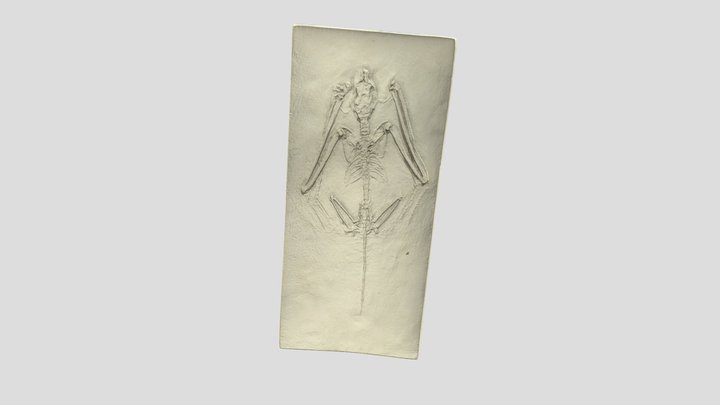
3D model
- Source
- Sketchfab
- Credit
- UIPaleoRepository
- Licence
- CC Attribution
- Commercial use
- cannot be read from the licence given — check the record
MorphoSource was not reached for this taxon, so this list is what the others held rather than everything there is.
The description on this site
- Licence
- CC BY-SA 4.0
This is what the site found, which is not the same as what exists.
Keep going
What may have been alongside itIcaronycteridae through timeFormations of the EoceneThe world it lived on
Occurrence data from the Paleobiology Database, CC BY 4.0. Jepsen 1966