Hemipneustes
Hemipneustes is an extinct genus of sea urchins belonging to the family Holasteridae.

Uncredited · via Wikipedia/Commons. May be a photograph of a specimen, or an artist’s reconstruction — an interpretation of a skeleton, since colour and soft tissue are almost never preserved.
On record
Recorded, not inferred- Sits inside
- HemipneustidaePBDB
- Diet
- detritivorePBDB, for Holasteroida
- Life habit
- semi-infaunalPBDB, for Holasteroida
- Motility
- actively mobilePBDB, for Holasteroida
- Vision
- limitedPBDB, for Echinoidea
- Environment
- marinePBDB, for Holasteroida
Time the record covers
At most 22 million years on record.
Every occurrence read is dated to somewhere between 83.6 Mya and 61.66 Mya, and nothing in the dating separates them, so that window is what the record shows rather than a span.
41 occurrences of Hemipneustes on record, most of them in the Late Cretaceous. Bar height is expected occurrences, not a count: each fossil is spread across the span it is dated to, so a tall narrow bar means tight dating and a low wide one means loose.
When
41 occurrencesThese are dates about fossils, not the animal: the record can only begin after it arose and end before it died out, so either end may reach further. Shares are expected occurrences: a fossil dated to a span is counted partly in each period it straddles. More on what this infers.
Found in
9 formations
- Simsima Formation11
- Maastricht Formation8
- Cabo de Lata Formation6
- Maastricht Formation4
- Arén Formation3
- Gulpen Formation2
Loading coastlines…
The named rock units Hemipneustes has been recovered from, largest first. Drawn where the rock is now, not where it formed. 3 occurrences have no formation on record, which is common for older literature.
Hemipneustes and its relatives
Late CretaceousWhere Hemipneustes and its relatives were recorded in the Late Cretaceous.
Found in the same rock
164 taxa- Hemiaster (Bolbaster) prunella14 sites
- Hemiaster11 sites
- Procassidulus lapiscancri11 sites
- Nucleopygus10 sites
- Oolopygus10 sites
- Goniasteridae9 sites
- Felderophiura vanderhami8 sites
- Nucleopygus scrobiculatus8 sites
- Trichaster ornatus8 sites
- Trochalosoma8 sites
- Astropectinidae7 sites
- Chomataster acules7 sites
- Echinogalerus7 sites
- Salenidia maestrichtensis7 sites
- Semiometra saskiae7 sites
- Temnocidaris7 sites
- Applinocrinus cretaceus6 sites
- Gauthieria pseudoradiata6 sites
- Jaekelometra belgica6 sites
- Jaekelometra concava6 sites
- Ophiomusium granulosum6 sites
- Tylocidaris6 sites
- Cardiaster granulosus5 sites
- Catopygus5 sites
The Paleobiology Database records 25 sites for Hemipneustes, and this reads all of them. The number is how many of those sites it was catalogued from too. The 24 sharing the most are listed.
This is not a list of everything alive at the time. It is only what has come out of the same ground as this animal and been written down.
Entered from
9 references- Late Cretaceous-Early Paleocene echinoderms and the K/T boundary in the southeast Netherlands and the northeast Belgium. - part 4: Echinoids16
- Late Cretaceous (Maastrichtian) echinoid-mollusc-coral assemblages and palaeoenvironments from a Tethyan carbonate platform succession, northern Oman Mountains11
- Late Cretaceous-early Tertiary echinoids from northern Spain: implications for the Cretaceous-Tertiary extinction event6
- Coniacian-Maastrichtian of the Tremp Area (South Central Pyrenees)3
- Latest Cretaceous mosasaurs and lamniform sharks from Labirinta cave, Vratsa district (northwest Bulgaria): a preliminary note1
- Albian-Cenomanian and Campanian-Maastrichtian biostratigraphy of southeast Spain1
- Late Maastrichtian and Early Palaeocene index macrofossils in the Maastrichtian type area (SE Netherlands, NE Belgium)1
- Occurrence of Hemipneustes Agassiz (Echinoid) from Tiruchirapalli Cretaceous, Tamil Nadu, India1
- Das Becken von Isfahan-Saidabad und seine altmiocäne Korallenfauna [The Isfahan-Saidabad Basin and its Miocene coral fauna]1
Each of the 41 occurrences read was entered from one of these publications, ordered by how many each accounts for. This is not a search for papers mentioning the name. Entries link to doi.org where the Paleobiology Database holds an identifier, and to its own record where it does not. Relayed as the Paleobiology Database holds them, not checked against what they resolve to.
Media and terms
Media content2

Picture of Hemipneustes
- Source
- Wikipedia/Commons
- Credit
- nobody named on the record
- Licence
- not stated by the source
- Commercial use
- cannot be read from the licence given — check the record
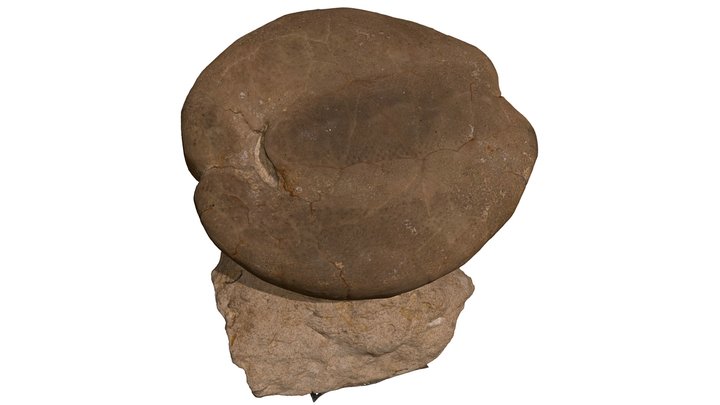
3D model
- Source
- Sketchfab
- Licence
- CC Attribution
- Commercial use
- cannot be read from the licence given — check the record
Smithsonian Open Access and MorphoSource were not reached for this taxon, so this list is what the others held rather than everything there is.
The description on this site
- Licence
- CC BY-SA 4.0
This is what the site found, which is not the same as what exists.
Keep going
What may have been alongside itHemipneustidae through timeFormations of the Late CretaceousThe world it lived on
Occurrence data from the Paleobiology Database, CC BY 4.0.