Hammatoceratinae
No picture of Hammatoceratinae was found. Wikipedia, Wikidata and iDigBio were searched and had none. Smithsonian Open Access did not answer, so this is what the others held rather than everything there is. GBIF was asked, and what came back is not recorded: nothing, or a picture this site could not tie to Hammatoceratinae, or no answer at all. This entry cannot say which.
On record
Recorded, not inferred- Sits inside
- HammatoceratidaePBDB
- Diet
- carnivorePBDB, for Ammonoidea
- Life habit
- nektonicPBDB, for Ammonoidea
- Motility
- fast-movingPBDB, for Ammonoidea
- Vision
- well-developedPBDB, for Cephalopoda
- Environment
- marinePBDB, for Cephalopoda
Time the record covers
At least 3.8 million years on record.
The record covers at least 174.7 Mya to 170.9 Mya. No occurrence read is dated outside 184.2 Mya to 168.2 Mya.
329 occurrences of Hammatoceratinae on record, most of them in the Middle Jurassic. Bar height is expected occurrences, not a count: each fossil is spread across the span it is dated to, so a tall narrow bar means tight dating and a low wide one means loose.
When
329 occurrencesThese are dates about fossils, not the animal: the record can only begin after it arose and end before it died out, so either end may reach further. Shares are expected occurrences: a fossil dated to a span is counted partly in each period it straddles. More on what this infers.
Found in
24 formations
- Tölgyhát Formation47
- Agoudim Formation41
- Kisgerecse Formation36
- Phantom Creek Formation22
- Subbetic Basin Formation17
- Kialagvik Formation13
Loading coastlines…
The named rock units Hammatoceratinae has been recovered from, largest first. Drawn where the rock is now, not where it formed. 101 occurrences have no formation on record, which is common for older literature.
Hammatoceratinae and its relatives
Middle JurassicWhere Hammatoceratinae and its relatives were recorded in the Middle Jurassic.
Found in the same rock
383 taxa- Bredyia19 sites
- Eudmetoceras19 sites
- Graphoceras19 sites
- Crestaites victorii17 sites
- Fontannesia16 sites
- Geczyceras speciosum16 sites
- Leioceras14 sites
- Csernyeiceras verpillierense13 sites
- Euaptetoceras13 sites
- Pleydellia13 sites
- Haplopleuroceras12 sites
- Planammatoceras planinsigne12 sites
- Planammatoceras tenuinsigne12 sites
- Pseudaptetoceras klimakomphalum12 sites
- Erycitoides11 sites
- Chlamys10 sites
- Crestaites meneghinii10 sites
- Planammatoceras10 sites
- Propeamussium (Striatoamussium) patriciae10 sites
- Rugitela10 sites
- Asthenoceras9 sites
- Palaeonucula hammeri9 sites
- Abbasites8 sites
- Brasilia8 sites
The Paleobiology Database records 177 sites for Hammatoceratinae, and this reads all of them. The number is how many of those sites it was catalogued from too. The 24 sharing the most are listed.
This is not a list of everything alive at the time. It is only what has come out of the same ground as this animal and been written down.
Entered from
41 references- Toarcian-Aalenian Hammatoceratinae (Ammonitina) from the Gerecse Mts (NE Transdanubian Range, Hungary)83
- Proposition de la region de Rich (Haut-Atlas central marocain) comme stratotype auxiliaire submediterranen pour la limite Aalenien Bajocien41
- Ammonoid fauna from the Early Middle Jurassic of Mendoza Province, Argentina32
- The Toarcian in the Subbetic basin (southern Spain): Bio-events (ammonite and calcareous nannofossils) and carbon-isotope stratigraphy17
- Early Jurassic Bivalvia of western Canada. Part I. Subclasses Palaeotaxodonta, Pteriomorpha, and Isofilibranchia16
- Ammonoides jurassiques de Csernye, Montagne Bakony, Hongrie; part I, (Hammatoceratidae)14
- The ammonite fauna of the Kialagvik Formation at Wide Bay, Alaska Peninsula. Part II. Sonninia sowerbyi zone (Bajocian)13
- Ammonites, taphonomical analysis and biostratigraphy of the Aalenian (Middle Jurassic) from Capo San Vigilio (Lake Garda, N Italy)12
- Hettangian through Aalenian (Jurassic) guide fossils and biostratigraphy, Northern Yukon and adjacent Northwest Territories10
- Palaeoclimatic and biotic changes during the Aalenian (Middle Jurassic) at the southern Laurasian Seaway (Basque–Cantabrian Basin, northern Spain)9
- El Aalenense en la Zona Subbetica [The Aalenian of the Subbetic Zone]9
- Toarcian (Early Jurassic) ammonoids from western North America7
Each of the 329 occurrences read was entered from one of these publications, ordered by how many each accounts for. This is not a search for papers mentioning the name. 29 further references are not listed. Entries link to doi.org where the Paleobiology Database holds an identifier, and to its own record where it does not. Relayed as the Paleobiology Database holds them, not checked against what they resolve to.
Media and terms
Media content1
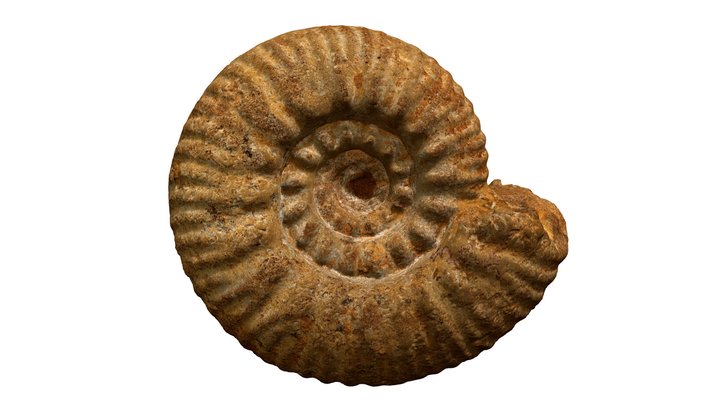
3D model
- Source
- Sketchfab
- Licence
- CC Attribution
- Commercial use
- cannot be read from the licence given — check the record
No picture of Hammatoceratinae was found. Wikipedia, Wikidata and iDigBio were searched and had none.
Smithsonian Open Access did not answer, so this is what the others held rather than everything there is.
GBIF was asked, and what came back is not recorded: nothing, or a picture this site could not tie to Hammatoceratinae, or no answer at all. This entry cannot say which.
Smithsonian Open Access and MorphoSource were not reached for this taxon, so this list is what the others held rather than everything there is.
This is what the site found, which is not the same as what exists.
Keep going
What may have been alongside itHammatoceratidae through timeFormations of the Middle JurassicThe world it lived on
Occurrence data from the Paleobiology Database, CC BY 4.0. Buckman 1887