Halorites

Hectonichus · CC BY-SA 4.0 · via Wikidata/Commons. May be a photograph of a specimen, or an artist’s reconstruction — an interpretation of a skeleton, since colour and soft tissue are almost never preserved.
On record
Recorded, not inferred- Sits inside
- HaloritidaePBDB
- Diet
- carnivorePBDB, for Ceratitida
- Life habit
- nektonicPBDB, for Ceratitida
- Motility
- actively mobilePBDB, for Ceratitida
- Vision
- well-developedPBDB, for Cephalopoda
- Environment
- marinePBDB, for Cephalopoda
Time the record covers
At least 16 million years on record.
The record covers at least 227.3 Mya to 211.18 Mya. No occurrence read is dated outside 237 Mya to 205.7 Mya.
19 occurrences of Halorites on record, most of them in the Late Triassic. Bar height is expected occurrences, not a count: each fossil is spread across the span it is dated to, so a tall narrow bar means tight dating and a low wide one means loose.
When
19 occurrences- Late Triassic100%
These are dates about fossils, not the animal: the record can only begin after it arose and end before it died out, so either end may reach further. Shares are expected occurrences: a fossil dated to a span is counted partly in each period it straddles. More on what this infers.
Found in
7 formations
- Igrimyuz Formation3
- Cephalopod Limestone Formation2
- Kuti Formation2
- Kamishak Formation1
- Chapin Peak Formation1
- Pardonet Formation1
Loading coastlines…
The named rock units Halorites has been recovered from, largest first. Drawn where the rock is now, not where it formed. 8 occurrences have no formation on record, which is common for older literature.
Halorites and its relatives
Late TriassicWhere Halorites and its relatives were recorded in the Late Triassic.
Found in the same rock
123 taxa- Anatomites3 sites
- Arcestes3 sites
- Brachiopoda3 sites
- Gastropoda3 sites
- Atractites2 sites
- Aulacoceras2 sites
- Bivalvia2 sites
- Cassianella2 sites
- Clionitites2 sites
- Cycloceltites2 sites
- Discophyllites2 sites
- Juvavites2 sites
- Megaphyllites2 sites
- Minetrigonia2 sites
- Orthoceras2 sites
- Paragymnites sakuntala2 sites
- Parajuvavites2 sites
- Pinacoceras2 sites
- Pinna2 sites
- Placites2 sites
- Rhabdoceras suessi2 sites
- Sagenites2 sites
- Steinmannites2 sites
- Trigoniidae2 sites
The Paleobiology Database records 11 sites for Halorites, and this reads all of them. The number is how many of those sites it was catalogued from too. The 24 sharing the most are listed.
This is not a list of everything alive at the time. It is only what has come out of the same ground as this animal and been written down.
Entered from
11 references- Upper Triassic Cephalopoda faunae of the Himalaya4
- Ammonoidei i Khronostratigrafiya Triasa3
- Palaeontological identifications, in (Heim & Gansser) Central Himalaya: Geologic Observations of the Swiss Expedition 19363
- De stratigraphie van Nederlandsch Oost-Indie. 19. Mesozoikum2
- Paleontology and stratigraphy of the Upper Triassic Kamishak Formation in the Puale Bay-Cape Kekurnoi-Alinchak Bay area, Karluk C-4 and C-5 quadrangle, Alaska Peninsula1
- Canadian Triassic Ammonoid Faunas1
- Upper Triassic (Norian) cephalopod limestones of the Hallstatt-type, Oman1
- Trias-Foraminiferen von Kumaun im Himalaya [Triassic foraminifers from Kumaun, Himalaya]1
- Map and table describing fossil collections and related samples in the Ketchikan and Prince Rupert Quadrangles, southeastern Alaska1
- Geology of Gravina Island, Alaska1
- Die Brachiopoden, Lamellibranchiaten und Gastropoden der Trias von Timor I1
Each of the 19 occurrences read was entered from one of these publications, ordered by how many each accounts for. This is not a search for papers mentioning the name. Entries link to doi.org where the Paleobiology Database holds an identifier, and to its own record where it does not. Relayed as the Paleobiology Database holds them, not checked against what they resolve to.
Media and terms
Media content2
Picture of Halorites
- Source
- Wikidata/Commons
- Credit
- Hectonichus
- Licence
- CC BY-SA 4.0
- Commercial use
- the licence allows it
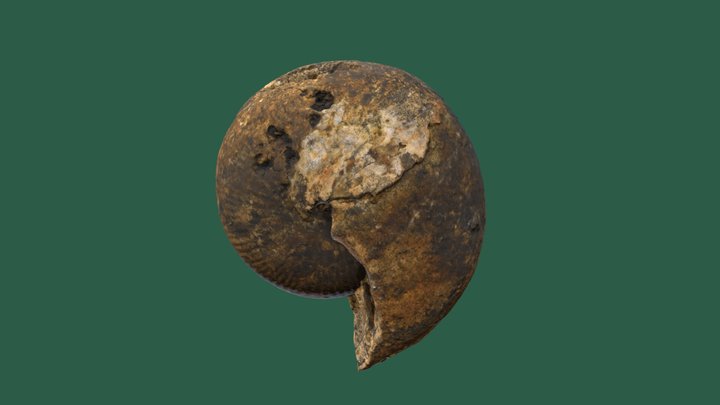
3D model
- Source
- Sketchfab
- Credit
- Shellie Luallin
- Licence
- CC Attribution
- Commercial use
- cannot be read from the licence given — check the record
Smithsonian Open Access and MorphoSource were not reached for this taxon, so this list is what the others held rather than everything there is.
This is what the site found, which is not the same as what exists.
Keep going
What may have been alongside itHaloritidae through timeFormations of the Late TriassicThe world it lived on
Occurrence data from the Paleobiology Database, CC BY 4.0. Mojsisovics 1879