Glyphostoma
Glyphostoma is a genus of sea snails, marine gastropod mollusks in the family Clathurellidae.

Jan Delsing · Public Domain · via Wikipedia/Commons. May be a photograph of a specimen, or an artist’s reconstruction — an interpretation of a skeleton, since colour and soft tissue are almost never preserved.
On record
Recorded, not inferred- Sits inside
- ClathurellidaePBDB
- Diet
- carnivorePBDB, for Conoidea
- Life habit
- epifaunalPBDB, for Conoidea
- Motility
- actively mobilePBDB, for Conoidea
- Vision
- limitedPBDB, for Gastropoda
Time the record covers
At least 15 million years on record.
The record covers at least 15.98 Mya to 129 ka. No occurrence read is dated outside 33.9 Mya to 0 Mya.
116 occurrences of Glyphostoma on record, most of them in the Miocene. The Paleobiology Database records this as a living group. Bar height is expected occurrences, not a count: each fossil is spread across the span it is dated to, so a tall narrow bar means tight dating and a low wide one means loose.
When
116 occurrences- Oligoceneunder 1%
- Miocene57%
- Pliocene29%
- Pleistocene14%
These are dates about fossils, not the animal: the record can only begin after it arose and end before it died out, so either end may reach further. Shares are expected occurrences: a fossil dated to a span is counted partly in each period it straddles. More on what this infers.
Found in
36 formations
- Gatun Formation18
- Chipola Formation · Alum Bluff Group15
- Esmeraldas Formation13
- Caloosahatchee Formation8
- Nancy Point Formation · Bocas del Toro Group6
- Shoal River Formation · Alum Bluff Group4
Loading coastlines…
The named rock units Glyphostoma has been recovered from, largest first. Drawn where the rock is now, not where it formed. 12 further formations hold fewer occurrences each and are not listed. 9 occurrences have no formation on record, which is common for older literature.
Glyphostoma and its relatives
MioceneWhere Glyphostoma and its relatives were recorded in the Miocene.
Found in the same rock
2,171 taxa- Anadara24 sites
- Polystira20 sites
- Strioterebrum18 sites
- Macrocallista maculata17 sites
- Acteocina15 sites
- Strioterebrum spiriferum15 sites
- Nassarius (Uzita)14 sites
- Volvulella (Volvulella) oxytata14 sites
- Calyptraea centralis13 sites
- Conus13 sites
- Architectonica nobilis12 sites
- Architectonica11 sites
- Bivetiella dariena11 sites
- Callocardia (Agriopoma) gatunensis11 sites
- Cancellaria11 sites
- Crepidula plana11 sites
- Hyotissa haitensis11 sites
- Mitrella11 sites
- Sulcularia11 sites
- Tectonatica11 sites
- Trachycardium11 sites
- Uromitra11 sites
- Arcinella arcinella10 sites
- Bellucina actinus10 sites
The Paleobiology Database records 45 sites for Glyphostoma, and this reads all of them. Of that, one read hit the database's own return limit, so every count below is a floor rather than a total. The number is how many of those sites it was catalogued from too. The 24 sharing the most are listed.
This is not a list of everything alive at the time. It is only what has come out of the same ground as this animal and been written down.
Entered from
31 references- Unpublished notes on Caribbean collection of the Naturhistorisches Museum Basel20
- The Molluscan Fauna of the Alum Bluff Group of Florida20
- Geology and paleontology of canal zone and adjoing parts of Panama: Description of Tertiary mollusks (gastropods: Eulimidae, Marginellidae to Helminthoglyptidae).16
- A paleobiotic survey of Caribbean faunas from the Neogene of the Isthmus of Panama12
- Part 2. The Pliocene Turridae of Saint Petersburg, Florida6
- Olsson, 19645
- Miocene gastropods and scaphopods from Trinidad, British West Indies4
- On the ages of certain Upper Tertiary beds of Peninsula India and Ceylon3
- Neogene molluscs, shallow marine paleoenvironments, and chronostratigraphy of the Guajira Peninsula, Colombia2
- Mollusca: Shoal River Formation (Middle Miocene2
- Neogene Biostratigraphy of the Charlotte Harbor Area in Southwestern Florida2
- Tertiary and Quaternary Gastropoda of Okinawa: A comparison of the late Miocene, Pliocene, and Pleistocene Gastropoda of Okinawa with related faunas of East Asia together with a resume of the geological setting of the fossiliferous deposits2
Each of the 116 occurrences read was entered from one of these publications, ordered by how many each accounts for. This is not a search for papers mentioning the name. 19 further references are not listed. Entries link to doi.org where the Paleobiology Database holds an identifier, and to its own record where it does not. Relayed as the Paleobiology Database holds them, not checked against what they resolve to.
Media and terms
Media content2

Picture of Glyphostoma
- Source
- Wikipedia/Commons
- Credit
- Jan Delsing
- Licence
- Public Domain
- Commercial use
- the licence allows it
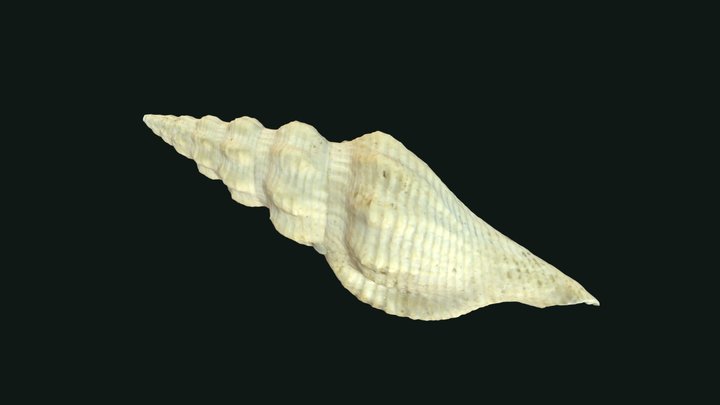
3D model
- Source
- Sketchfab
- Credit
- Shellie Luallin
- Licence
- CC Attribution
- Commercial use
- cannot be read from the licence given — check the record
Smithsonian Open Access was not reached for this taxon, so this list is what the others held rather than everything there is.
The description on this site
- Source
- Wikipedia, “Glyphostoma”
- Licence
- CC BY-SA 4.0
This is what the site found, which is not the same as what exists.
Keep going
What may have been alongside itClathurellidae through timeFormations of the MioceneThe world it lived on
Occurrence data from the Paleobiology Database, CC BY 4.0. (Gabb 1872)