Globidens
Globidens is an extinct genus of mosasaurid oceanic lizard classified as part of the Globidensini tribe in the Mosasaurinae subfamily. Globidens belongs to the family Mosasauridae, which consists of several genera of predatory marine lizards of various sizes that were prevalent during the Late Cretaceous. Specimens of Globidens have been discovered in Angola, Brazil, Colombia, Morocco, Syria and the United States. Among mosasaurs, Globidens is probably most well known for the highly rounded, globe-like teeth that give it its name.

Jonathan Chen · CC BY-SA 4.0 · via Wikipedia/Commons. May be a photograph of a specimen, or an artist’s reconstruction — an interpretation of a skeleton, since colour and soft tissue are almost never preserved.
On record
Recorded, not inferred- Sits inside
- GlobidensiniPBDB
- Diet
- carnivorePBDB, for Mosasauridae
- Life habit
- aquaticPBDB, for Mosasauridae
- Motility
- actively mobilePBDB, for Osteichthyes
- Vision
- well-developedPBDB, for Mosasauridae
- Environment
- terrestrialPBDB, for Amniota
- Length
- 6 mWikidata
Time the record covers
At least 11 million years on record.
The record covers at least 83.6 Mya to 72.2 Mya. No occurrence read is dated outside 89.8 Mya to 66 Mya.
32 occurrences of Globidens on record, most of them in the Late Cretaceous. Bar height is expected occurrences, not a count: each fossil is spread across the span it is dated to, so a tall narrow bar means tight dating and a low wide one means loose.
When
32 occurrences- Late Cretaceous100%
These are dates about fossils, not the animal: the record can only begin after it arose and end before it died out, so either end may reach further. Shares are expected occurrences: a fossil dated to a span is counted partly in each period it straddles. More on what this infers.
Found in
13 formations
- Pierre Shale Formation · Montana Group4
- Wolfe City/Sprinkle Formation · Taylor Group3
- Phosphates Formation2
- Marshalltown Formation · Matawan Group1
- Mooreville Chalk Formation · Selma Group1
- Austin Chalk Formation1
Loading coastlines…
The named rock units Globidens has been recovered from, largest first. Drawn where the rock is now, not where it formed. 13 occurrences have no formation on record, which is common for older literature.
Globidens and its relatives
Late CretaceousWhere Globidens and its relatives were recorded in the Late Cretaceous.
Found in the same rock
232 taxa- Squalicorax pristodontus13 sites
- Elasmosauridae12 sites
- Plioplatecarpinae11 sites
- Chelonioidea10 sites
- Cretalamna maroccana9 sites
- Enchodus elegans9 sites
- Rhinobatos9 sites
- Stephanodus9 sites
- Plicatoscyllium8 sites
- Squalicorax bassanii8 sites
- Youssoubatis8 sites
- Hypsobatis7 sites
- Leiodon anceps7 sites
- Mosasauridae7 sites
- Rhombodus meridionalis7 sites
- Stratodus apicalis7 sites
- Enchodus6 sites
- Mosasaurus lemonnieri6 sites
- Plioplatecarpini6 sites
- Prognathodon6 sites
- Prognathodon giganteus6 sites
- Pycnodontidae6 sites
- Scapanorhynchus rapax6 sites
- Teleostei6 sites
The Paleobiology Database records 31 sites for Globidens, and this reads all of them. The number is how many of those sites it was catalogued from too. The 24 sharing the most are listed.
This is not a list of everything alive at the time. It is only what has come out of the same ground as this animal and been written down.
Entered from
19 references- The marine vertebrate faunas from the Late Cretaceous phosphates of Syria5
- Durophagous Mosasauridae (Squamata) from the Upper Cretaceous phosphates of Morocco, with description of a new species of Globidens4
- A new species of Globidens from South Dakota, and a review of the globidentine mosasaurs4
- The mosasaur collections of the Museum National d'Histoire Naturelle of Paris3
- The Skull of American Mosasaurs2
- The youngest records of mosasaurid reptiles from the Upper Cretaceous of the South-Western Desert in Egypt1
- Insights into the anatomy and functional morphology of durophagous mosasaurines (Squamata: Mosasauridae) from a new species of Globidens from Morocco1
- The North African Mosasaur Globidens phosphaticus from the Maastrichtian of Angola1
- Rare occurrence of a Globidens sp. (Reptilia; Mosasauridae) dentary in the Sharon Springs Member of the Pierre Shale (Middle Campanian) of Western Kansas1
- A new species of the durophagous mosasaur Globidens (Squamata: Mosasauridae) from the Late Cretaceous Pierre Shale Group of central South Dakota, USA1
- Latest Cretaceous mosasaurs and lamniform sharks from Labirinta cave, Vratsa district (northwest Bulgaria): a preliminary note1
- Marine reptiles from the Late Cretaceous Phosphates of Jordan: palaeobiogeographical implications1
Each of the 32 occurrences read was entered from one of these publications, ordered by how many each accounts for. This is not a search for papers mentioning the name. 7 further references are not listed. Entries link to doi.org where the Paleobiology Database holds an identifier, and to its own record where it does not. Relayed as the Paleobiology Database holds them, not checked against what they resolve to.
Media and terms
Media content2

Picture of Globidens
- Source
- Wikipedia/Commons
- Credit
- Jonathan Chen
- Licence
- CC BY-SA 4.0
- Commercial use
- the licence allows it
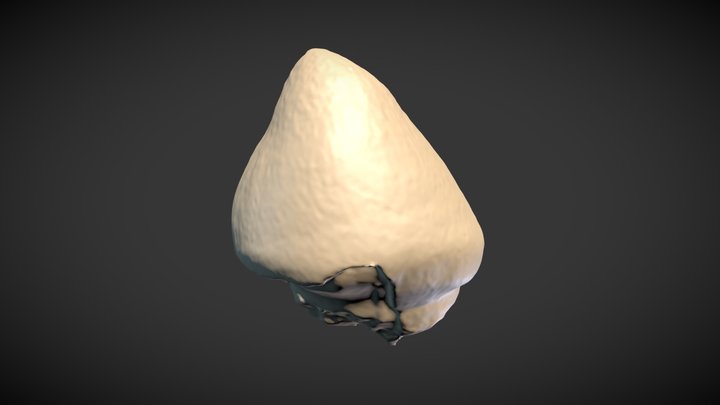
3D model
- Source
- Sketchfab
- Credit
- EDDyLab @ULiege
- Licence
- CC Attribution-NonCommercial
- Commercial use
- the licence does not allow it
Smithsonian Open Access and MorphoSource were not reached for this taxon, so this list is what the others held rather than everything there is.
The description on this site
- Source
- Wikipedia, “Globidens”
- Licence
- CC BY-SA 4.0
This is what the site found, which is not the same as what exists.
Keep going
What may have been alongside itGlobidensini through timeFormations of the Late CretaceousThe world it lived on
Occurrence data from the Paleobiology Database, CC BY 4.0. Gilmore 1912