Elasmosauridae
Elasmosauridae, often called elasmosaurs or elasmosaurids, is an extinct family of plesiosaurs that lived from the Hauterivian stage of the Early Cretaceous to the Maastrichtian stage of the Late Cretaceous period. The taxon was initially erected in 1869 by Edward Drinker Cope to include the type genus Elasmosaurus with the related Cimoliasaurus, although he did not argue in detail why. Over the following years, many authors recognized this classification on the basis of predominantly postcranial features, becoming one of the three groups in which plesiosaurs were often classified during the 19th century, along with the Pliosauridae and the Plesiosauridae. However, most of these traits led to many genera since recognized as belonging to other plesiosaur families being classified as elasmosaurids. Another family historically considered as distinct, the Cimoliasauridae, has since 2009 been recognized as a junior synonym of the Elasmosauridae. Along with the Polycotylidae, elasmosaurids represent the few plesiosauroids that lived until the Cretaceous–Paleogene extinction event.

MCDinosaurhunter · CC BY-SA 3.0 · via Wikipedia/Commons. May be a photograph of a specimen, or an artist’s reconstruction — an interpretation of a skeleton, since colour and soft tissue are almost never preserved.
On record
Recorded, not inferred- Also called
- elasmosaurPBDB
- Sits inside
- PlesiosauroideaPBDB
- Diet
- carnivorePBDB, for Plesiosauria
- Life habit
- aquatic, depth=surfacePBDB, for Plesiosauria
- Motility
- actively mobilePBDB, for Plesiosauria
- Environment
- marinePBDB, for Plesiosauria
Time the record covers
At least 138 million years on record.
The record covers at least 211.18 Mya to 72.2 Mya. No occurrence read is dated outside 227.3 Mya to 56 Mya.
309 occurrences of Elasmosauridae on record, most of them in the Late Cretaceous. Bar height is expected occurrences, not a count: each fossil is spread across the span it is dated to, so a tall narrow bar means tight dating and a low wide one means loose.
When
309 occurrences- Late Triassicunder 1%
- Early Jurassicunder 1%
- Middle Jurassicunder 1%
- Late Jurassic2%
- Early Cretaceous10%
- Late Cretaceous86%
- Paleoceneunder 1%
These are dates about fossils, not the animal: the record can only begin after it arose and end before it died out, so either end may reach further. Shares are expected occurrences: a fossil dated to a span is counted partly in each period it straddles. More on what this infers.
Found in
91 formations
- Conway Formation · Eyre Group22
- López de Bertodano Formation21
- Tahora Formation · Mata Group12
- Allen Formation · Malargüe Group9
- Snow Hill Island Formation · Marambio Group9
- Pierre Shale Formation · Montana Group8
Loading coastlines…
The named rock units Elasmosauridae has been recovered from, largest first. Drawn where the rock is now, not where it formed. 67 further formations hold fewer occurrences each and are not listed. 62 occurrences have no formation on record, which is common for older literature.
Elasmosauridae and its relatives
Late CretaceousWhere Elasmosauridae and its relatives were recorded in the Late Cretaceous.
Found in the same rock
1,085 taxa- Plesiosauria27 sites
- Mosasauridae23 sites
- Squalicorax pristodontus17 sites
- Teleostei17 sites
- Chelonioidea16 sites
- Squalicorax15 sites
- Enchodus14 sites
- Prognathodon14 sites
- Rhinobatos14 sites
- Plioplatecarpinae13 sites
- Squalicorax kaupi13 sites
- Testudines13 sites
- Carcharias12 sites
- Cimoliasaurus12 sites
- Pliosauridae12 sites
- Cretalamna appendiculata11 sites
- Enchodus elegans11 sites
- Hadrosauridae11 sites
- Inoceramus11 sites
- Osteichthyes11 sites
- Pycnodontidae11 sites
- Stephanodus11 sites
- Polycotylidae10 sites
- Theropoda10 sites
The Paleobiology Database records 277 sites for Elasmosauridae, and this reads 240 of them. The number is how many of those sites it was catalogued from too. The 24 sharing the most are listed.
This is not a list of everything alive at the time. It is only what has come out of the same ground as this animal and been written down.
Entered from
179 references- Late Cretaceous marine reptiles of New Zealand12
- Late Cretaceous reptiles (families Elasmosauridae and Pliosauridae) from the Mangahouanga Stream, North Island, New Zealand10
- Elasmosaur remains from the Maastrichtian type area, and a review of latest Cretaceous elasmosaurs (Reptilia, Plesiosauroidea)9
- On the fossil Reptilia of New Zealand9
- The marine vertebrate faunas from the Late Cretaceous phosphates of Syria8
- New plesiosaurs from the Upper Cretaceous of Antarctica7
- A new elasmosaurid (Sauropterygia: Plesiosauria) from the non-marine to paralic Dinosaur Park Formation of southern Alberta, Canada6
- Reptiles from the Senonian (U Cret) of Scania (S Sweden)6
- Northernmost occurrences of plesiosaurs and turtles in the Upper Cretaceous of Eurasia5
- Preliminary report on the Cretaceous reptile fossils from Hokkaido5
- New elasmosaurids (Sauropterygia, Plesiosauria) from the Late Cretaceous of the Magallanes Basin, Chilean Patagonia: Evidence of a faunal turnover during the Maastrichtian along the Weddellian Biogeographic Province4
- Marine vertebrate faunas from the Maastrichtian phosphates of Benguérir (Ganntour Basin, Morocco): Biostratigraphy, palaeobiogeography and palaeoecology4
Each of the 309 occurrences read was entered from one of these publications, ordered by how many each accounts for. This is not a search for papers mentioning the name. 167 further references are not listed. Entries link to doi.org where the Paleobiology Database holds an identifier, and to its own record where it does not. Relayed as the Paleobiology Database holds them, not checked against what they resolve to.
Media and terms
Media content2
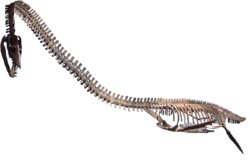
Picture of Elasmosauridae
- Source
- Wikipedia/Commons
- Credit
- MCDinosaurhunter
- Licence
- CC BY-SA 3.0
- Commercial use
- the licence allows it
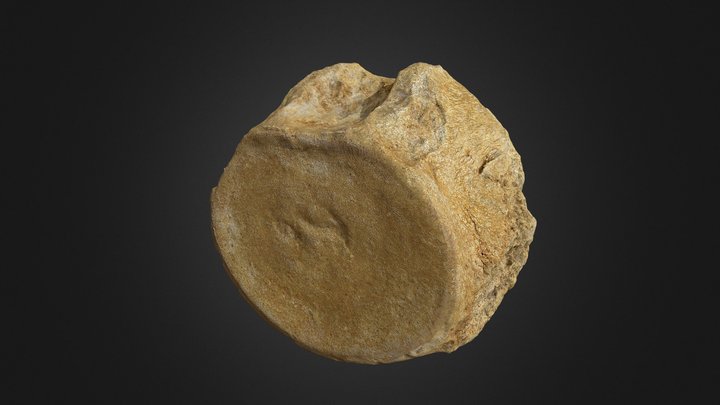
3D model
- Source
- Sketchfab
- Credit
- Olof Moleman
- Licence
- CC Attribution-NonCommercial
- Commercial use
- the licence does not allow it
Smithsonian Open Access and MorphoSource were not reached for this taxon, so this list is what the others held rather than everything there is.
The description on this site
- Licence
- CC BY-SA 4.0
This is what the site found, which is not the same as what exists.
Keep going
What may have been alongside itPlesiosauroidea through timeFormations of the Late CretaceousThe world it lived on
Occurrence data from the Paleobiology Database, CC BY 4.0. Cope 1869