Fusinus (Fusinus)
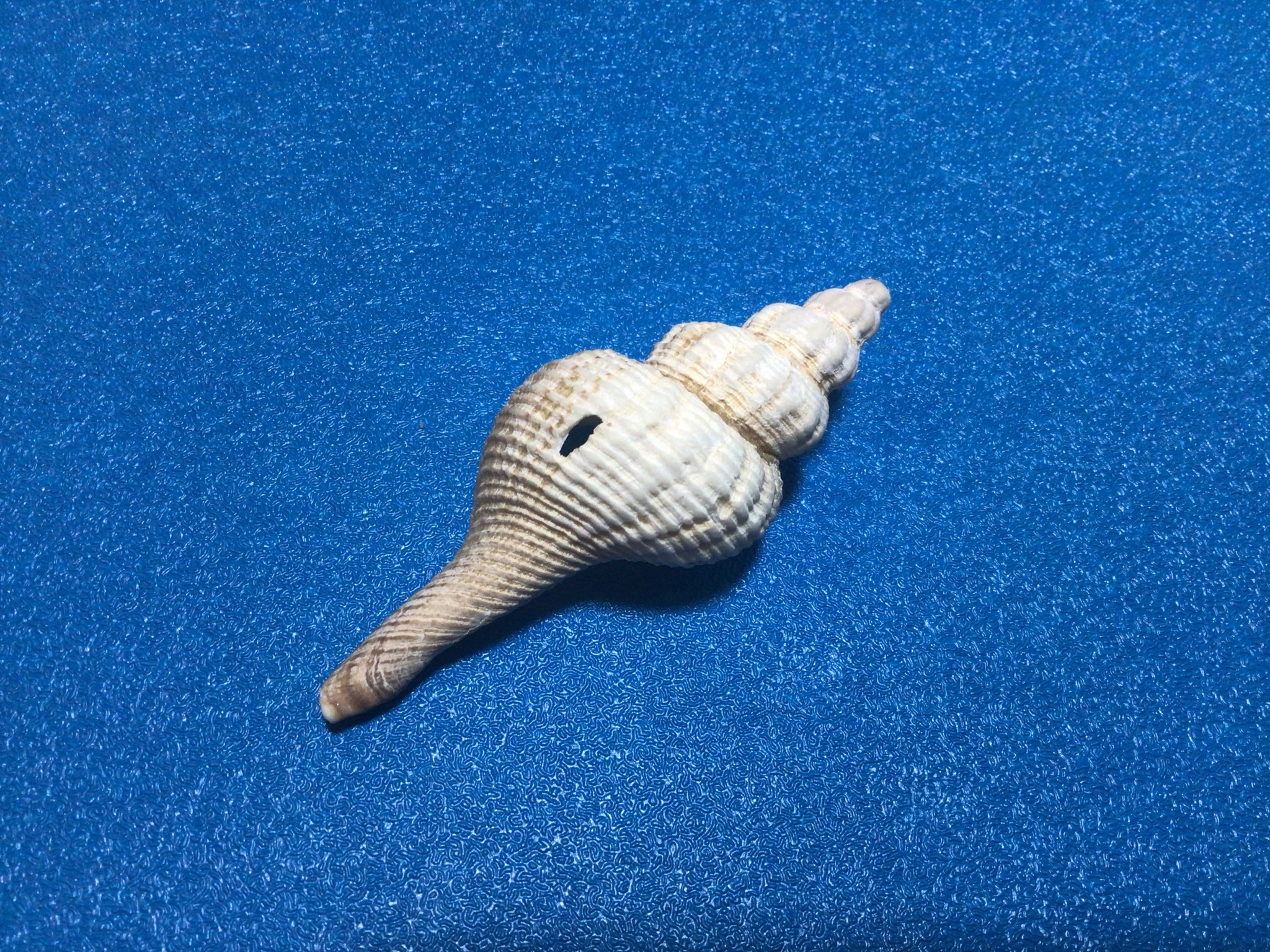
Naganisi · CC BY-NC 4.0 · via GBIF. May be a photograph of a specimen, or an artist’s reconstruction — an interpretation of a skeleton, since colour and soft tissue are almost never preserved.
On record
Recorded, not inferred- Sits inside
- FusinusPBDB
- Diet
- carnivorePBDB, for Fasciolariidae
- Life habit
- epifaunalPBDB, for Fasciolariidae
- Motility
- actively mobilePBDB, for Fasciolariidae
- Vision
- limitedPBDB, for Gastropoda
Time the record covers
At least 35 million years on record.
The record covers at least 37.71 Mya to 2.58 Mya. No occurrence read is dated outside 48.07 Mya to 11.7 ka.
18 occurrences of Fusinus (Fusinus) on record, most of them in the Pliocene. The Paleobiology Database records this as a living group. Bar height is expected occurrences, not a count: each fossil is spread across the span it is dated to, so a tall narrow bar means tight dating and a low wide one means loose.
When
18 occurrences- Eocene22%
- Pliocene72%
- Pleistocene6%
These are dates about fossils, not the animal: the record can only begin after it arose and end before it died out, so either end may reach further. Shares are expected occurrences: a fossil dated to a span is counted partly in each period it straddles. More on what this infers.
Found in
5 formations
- Esmeraldas Formation13
- Snatolskaya Formation2
- Kovachinskaya Formation1
- Rateginskaya Formation1
- Montezuma Formation1
Loading coastlines…
The named rock units Fusinus (Fusinus) has been recovered from, largest first. Drawn where the rock is now, not where it formed.
Fusinus (Fusinus) and its relatives
PlioceneWhere Fusinus (Fusinus) and its relatives were recorded in the Pliocene.
Found in the same rock
223 taxa- Calyptraea diegoana3 sites
- Conus3 sites
- Hataiella3 sites
- Polinices (Polinices)3 sites
- Puncturella3 sites
- Spirocrypta pileum3 sites
- Acesta2 sites
- Acmaea (Acmaea)2 sites
- Anachis (Alia)2 sites
- Anachis (Anachis)2 sites
- Anadara (Sectiarca) henekeni2 sites
- Ancistrosyrinx cedonulli reevi2 sites
- Antillophos2 sites
- Arca (Arca) suspecta2 sites
- Beringius (Beringius) pressulus2 sites
- Boreoscala2 sites
- Buridrillia2 sites
- Cancellaria (Cancellaria) esmeralda2 sites
- Cantharus2 sites
- Capulus2 sites
- Conomitra2 sites
- Conus cacuminatus2 sites
- Dalium2 sites
- Dentalium (Fissidentalium)2 sites
The Paleobiology Database records 5 sites for Fusinus (Fusinus), and this reads all of them. The number is how many of those sites it was catalogued from too. The 24 sharing the most are listed.
This is not a list of everything alive at the time. It is only what has come out of the same ground as this animal and been written down.
Entered from
5 references- Unpublished notes on Caribbean collection of the Naturhistorisches Museum Basel7
- Olsson, 19646
- Eocene gastropods of western Kamchatka - implications for high-latitude north Pacific biostratigraphy and biogeography3
- Biotic response to the Eocene-Oligocene Transition: Gastropod assemblages in the High-Latitude North Pacific1
- Comparacion entre la fauna malacologica de las principales formaciones del Plioceno marino de Costa Rica, America Central1
Each of the 18 occurrences read was entered from one of these publications, ordered by how many each accounts for. This is not a search for papers mentioning the name. Entries link to doi.org where the Paleobiology Database holds an identifier, and to its own record where it does not. Relayed as the Paleobiology Database holds them, not checked against what they resolve to.
Media and terms
Media content3
Picture of Fusinus (Fusinus)
- Source
- GBIF
- Credit
- Naganisi
- Licence
- CC BY-NC 4.0
- Commercial use
- the licence does not allow it
Photogrammetry
- Source
- MorphoSource
- Licence
- In Copyright
- Commercial use
- cannot be read from the licence given — check the record
- Specimen
- Fusinus fusinus eucosmius · UF:Invertebrate Zoology:029041-Mollusca
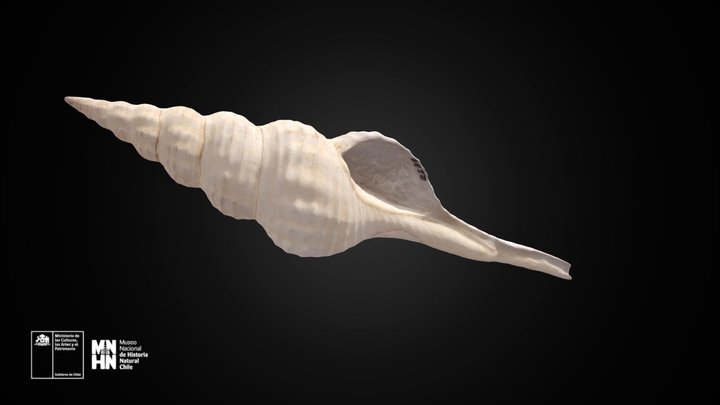
3D model
- Source
- Sketchfab
- Licence
- CC0 Public Domain
- Commercial use
- the licence allows it
Smithsonian Open Access was not reached for this taxon, so this list is what the others held rather than everything there is.
This is what the site found, which is not the same as what exists.
Keep going
What may have been alongside itFusinus through timeFormations of the PlioceneThe world it lived on
Occurrence data from the Paleobiology Database, CC BY 4.0. Rafinesque 1815