Euaspidoceras
Euaspidoceras is an extinct ammonoid cephalopod genus that lived during the Middle Jurassic.

Neoammoniten · CC BY-SA 3.0 · via Wikipedia/Commons. May be a photograph of a specimen, or an artist’s reconstruction — an interpretation of a skeleton, since colour and soft tissue are almost never preserved.
On record
Recorded, not inferred- Sits inside
- EuaspidoceratinaePBDB
- Diet
- carnivorePBDB, for Ammonoidea
- Life habit
- nektonicPBDB, for Ammonoidea
- Motility
- fast-movingPBDB, for Ammonoidea
- Vision
- well-developedPBDB, for Cephalopoda
- Environment
- marinePBDB, for Cephalopoda
Time the record covers
At least 12 million years on record.
The record covers at least 161.5 Mya to 149.2 Mya. No occurrence read is dated outside 165.3 Mya to 137.05 Mya.
233 occurrences of Euaspidoceras on record, most of them in the Late Jurassic. Bar height is expected occurrences, not a count: each fossil is spread across the span it is dated to, so a tall narrow bar means tight dating and a low wide one means loose.
When
233 occurrences- Middle Jurassic10%
- Late Jurassic90%
- Early Cretaceousunder 1%
These are dates about fossils, not the animal: the record can only begin after it arose and end before it died out, so either end may reach further. Shares are expected occurrences: a fossil dated to a span is counted partly in each period it straddles. More on what this infers.
Found in
24 formations
- La Manga Formation11
- Rosso Ammonitico Formation7
- Hanifa Formation · Shaqra Group7
- Habo beds Formation7
- Lotena Formation7
- "Hartmannshof" Formation4
Loading coastlines…
The named rock units Euaspidoceras has been recovered from, largest first. Drawn where the rock is now, not where it formed. 160 occurrences have no formation on record, which is common for older literature.
Euaspidoceras and its relatives
Late JurassicWhere Euaspidoceras and its relatives were recorded in the Late Jurassic.
Found in the same rock
685 taxa- Perisphinctes20 sites
- Perisphinctes (Dichotomosphinctes)15 sites
- Mirosphinctes10 sites
- Perisphinctes (Dichotomosphinctes) antecedens10 sites
- Taramelliceras10 sites
- Gregoryceras9 sites
- Actinostreon gregarea8 sites
- Lytoceras8 sites
- Peltoceratoides (Parawedekindia) arduennensis8 sites
- Trimarginites8 sites
- Alligaticeras7 sites
- Hecticoceras (Sublunuloceras)7 sites
- Ochetoceras7 sites
- Sowerbyceras tortisulcatum7 sites
- Taramelliceras (Taramelliceras) argoviense7 sites
- Taramelliceras (Taramelliceras) pseudoculatum7 sites
- Bonarellia bicostata6 sites
- Campylites delmontanus6 sites
- Choffatia6 sites
- Hecticoceras lairense6 sites
- Lunuloceras lunuloides6 sites
- Nanogyra (Nanogyra) nana6 sites
- Neoprionoceras henrici6 sites
- Otosphinctes6 sites
The Paleobiology Database records 120 sites for Euaspidoceras, and this reads all of them. The number is how many of those sites it was catalogued from too. The 24 sharing the most are listed.
This is not a list of everything alive at the time. It is only what has come out of the same ground as this animal and been written down.
Entered from
37 references- Stratigraphie und Palaeontologie des oolithischen Eisenerzlagers von Herznach und seiner Umgebung73
- Les Euaspidoceratinae (Ammonitina, Aspidoceratidae) d'Herznach (Suisse septentrionale) à la fin de la zone à Cordatum (Oxfordien inférieur)30
- L'Oxfordien dans la moitié sud du Jura francais - etude stratigraphique26
- Oxfordian and late Callovian ammonite faunas and biostratigraphy of the Neuquen-Mendoza and Tarapaca Basins (Jurassic, Ammonoidea, Western South-America)10
- Geologie de Madagascar I. Les Terrains Sedimentaires10
- The ammonite fauna of the La Manga Formation (Late Callovian-Early Oxfordian) of Vega de la Veranada, Neuquén Basin, Argentina9
- The Middle Jurassic-Lower Cretaceous Rosso Ammonitico succession of Monte Inici (Trapanese Domain, western Sicily): sedimentology, biostratigraphy and isotope stratigraphy7
- Habo Beds near Ler (Kutch): Pt. 3 - Biostratigraphy of the beds on the east of Ler7
- Le Jurassique D`Arabie Centrale6
- Zur Stratigraphie des Mittel- und unteren Oberjuras in Sengenthal bei Neumarkt /Opf. (Fränkische Alb) [On the stratigraphy of the Middle and early Upper Jurassic at Sengenthal, near Neumarkt/Opf. (Franconian Alb)]6
- Atlas des fossiles caractéristiques de Madagascar (ammonites) - Fascicule IV (Argovien - Rauracien)6
- Middle to Upper Jurassic (Callovian-Kimmeridgian) in the Arcos Plateau (Arino-Oliere area, eastern Iberian chain, Spain): Taphonomic analysis and biostratigraphy5
Each of the 233 occurrences read was entered from one of these publications, ordered by how many each accounts for. This is not a search for papers mentioning the name. 25 further references are not listed. Entries link to doi.org where the Paleobiology Database holds an identifier, and to its own record where it does not. Relayed as the Paleobiology Database holds them, not checked against what they resolve to.
Media and terms
Media content2

Picture of Euaspidoceras
- Source
- Wikipedia/Commons
- Credit
- Neoammoniten
- Licence
- CC BY-SA 3.0
- Commercial use
- the licence allows it
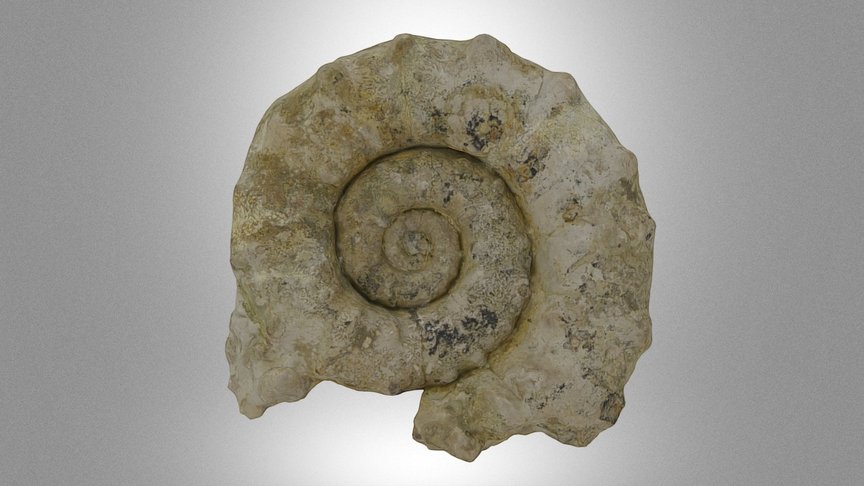
3D model
- Source
- Sketchfab
- Licence
- CC0 Public Domain
- Commercial use
- the licence allows it
The description on this site
- Licence
- CC BY-SA 4.0
This is what the site found, which is not the same as what exists.
Keep going
What may have been alongside itEuaspidoceratinae through timeFormations of the Late JurassicThe world it lived on
Occurrence data from the Paleobiology Database, CC BY 4.0. (Spath 1931)