Eopsaltria
Eopsaltria is a genus of small forest passerines known in Australia as the yellow robins. They belong to the Australasian robin family Petroicidae. The name is derived from the Ancient Greek for "dawn singer/song" because of their dawn chorus. They are inquisitive and bold birds, and have been reported perching on the shoulders or boots of people in the bush. Open eucalyptus woodlands are their preferred habitat. The ornithologist John Gould likened the behaviour and mannerisms of the eastern and western yellow robin to those of the European robin. The name "yellow robin" itself was applied to the eastern yellow robin by the early settlers of New South Wales.

No machine-readable author provided. Dlanglois assumed (based on copyright claims). · CC BY-SA 3.0 · via Wikipedia/Commons. May be a photograph of a specimen, or an artist’s reconstruction — an interpretation of a skeleton, since colour and soft tissue are almost never preserved.
On record
Recorded, not inferred- Sits inside
- PetroicidaePBDB
- Diet
- carnivorePBDB, for Coelurosauria
- Life habit
- ground dwelling, solitaryPBDB, for Theropoda
- Motility
- actively mobilePBDB, for Theropoda
- Environment
- terrestrialPBDB, for Theropoda
Time the record covers
At most 129 thousand years on record.
Every occurrence read is dated to somewhere between 129 ka and 0 Mya, and nothing in the dating separates them, so that window is what the record shows rather than a span.
2 occurrences of Eopsaltria on record, most of them in the Pleistocene. The Paleobiology Database records this as a living group. Bar height is expected occurrences, not a count: each fossil is spread across the span it is dated to, so a tall narrow bar means tight dating and a low wide one means loose.
When
2 occurrences- Pleistocene91%
- Holocene9%
These are dates about fossils, not the animal: the record can only begin after it arose and end before it died out, so either end may reach further. Shares are expected occurrences: a fossil dated to a span is counted partly in each period it straddles. More on what this infers.
Eopsaltria and its relatives
PleistoceneWhere Eopsaltria and its relatives were recorded in the Pleistocene.
Found in the same rock
25 taxa- Alopecoenas stairi2 sites
- Aplonis tabuensis2 sites
- Clytorhynchus vitiensis2 sites
- Didunculus placopedetes2 sites
- Ducula2 sites
- Ducula david2 sites
- Foulehaio carunculatus2 sites
- Gallirallus vekamatolu2 sites
- Lalage maculosa2 sites
- Megapodius alimentum2 sites
- Todiramphus chloris2 sites
- Turdus poliocephalus2 sites
- Accipiter rufitorques1 site
- Cettia1 site
- Eclectus infectus1 site
- Gallinula1 site
- Megapodius1 site
- Myiagra1 site
- Myzomela cardinalis1 site
- Nycticorax1 site
- Phigys solitarius1 site
- Ptilinopus perousii1 site
- Ptilinopus porphyraceus1 site
- Vini australis1 site
The Paleobiology Database records 2 sites for Eopsaltria, and this reads all of them. The number is how many of those sites it was catalogued from too. The 24 sharing the most are listed.
This is not a list of everything alive at the time. It is only what has come out of the same ground as this animal and been written down.
Entered from
1 referenceEach of the 2 occurrences read was entered from one of these publications, ordered by how many each accounts for. This is not a search for papers mentioning the name. Each entry links to doi.org. Relayed as the Paleobiology Database holds them, not checked against what they resolve to.
Media and terms
Media content3

Picture of Eopsaltria
- Source
- Wikipedia/Commons
- Credit
- No machine-readable author provided. Dlanglois assumed (based on copyright claims).
- Licence
- CC BY-SA 3.0
- Commercial use
- the licence allows it
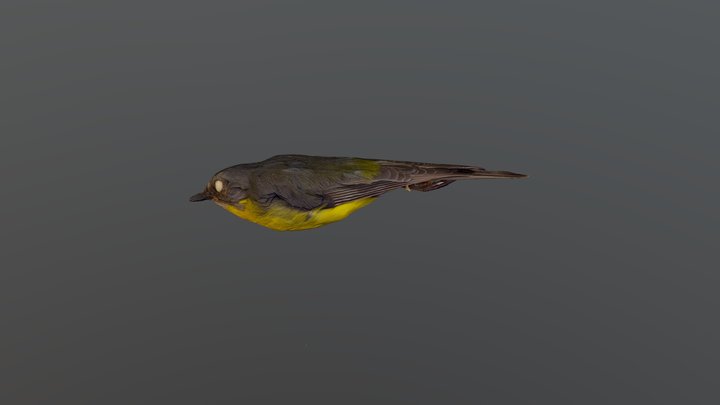
CT scan
- Source
- MorphoSource
- Credit
- MCZ Ornithology
- Licence
- In Copyright
- Commercial use
- cannot be read from the licence given — check the record
- Specimen
- Eopsaltria australis griseogularis · MCZ:Orn:333740
Smithsonian Open Access was not reached for this taxon, so this list is what the others held rather than everything there is.
The description on this site
- Source
- Wikipedia, “Eopsaltria”
- Licence
- CC BY-SA 4.0
This is what the site found, which is not the same as what exists.
Keep going
What may have been alongside itPetroicidae through timeFormations of the PleistoceneThe world it lived on
Occurrence data from the Paleobiology Database, CC BY 4.0. Swainson 1832