Echinocardium
Echinocardium is a genus of sea urchins of the family Loveniidae, known as heart urchins. The name is derived from the Greek ἐχῖνος and καρδία.

Hans Hillewaert · CC BY-SA 4.0 · via Wikipedia/Commons. May be a photograph of a specimen, or an artist’s reconstruction — an interpretation of a skeleton, since colour and soft tissue are almost never preserved.
On record
Recorded, not inferred- Sits inside
- LoveniidaePBDB
- Diet
- deposit feeder, detritivorePBDB, for Spatangoida
- Life habit
- shallow infaunalPBDB, for Spatangoida
- Motility
- slow-movingPBDB, for Spatangoida
- Vision
- limitedPBDB, for Echinoidea
- Environment
- marinePBDB, for Spatangoida
Time the record covers
At least 17 million years on record.
The record covers at least 20.45 Mya to 2.58 Mya. No occurrence read is dated outside 27.3 Mya to 774 ka.
26 occurrences of Echinocardium on record, most of them in the Pliocene. The Paleobiology Database records this as a living group, and the chart stops with its fossils rather than at the present. Bar height is expected occurrences, not a count: each fossil is spread across the span it is dated to, so a tall narrow bar means tight dating and a low wide one means loose.
When
26 occurrences- Oligocene2%
- Miocene25%
- Pliocene65%
- Pleistocene8%
These are dates about fossils, not the animal: the record can only begin after it arose and end before it died out, so either end may reach further. Shares are expected occurrences: a fossil dated to a span is counted partly in each period it straddles. More on what this infers.
Found in
11 formations
- Yorktown Formation · Chesapeake Group10
- Upper Marine Molasse Formation4
- Tamiami Formation2
- Kattendijk, Lillo Formation1
- Jackson Bluff Formation · Alum Bluff Group1
- Goose Creek Formation1
Loading coastlines…
The named rock units Echinocardium has been recovered from, largest first. Drawn where the rock is now, not where it formed. 2 occurrences have no formation on record, which is common for older literature.
Echinocardium and its relatives
PlioceneWhere Echinocardium and its relatives were recorded in the Pliocene.
Found in the same rock
683 taxa- Psammechinus philanthropus5 sites
- Arbacia improcera3 sites
- Chlamys3 sites
- Encope macrophora3 sites
- Mellita aclinensis3 sites
- Modiolus3 sites
- Agassizia porifera2 sites
- Amusium mortoni2 sites
- Argopecten2 sites
- Cardium2 sites
- Chesapecten madisonius2 sites
- Conradostrea sculpturata2 sites
- Echinus2 sites
- Ecphora quadricostata2 sites
- Hyotissa haitensis2 sites
- Megachasma2 sites
- Mellita2 sites
- Mercenaria2 sites
- Nodipecten2 sites
- Ostrea2 sites
- Panopea2 sites
- Pecten2 sites
- Placunanomia (Tamianomia) burnsi2 sites
- Septastrea marylandica2 sites
The Paleobiology Database records 24 sites for Echinocardium, and this reads all of them. The number is how many of those sites it was catalogued from too. The 24 sharing the most are listed.
This is not a list of everything alive at the time. It is only what has come out of the same ground as this animal and been written down.
Entered from
12 references- Upper Miocene Echinoids from the Yorktown Formation of Virginia and their environmental significance10
- Echinoids from the Belpberg Beds (Obere Meeresmolasse, Middle Burdigalian) in the area of Bern (Switzerland).4
- Diversity patterns and biostratigraphy of Cenozoic echinodems from Florida3
- USNM Chesapeake Group Cetacean Collection Data1
- Pliocene echinoid faunules from Kallo (Antwerp area, NW Belgium)1
- Preliminary biostratigraphy and molluscan fauna of the Goose Creek Limestone of eastern South Carolina1
- Upper Cenozoic echinoids from the Lee Creek Mine1
- Macrofauna del Pleistocene inferiore di Cinisi (Sicilia)1
- The echinoid fauna from Japan and adjacent regions, Part II1
- Some Neogene Mollusca from Florida and the Carolinas1
- Geology of the Coastal Plain of South Carolina1
- The Mesozoic and Cenozoic Echinodermata of the United States1
Each of the 26 occurrences read was entered from one of these publications, ordered by how many each accounts for. This is not a search for papers mentioning the name. Entries link to doi.org where the Paleobiology Database holds an identifier, and to its own record where it does not. Relayed as the Paleobiology Database holds them, not checked against what they resolve to.
Media and terms
Media content2
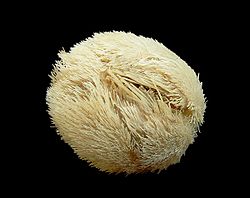
Picture of Echinocardium
- Source
- Wikipedia/Commons
- Credit
- Hans Hillewaert
- Licence
- CC BY-SA 4.0
- Commercial use
- the licence allows it
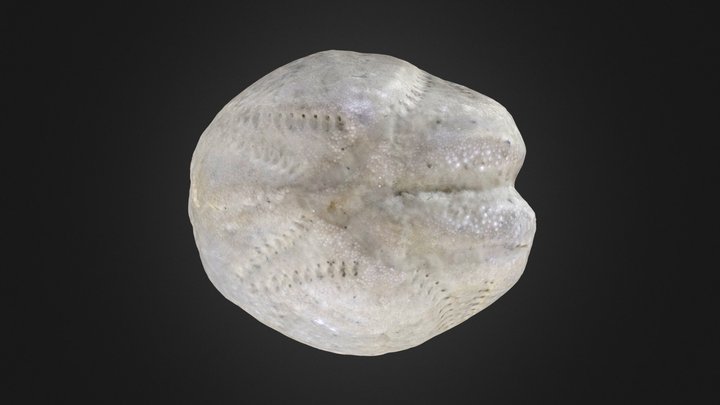
3D model
- Source
- Sketchfab
- Licence
- CC0 Public Domain
- Commercial use
- the licence allows it
The description on this site
- Licence
- CC BY-SA 4.0
This is what the site found, which is not the same as what exists.
Keep going
What may have been alongside itLoveniidae through timeFormations of the PlioceneThe world it lived on
Occurrence data from the Paleobiology Database, CC BY 4.0. Gray 1825