Drepanoistodus forceps
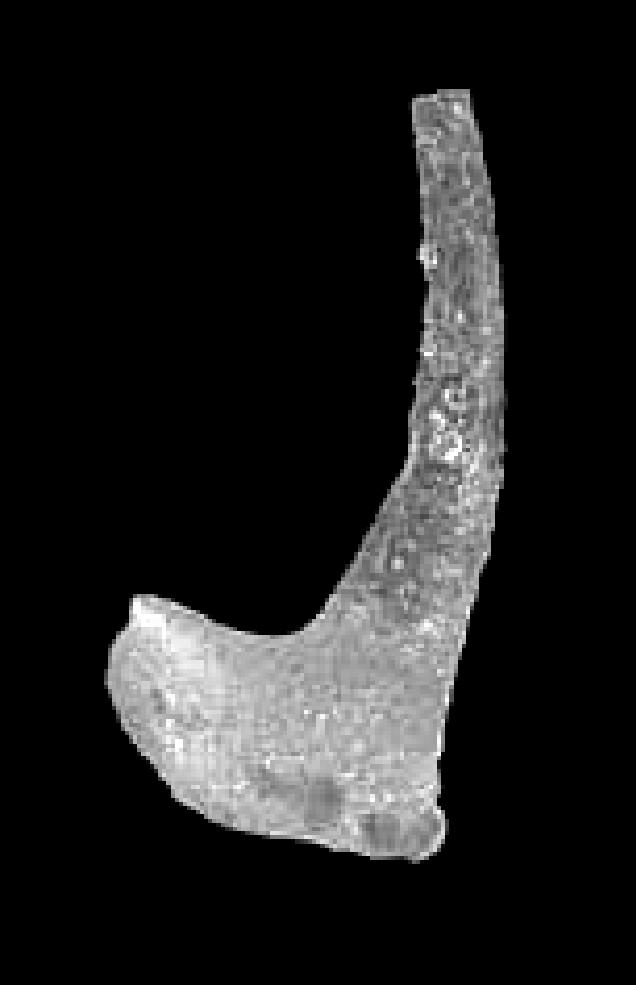
Viira, Viive · CC BY-NC 4.0 · via GBIF. May be a photograph of a specimen, or an artist’s reconstruction — an interpretation of a skeleton, since colour and soft tissue are almost never preserved.
On record
Recorded, not inferred- Sits inside
- DrepanoistodusPBDB
- Diet
- carnivorePBDB, for Conodonta
- Life habit
- nektonicPBDB, for Conodonta
- Motility
- actively mobilePBDB, for Conodonta
- Vision
- well-developedPBDB, for Conodonta
Time the record covers
At least 15 million years on record.
The record covers at least 477.1 Mya to 461.4 Mya. No occurrence read is dated outside 486.85 Mya to 458.2 Mya.
58 occurrences of Drepanoistodus forceps on record, most of them in the Ordovician. Bar height is expected occurrences, not a count: each fossil is spread across the span it is dated to, so a tall narrow bar means tight dating and a low wide one means loose.
When
58 occurrences- Ordovician100%
These are dates about fossils, not the animal: the record can only begin after it arose and end before it died out, so either end may reach further. Shares are expected occurrences: a fossil dated to a span is counted partly in each period it straddles. More on what this infers.
Found in
15 formations
- Volkhov Stage Formation12
- Volkhov Formation10
- Toila Formation7
- Zitai Formation6
- Dawan Formation5
- Leetse Formation4
Loading coastlines…
The named rock units Drepanoistodus forceps has been recovered from, largest first. Drawn where the rock is now, not where it formed. 1 occurrence has no formation on record, which is common for older literature.
Drepanoistodus forceps and its relatives
OrdovicianWhere Drepanoistodus forceps and its relatives were recorded in the Ordovician.
Found in the same rock
227 taxa- Periodon35 sites
- Baltoniodus31 sites
- Protopanderodus rectus29 sites
- Drepanoistodus basiovalis28 sites
- Cornuodus longibasis24 sites
- Oistodus lanceolatus21 sites
- Scolopodus striatus20 sites
- Decoriconus19 sites
- Microzarkodina19 sites
- Acodus similaris18 sites
- Protopanderodus18 sites
- Paurorthis parva17 sites
- Paroistodus originalis16 sites
- Productorthis aculeata16 sites
- Ranorthis15 sites
- Nothorthis penetrabilis14 sites
- Trapezognathus quadrangulum12 sites
- Triangulodus11 sites
- Semiacontiodus10 sites
- Brachiopoda9 sites
- Drepanodus9 sites
- Antigonambonites8 sites
- Paltodus8 sites
- Oepikodus7 sites
The Paleobiology Database records 58 sites for Drepanoistodus forceps, and this reads all of them. The number is how many of those sites it was catalogued from too. The 24 sharing the most are listed.
This is not a list of everything alive at the time. It is only what has come out of the same ground as this animal and been written down.
Entered from
12 references- Conodonts and brachiopods from the Volkhov Stage (Lower Ordovician) microbial mud mound at Putilovo Quarry, north-western Russia22
- An Early to Middle Ordovician succession of conodont faunas at Mäekalda, northern Estonia11
- Biodiversification of Early to Middle Ordovician conodonts: a case study from the Zitai Formation of Anhui Province, eastern China6
- The global stratotype section and point for the base of the Middle Ordovician Series and the Third Stage (Dapingian)5
- An integrated biostratigraphical analysis of the Volkhov–Kunda (Lower Ordovician) succession at Fågelsång, Scania, Sweden3
- Stratigrafia viruskoy i kharjuskoy seriy (ordovik) Sevemoy Estonii. [Stratigraphy of the Viruan and Harjuan Series (Ordovician) in North Estonia]3
- Late Tremadocian radiolarian faunas and biostratigraphy of the Cow Head Group, Western Newfoundland, Canada2
- Early Ordovician conodonts from the southern Cuyania terrane (Mendoza Province, Argentina)2
- Conodont biostratigraphy and global correlation of the middle Darriwilian-lower Sandbian (Ordovician) Las Aguaditas Formation, Precordillera of San Juan, Argentina1
- An Early Ordovician (Floian) Conodont Fauna from the Eastern Cordillera of Peru (Central Andean Basin)1
- Tempo of earliest Ordovician graptolite faunal succession: conodont-based correlations from the Tremadocian of Quebec1
- Ordovician trilobites from the Keele Range, Northwestern Yukon Territory1
Each of the 58 occurrences read was entered from one of these publications, ordered by how many each accounts for. This is not a search for papers mentioning the name. Entries link to doi.org where the Paleobiology Database holds an identifier, and to its own record where it does not. Relayed as the Paleobiology Database holds them, not checked against what they resolve to.
Media and terms
Media content1
Picture of Drepanoistodus forceps
- Source
- GBIF
- Credit
- Viira, Viive
- Licence
- CC BY-NC 4.0
- Commercial use
- the licence does not allow it
No 3D scan of Drepanoistodus forceps was found in MorphoSource and Sketchfab.
Smithsonian Open Access was not reached for this taxon, so this list is what the others held rather than everything there is.
This is what the site found, which is not the same as what exists.
Keep going
What may have been alongside itDrepanoistodus through timeFormations of the OrdovicianThe world it lived on
Occurrence data from the Paleobiology Database, CC BY 4.0. (Lindström 1955)