Diplocaulus
Diplocaulus is an extinct genus of lepospondyl amphibians which lived from the Late Carboniferous to the Late Permian of North America and Africa. Diplocaulus is by far the largest and best-known of the lepospondyls, characterized by a distinctive boomerang-shaped skull. Remains attributed to Diplocaulus have been found from the Late Permian of Morocco and represent the youngest-known occurrence of a lepospondyl.

Camelops · CC BY-SA 4.0 · via Wikipedia/Commons. May be a photograph of a specimen, or an artist’s reconstruction — an interpretation of a skeleton, since colour and soft tissue are almost never preserved.
On record
Recorded, not inferred- Sits inside
- DiplocaulidaePBDB
- Motility
- actively mobilePBDB, for Osteichthyes
- Environment
- brackish,freshwater,terrestrialPBDB, for Tetrapoda
- Length
- 1 mWikidata
Time the record covers
At least 43 million years on record.
The record covers at least 303.7 Mya to 259.857 Mya. No occurrence read is dated outside 307.4 Mya to 251.902 Mya.
74 occurrences of Diplocaulus on record, most of them in the Permian. Bar height is expected occurrences, not a count: each fossil is spread across the span it is dated to, so a tall narrow bar means tight dating and a low wide one means loose.
When
74 occurrences- Carboniferous6%
- Permian94%
These are dates about fossils, not the animal: the record can only begin after it arose and end before it died out, so either end may reach further. Shares are expected occurrences: a fossil dated to a span is counted partly in each period it straddles. More on what this infers.
Found in
19 formations
- Vale Formation · Clear Fork Group23
- Arroyo Formation · Clear Fork Group19
- Wellington Formation · Sumner Group4
- Hennessey Formation3
- Lueders Formation · Wichita Group3
- Choza Formation · Clear Fork Group3
Loading coastlines…
The named rock units Diplocaulus has been recovered from, largest first. Drawn where the rock is now, not where it formed. 2 occurrences have no formation on record, which is common for older literature.
Diplocaulus and its relatives
PermianWhere Diplocaulus and its relatives were recorded in the Permian.
Found in the same rock
145 taxa- Trimerorhachis17 sites
- Diadectes15 sites
- Ophiacodon14 sites
- Xenacanthus14 sites
- Eryops13 sites
- Captorhinus aguti11 sites
- Dimetrodon giganhomogenes11 sites
- Eryops megacephalus10 sites
- Brachydectes newberryi9 sites
- Dimetrodon8 sites
- Trimerorhachis insignis8 sites
- Archeria6 sites
- Brachydectes6 sites
- Captorhinus6 sites
- Edaphosaurus6 sites
- Labidosaurus hamatus6 sites
- Cardiocephalus sternbergi5 sites
- Dimetrodon limbatus5 sites
- Gnathorhiza dikeloda5 sites
- Gnathorhiza4 sites
- Labidosaurus4 sites
- Zatrachys4 sites
- Acheloma3 sites
- Captorhinikos valensis3 sites
The Paleobiology Database records 45 sites for Diplocaulus, and this reads all of them. The number is how many of those sites it was catalogued from too. The 24 sharing the most are listed.
This is not a list of everything alive at the time. It is only what has come out of the same ground as this animal and been written down.
Entered from
23 references- Fauna of the Vale and Choza: Summary, Review, and Integration of the Geology and the Faunas16
- Vertebrate faunal horizons in the Texas Permo-Carboniferous red beds11
- Diplocaulus, a Study in Growth and Variation7
- The Vale Formation (Lower Permian): Its Vertebrates and Paleoecology5
- Lower Permian vertebrate localities of New Mexico and their assemblages4
- Early Permian Vertebrates4
- Morphology, Phylogeny, and Evolution of Diadectidae (Cotylosauria: Diadectomorpha)3
- New Specimens of Xenacanth and Hybodont Sharks (Elasmobranchii: Xenacanthida and Hybodontoidea) from the Lower Permian of Southwestern Oklahoma3
- New Occurences and Paleoecology of Peronedon primus Olson (Nectridea)3
- Vertebrate Fossils from the Lueders Formation, Lower Permian of North-Central Texas.3
- New and little known genera and species of vertebrates from the Lower Permian of Oklahoma2
- A continuation of researches among the Batrachia of the Coal Measures of Ohio2
Each of the 74 occurrences read was entered from one of these publications, ordered by how many each accounts for. This is not a search for papers mentioning the name. 11 further references are not listed. Entries link to doi.org where the Paleobiology Database holds an identifier, and to its own record where it does not. Relayed as the Paleobiology Database holds them, not checked against what they resolve to.
Media and terms
Media content4
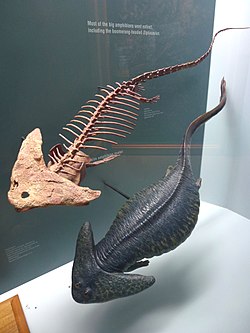
Picture of Diplocaulus
- Source
- Wikipedia/Commons
- Credit
- Camelops
- Licence
- CC BY-SA 4.0
- Commercial use
- the licence allows it
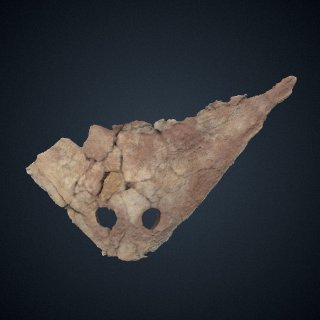
3D scan
- Source
- Smithsonian
- Licence
- CC0 — this site’s default, not the record’s
- Commercial use
- the licence allows it
- Specimen
- Diplocaulus magnicornis

Synchrotron Imaging scan
- Source
- MorphoSource
- Licence
- In Copyright
- Commercial use
- cannot be read from the licence given — check the record
- Specimen
- Diplocaulus magnicornis · AMNH:FARB:4511
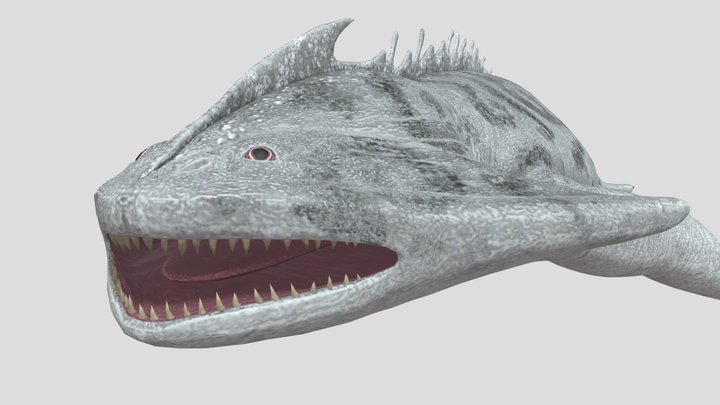
The description on this site
- Source
- Wikipedia, “Diplocaulus”
- Licence
- CC BY-SA 4.0
This is what the site found, which is not the same as what exists.
Keep going
What may have been alongside itDiplocaulidae through timeFormations of the PermianThe world it lived on
Occurrence data from the Paleobiology Database, CC BY 4.0. Cope 1877