Cyclocardia (Cyclocardia)
No picture of Cyclocardia (Cyclocardia) was found. Wikipedia, Wikidata and iDigBio were searched and had none. Smithsonian Open Access did not answer, so this is what the others held rather than everything there is. GBIF was asked, and what came back is not recorded: nothing, or a picture this site could not tie to Cyclocardia (Cyclocardia), or no answer at all. This entry cannot say which.
On record
Recorded, not inferred- Sits inside
- CyclocardiaPBDB
- Diet
- suspension feederPBDB, for Cyclocardia
- Life habit
- semi-infaunalPBDB, for Cyclocardia
- Motility
- facultatively mobilePBDB, for Cyclocardia
- Vision
- blindPBDB, for Crassatelloidea
- Environment
- marinePBDB, for Crassatelloidea
Time the record covers
At least 23 million years on record.
The record covers at least 27.3 Mya to 3.6 Mya. No occurrence read is dated outside 33.9 Mya to 2.58 Mya.
17 occurrences of Cyclocardia (Cyclocardia) on record, most of them in the Oligocene. The Paleobiology Database records this as a living group, and the chart stops with its fossils rather than at the present. Bar height is expected occurrences, not a count: each fossil is spread across the span it is dated to, so a tall narrow bar means tight dating and a low wide one means loose.
When
17 occurrencesThese are dates about fossils, not the animal: the record can only begin after it arose and end before it died out, so either end may reach further. Shares are expected occurrences: a fossil dated to a span is counted partly in each period it straddles. More on what this infers.
Found in
10 formations
- Lillo Formation4
- Monterey Formation2
- Branden Clay Formation2
- Breda Formation2
- Marrowstone Formation2
- Pittsburg Bluff Formation1
Loading coastlines…
The named rock units Cyclocardia (Cyclocardia) has been recovered from, largest first. Drawn where the rock is now, not where it formed.
Cyclocardia (Cyclocardia) and its relatives
OligoceneWhere Cyclocardia (Cyclocardia) and its relatives were recorded in the Oligocene.
Found in the same rock
425 taxa- Acamptogenotia3 sites
- Anachis (Costoanachis)3 sites
- Astarte (Astarte)3 sites
- Astarte (Astarte) radiata3 sites
- Asthenotoma3 sites
- Babylonella3 sites
- Calliostoma (Ampullotrochus)3 sites
- Calyptraea chinensis3 sites
- Circulus3 sites
- Cirsotrema3 sites
- Conus (Conolithes)3 sites
- Cuspidaria (Cuspidaria)3 sites
- Cylichna (Cylichna)3 sites
- Epitonium frondiculum3 sites
- Eulima3 sites
- Eulimella3 sites
- Euspira helicina protracta3 sites
- Favriella3 sites
- Gemmula (Gemmula)3 sites
- Glossus (Glossus)3 sites
- Goodallia (Goodallia) angulata3 sites
- Laevicardium (Habecardium) dingdense3 sites
- Limacina valvatina3 sites
- Limopsis (Limopsis) aurita3 sites
The Paleobiology Database records 6 sites for Cyclocardia (Cyclocardia), and this reads all of them. The number is how many of those sites it was catalogued from too. The 24 sharing the most are listed.
This is not a list of everything alive at the time. It is only what has come out of the same ground as this animal and been written down.
Entered from
8 references- The Neogene Bivalvia (Heterodonta and Anomalodesmata) and Scaphopoda from Kallo and Doel (Oost Vlaanderen, Belgium)5
- The molluscan fauna of the late Oligocene Branden Clay, Denmark3
- The mollusc fauna of the Stemerdink Bed (Miocene, Reinbekian) from outcrops in the Slinge brook at Winterswijk-Brinkheurne (The Netherlands, province of Gelderland)2
- Stratigraphy, paleontology, and geology of the Central Santa Cruz Mountains, California Coast Ranges2
- Megafaunal zones of the Oligocene of northwestern Washington2
- Die molluskenfauna (Hermmorium, Untermiozän) aus der Kiesgrube kirnke bei Werder (Nordwest-Niedersachsen)1
- The Marine Gram Formation at Gram, Denmark: Late Miocene Geology and Palaeontology1
- Oligocene marine mollusks from the Pittsburg Bluff Formation in Oregon1
Each of the 17 occurrences read was entered from one of these publications, ordered by how many each accounts for. This is not a search for papers mentioning the name. Entries link to doi.org where the Paleobiology Database holds an identifier, and to its own record where it does not. Relayed as the Paleobiology Database holds them, not checked against what they resolve to.
Media and terms
Media content1
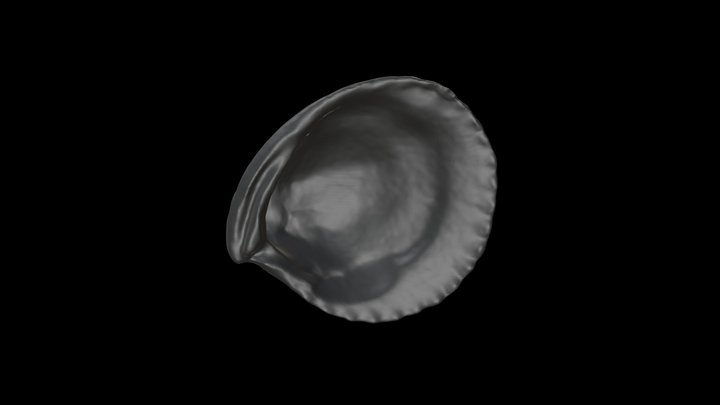
3D model
- Source
- Sketchfab
- Credit
- WesternScienceCenter
- Licence
- CC0 Public Domain
- Commercial use
- the licence allows it
No picture of Cyclocardia (Cyclocardia) was found. Wikipedia, Wikidata and iDigBio were searched and had none.
Smithsonian Open Access did not answer, so this is what the others held rather than everything there is.
GBIF was asked, and what came back is not recorded: nothing, or a picture this site could not tie to Cyclocardia (Cyclocardia), or no answer at all. This entry cannot say which.
Smithsonian Open Access and MorphoSource were not reached for this taxon, so this list is what the others held rather than everything there is.
This is what the site found, which is not the same as what exists.
Keep going
What may have been alongside itCyclocardia through timeFormations of the OligoceneThe world it lived on
Occurrence data from the Paleobiology Database, CC BY 4.0. Conrad 1867