Craspedites

Vassil · CC0 · via Wikidata/Commons. May be a photograph of a specimen, or an artist’s reconstruction — an interpretation of a skeleton, since colour and soft tissue are almost never preserved.
On record
Recorded, not inferred- Sits inside
- CraspeditidaePBDB
- Diet
- carnivorePBDB, for Ammonoidea
- Life habit
- nektonicPBDB, for Ammonoidea
- Motility
- fast-movingPBDB, for Ammonoidea
- Vision
- well-developedPBDB, for Cephalopoda
- Environment
- marinePBDB, for Cephalopoda
Time the record covers
At least 6.1 million years on record.
The record covers at least 149.2 Mya to 143.1 Mya. No occurrence read is dated outside 154.8 Mya to 137.05 Mya.
123 occurrences of Craspedites on record, most of them in the Late Jurassic. Bar height is expected occurrences, not a count: each fossil is spread across the span it is dated to, so a tall narrow bar means tight dating and a low wide one means loose.
When
123 occurrencesThese are dates about fossils, not the animal: the record can only begin after it arose and end before it died out, so either end may reach further. Shares are expected occurrences: a fossil dated to a span is counted partly in each period it straddles. More on what this infers.
Found in
6 formations
- Paksa Formation7
- Hajar Formation2
- Lower Sandstone Formation1
- Ladegardsaen Formation1
- Monteith Formation1
- Agardhfjellet Formation1
Loading coastlines…
The named rock units Craspedites has been recovered from, largest first. Drawn where the rock is now, not where it formed. 110 occurrences have no formation on record, which is common for older literature.
Craspedites and its relatives
Late JurassicWhere Craspedites and its relatives were recorded in the Late Jurassic.
Found in the same rock
70 taxa- Buchia6 sites
- Aequipecten4 sites
- Cristellaria (Marginulina)4 sites
- Decapoda4 sites
- Haplophragmoides4 sites
- Lenticulina4 sites
- Saracenaria4 sites
- Trochammina4 sites
- Buchia fischeriana3 sites
- Buchia volgensis3 sites
- Chetaites3 sites
- Dentalina3 sites
- Garniericeras3 sites
- Geinitzinita3 sites
- Lima3 sites
- Nucula3 sites
- Recurvoides3 sites
- Subcraspedites3 sites
- Ammobaculites2 sites
- Ammodiscus2 sites
- Buchia terebratuloides2 sites
- Cylindroteuthis porrectiformis2 sites
- Gaudryina2 sites
- Lagonibelus2 sites
The Paleobiology Database records 16 sites for Craspedites, and this reads all of them. The number is how many of those sites it was catalogued from too. The 24 sharing the most are listed.
This is not a list of everything alive at the time. It is only what has come out of the same ground as this animal and been written down.
Entered from
8 references- Jurassic deposits of the southern part of the Moscow syneclyse and their fauna94
- The Jurassic-Cretaceous Boundary and the Berriasian Stage in the Boreal Realm14
- The Upper Jurassic of the Volga basin: ammonites biostratigraphy and correlations with standard European zonations9
- The Jurassic and Lower Cretaceous of Wadi Hajar, southern Yemen2
- Jurassic-Cretaceous boundary of the extreme Arctic (Peary Land, North Greenland)1
- Macrofossil zones of the marine Cretaceous of the Western Interior of Canada and their correlation with the zones and stages of Europe and the Western Interior of the United States1
- Upper Jurassic and Lower Cretaceous rocks, west flank of Richardson Mountains between the headwaters of Blow River and Bell RIver, Yukon Territory1
- Das Festungsprofil auf Spitzbergen1
Each of the 123 occurrences read was entered from one of these publications, ordered by how many each accounts for. This is not a search for papers mentioning the name. Entries link to doi.org where the Paleobiology Database holds an identifier, and to its own record where it does not. Relayed as the Paleobiology Database holds them, not checked against what they resolve to.
Media and terms
Media content2
Picture of Craspedites
- Source
- Wikidata/Commons
- Credit
- Vassil
- Licence
- CC0
- Commercial use
- the licence allows it
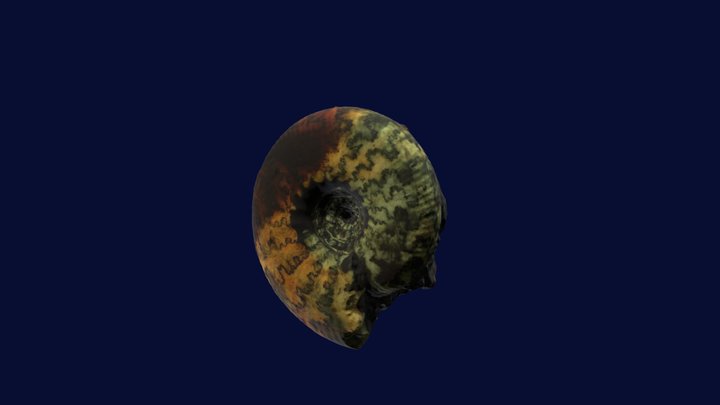
3D model
- Source
- Sketchfab
- Credit
- Shellie Luallin
- Licence
- CC Attribution
- Commercial use
- cannot be read from the licence given — check the record
Smithsonian Open Access and MorphoSource were not reached for this taxon, so this list is what the others held rather than everything there is.
This is what the site found, which is not the same as what exists.
Keep going
What may have been alongside itCraspeditidae through timeFormations of the Late JurassicThe world it lived on
Occurrence data from the Paleobiology Database, CC BY 4.0.