Coralliochama
via iDigBio · CC BY · via iDigBio. May be a photograph of a specimen, or an artist’s reconstruction — an interpretation of a skeleton, since colour and soft tissue are almost never preserved.
On record
Recorded, not inferred- Sits inside
- PlagioptychidaePBDB
- Diet
- suspension feederPBDB, for Hippuritida
- Life habit
- intermediate-level epifaunal, gregariousPBDB, for Hippuritida
- Motility
- stationary, attachedPBDB, for Hippuritida
- Vision
- blindPBDB, for Bivalvia
- Environment
- marinePBDB, for Hippuritida
Time the record covers
At least 11 million years on record.
The record covers at least 83.6 Mya to 72.2 Mya. No occurrence read is dated outside 85.7 Mya to 66 Mya.
14 occurrences of Coralliochama on record, most of them in the Late Cretaceous. Bar height is expected occurrences, not a count: each fossil is spread across the span it is dated to, so a tall narrow bar means tight dating and a low wide one means loose.
When
14 occurrences- Late Cretaceous100%
These are dates about fossils, not the animal: the record can only begin after it arose and end before it died out, so either end may reach further. Shares are expected occurrences: a fossil dated to a span is counted partly in each period it straddles. More on what this infers.
Found in
9 formations
- Angostura Formation2
- Cardenas Formation1
- Mendez Formation1
- Pigeon Point Formation1
- Point Loma Formation1
- Williams Formation1
Loading coastlines…
The named rock units Coralliochama has been recovered from, largest first. Drawn where the rock is now, not where it formed. 4 occurrences have no formation on record, which is common for older literature.
Coralliochama and its relatives
Late CretaceousWhere Coralliochama and its relatives were recorded in the Late Cretaceous.
Found in the same rock
209 taxa- Biradiolites4 sites
- Bournonia4 sites
- Crassatella4 sites
- Tampsia4 sites
- Fimbria3 sites
- Mitrocaprina3 sites
- Spondylus subnodosus3 sites
- Titanosarcolites3 sites
- Trechmannites rudissimus3 sites
- Acila (Truncacila) demessa2 sites
- Alencasterites mooretownensis2 sites
- Ampullina2 sites
- Anomia2 sites
- Antillocaprina2 sites
- Antillocaprina trilobata2 sites
- Barrettia2 sites
- Calva2 sites
- Calva (Calva) peninsularis2 sites
- Camptonectes2 sites
- Chiapasella radiolitiformis2 sites
- Corbicula astartoides2 sites
- Durania2 sites
- Etea2 sites
- Gastrochaena2 sites
The Paleobiology Database records 13 sites for Coralliochama, and this reads all of them. The number is how many of those sites it was catalogued from too. The 24 sharing the most are listed.
This is not a list of everything alive at the time. It is only what has come out of the same ground as this animal and been written down.
Entered from
12 references- Unpublished data on Cretaceous-Paleocene molluscan assemblages2
- Anatomy and evolution of the inner perimeter ridge (sites 874 and 877) of a Campanian-Maastrichtian atoll-like structure (Wodejebato Guyot, Marshall Islands)2
- A New Species Of Late Cretaceous (Campanian) Cypraeid Gastropod, Santa Ana Mountains, Southern California and New Records of California Cretaceous Cypraeids1
- Rudists of Mexico: Historical Aspects and Selected Areas of Research1
- Rudistas del Cretácico superior del Centro al Sureste de México (Recuento sistemático de rudistas americanos)1
- Depositional environment of coral-rudist associations in the Upper Cretaceous Cardenas Formation (central Mexico)1
- New Late Cretaceous gastropods from the Pacifc slope of North America1
- Antillocaprina trilobata nov. sp. and upper Cretaceous associated fauna from Chiapas, Southeast Mexico1
- Paleogeographic implications of molluscan assemblages in the Upper Cretaceous (Campanian) Pigeon Point Formation, California1
- The Paleontology of the Cabrillo Formation1
- Upper Cretaceous of the Pacific Coast1
- Un reptil y algunos invertebrados fosiles de Rayon, Estado de Tamaulipas [A reptile and some invertebrate fossils from Rayon, Tamaulipas state]1
Each of the 14 occurrences read was entered from one of these publications, ordered by how many each accounts for. This is not a search for papers mentioning the name. Entries link to doi.org where the Paleobiology Database holds an identifier, and to its own record where it does not. Relayed as the Paleobiology Database holds them, not checked against what they resolve to.
Media and terms
Media content2
Picture of Coralliochama
- Source
- iDigBio
- Credit
- via iDigBio
- Licence
- CC BY
- Commercial use
- the licence allows it
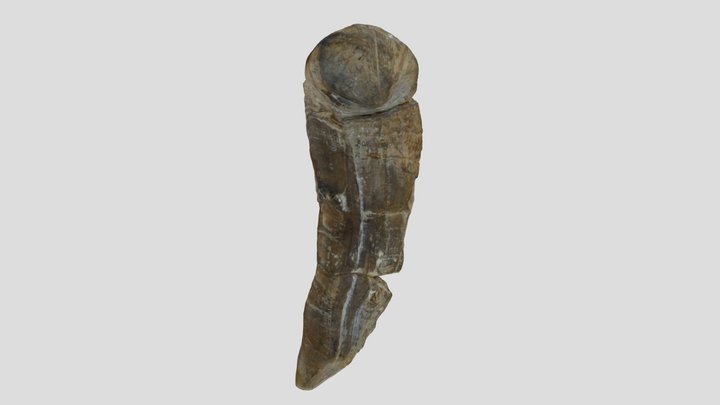
3D model
- Source
- Sketchfab
- Licence
- CC Attribution-NonCommercial
- Commercial use
- the licence does not allow it
Smithsonian Open Access and MorphoSource were not reached for this taxon, so this list is what the others held rather than everything there is.
This is what the site found, which is not the same as what exists.
Keep going
What may have been alongside itPlagioptychidae through timeFormations of the Late CretaceousThe world it lived on
Occurrence data from the Paleobiology Database, CC BY 4.0. White 1885