Clupea
Clupea is a genus of planktivorous bony fish belonging to the family Clupeidae, commonly known as herrings. They are found in the shallow, temperate waters of the North Pacific and the North Atlantic oceans, including the Baltic Sea. Two main species of Clupea are currently recognized: the Atlantic herring and the Pacific herring, which have each been divided into subspecies. Herrings are forage fish moving in vast schools, coming in spring to the shores of Europe and America, where they form important commercial fisheries.

Unknown author Unknown author · Public Domain · via Wikipedia/Commons. May be a photograph of a specimen, or an artist’s reconstruction — an interpretation of a skeleton, since colour and soft tissue are almost never preserved.
On record
Recorded, not inferred- Sits inside
- ClupeidaePBDB
- Diet
- carnivorePBDB, for Clupeiformes
- Life habit
- nektonicPBDB, for Clupeiformes
- Motility
- actively mobilePBDB, for Clupeiformes
Time the record covers
At least 93 million years on record.
The record covers at least 93.9 Mya to 11.7 ka. No occurrence read is dated outside 143.1 Mya to 0 Mya.
54 occurrences of Clupea on record, most of them in the Miocene. The Paleobiology Database records this as a living group. Bar height is expected occurrences, not a count: each fossil is spread across the span it is dated to, so a tall narrow bar means tight dating and a low wide one means loose.
When
54 occurrences- Early Cretaceousunder 1%
- Late Cretaceous10%
- Paleocene2%
- Eoceneunder 1%
- Oligocene25%
- Miocene53%
- Plioceneunder 1%
- Pleistocene7%
- Holocene2%
These are dates about fossils, not the animal: the record can only begin after it arose and end before it died out, so either end may reach further. Shares are expected occurrences: a fossil dated to a span is counted partly in each period it straddles. More on what this infers.
Found in
17 formations
- Viso Formation1
- Rupel Formation1
- Kidong Formation · Myongchon Group1
- Menilite Formation1
- Modelo Formation1
- Monterey Formation1
Loading coastlines…
The named rock units Clupea has been recovered from, largest first. Drawn where the rock is now, not where it formed. 37 occurrences have no formation on record, which is common for older literature.
Clupea and its relatives
MioceneWhere Clupea and its relatives were recorded in the Miocene.
Found in the same rock
735 taxa- Anenchelum glarisianum5 sites
- Diaphus debilis5 sites
- Maicopiella longimana5 sites
- Capros radobojanus4 sites
- Dentex nobilis4 sites
- Palaeogadus4 sites
- Raja4 sites
- Teleostei4 sites
- Alosa sculptata3 sites
- Citharichthys sordidus3 sites
- Citharichthys stigmaeus3 sites
- Cottidae3 sites
- Cymatogaster aggregata3 sites
- Engraulis mordax3 sites
- Galeorhinus galeus3 sites
- Genyonemus lineatus3 sites
- Glyptocephalus zachirus3 sites
- Gobius3 sites
- Leptocottus armatus3 sites
- Lycodes pacificus3 sites
- Merluccius merluccius3 sites
- Microgadus proximus3 sites
- Micromestius cognatus3 sites
- Porichthys notatus3 sites
The Paleobiology Database records 39 sites for Clupea, and this reads all of them. The number is how many of those sites it was catalogued from too. The 24 sharing the most are listed.
This is not a list of everything alive at the time. It is only what has come out of the same ground as this animal and been written down.
Entered from
36 references- Ricerche sui Pesci Fossili di Chiavòn (Strati di Sotzka -- Miocene Inferiore)9
- Fauna Fosila din Oligocenul de la Piatra Neamt4
- Les otolithes des téléostéens de l'oligo-miocène Belge3
- New taxonomic synopses and revision of the scombroid fishes (Scombroidei, Perciformes), including billfishes, from the Cenozoic of territories of the former USSR2
- Fischotolithen aus dem Obermiozän von Hohen Woos2
- Die fossile fauna und flora aus dem Oligozan von Suslanesti-Muscel in Rumanien2
- Vorläufige mitteilung über eine fossile fischfauna aus den Oligozänschiefern von Sulanesti, Muscel2
- Synopsis des poissons tertiaires de Licata2
- A new Miocene herring, Clupea macrocephala, from Sakaki Town, Hanishina County, Nagano, Japan1
- Oligaeschna kvaceki sp. nov., a new fossil dragonfly (Odonata: Aeshnidae) from the middle Oligocene sediments of Northern Moravia (Western Carpathians)1
- Volhynian (early Sarmatian sensu lato) fishes from Tsurevsky, North Caucasus, Russia1
- Données récentes sur Les téléostéens du Miocène et du Pliocéne d'Italie1
Each of the 54 occurrences read was entered from one of these publications, ordered by how many each accounts for. This is not a search for papers mentioning the name. 24 further references are not listed. Entries link to doi.org where the Paleobiology Database holds an identifier, and to its own record where it does not. Relayed as the Paleobiology Database holds them, not checked against what they resolve to.
Media and terms
Media content2

Picture of Clupea
- Source
- Wikipedia/Commons
- Credit
- Unknown author Unknown author
- Licence
- Public Domain
- Commercial use
- the licence allows it
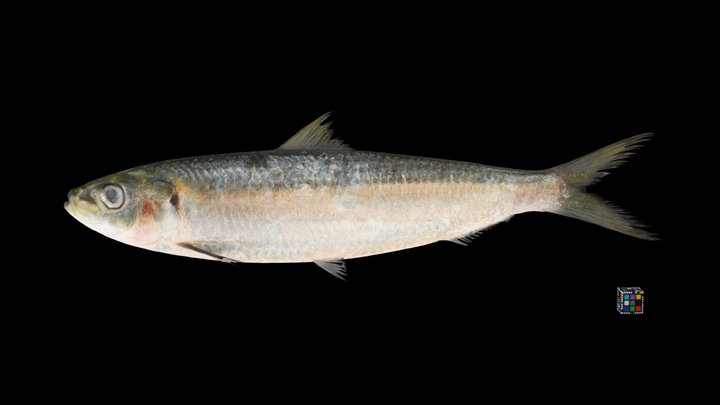
3D model
- Source
- Sketchfab
- Licence
- CC0 Public Domain
- Commercial use
- the licence allows it
Smithsonian Open Access and MorphoSource were not reached for this taxon, so this list is what the others held rather than everything there is.
The description on this site
- Source
- Wikipedia, “Clupea”
- Licence
- CC BY-SA 4.0
This is what the site found, which is not the same as what exists.
Keep going
What may have been alongside itClupeidae through timeFormations of the MioceneThe world it lived on
Occurrence data from the Paleobiology Database, CC BY 4.0. Linnaeus 1758