Cheirolepidiaceae
Cheirolepidiaceae is an extinct family of conifers in the pine order, Pinales. They first appeared in the Triassic, and were a diverse and common group of conifers during most of the Mesozoic era, primarily at low latitudes, where they often formed a dominant element of the vegetation. They are united by the possession of a distinctive pollen type assigned to the form genus Classopollis The name Frenelopsidaceae or "frenelopsids" has been used for a group of Cheirolepidiaceae with jointed stems, thick internode cuticles, sheathing leaf bases and reduced free leaf tips. The leaf morphology has been noted as being similar to that of halophyte Salicornia. Several members of the family appear to have been adapted for semi-arid and coastal settings, with a high tolerance of saline conditions. Cheirolepidiaceae disappeared from most regions of the world during the Cenomanian-Turonian stages of the Late Cretaceous, but reappeared in South America during the Maastrichtian, the final stage of the Cretaceous, increasing in abundance after the K-Pg extinction and being a prominent part of the regional flora during the Paleocene, before going extinct. Survival into the Paleocene in North America and China has also been suggested based on pollen. However recent studies suggest those records, or some of them, are in reality reworked specimens from Cretaceous facies.

Lutz Kunzmann, Barbara A. R. Mohr, Mary E. C. Bernardes-de-Oliveira & Volker Wilde · CC BY 4.0 · via Wikipedia/Commons. May be a photograph of a specimen, or an artist’s reconstruction — an interpretation of a skeleton, since colour and soft tissue are almost never preserved.
On record
Recorded, not inferred- Sits inside
- PinidaePBDB
- Diet
- "photoautotroph"PBDB, for Streptophyta
Time the record covers
At least 203 million years on record.
The record covers at least 251.902 Mya to 48.07 Mya. No occurrence read is dated outside 259.857 Mya to 5.333 Mya.
1,074 occurrences of Cheirolepidiaceae on record, most of them in the Early Cretaceous. Bar height is expected occurrences, not a count: each fossil is spread across the span it is dated to, so a tall narrow bar means tight dating and a low wide one means loose.
When
1,074 occurrences- Permianunder 1%
- Middle Triassicunder 1%
- Late Triassic1%
- Early Jurassic3%
- Middle Jurassic2%
- Late Jurassic8%
- Early Cretaceous48%
- Late Cretaceous28%
- Paleocene8%
- Eoceneunder 1%
- Oligoceneunder 1%
- Mioceneunder 1%
These are dates about fossils, not the animal: the record can only begin after it arose and end before it died out, so either end may reach further. Shares are expected occurrences: a fossil dated to a span is counted partly in each period it straddles. More on what this infers.
Found in
150 formations
- Riachuelo Formation118
- Bima Formation · Bornu Basin Group36
- Agua Doce Formation36
- Fort Union Formation36
- Muribeca Formation32
- Burg El-Arab Formation24
Loading coastlines…
The named rock units Cheirolepidiaceae has been recovered from, largest first. Drawn where the rock is now, not where it formed. 126 further formations hold fewer occurrences each and are not listed. 191 occurrences have no formation on record, which is common for older literature.
Cheirolepidiaceae and its relatives
Early CretaceousWhere Cheirolepidiaceae and its relatives were recorded in the Early Cretaceous.
Found in the same rock
1,162 taxa- Classopollis106 sites
- Afropollis jardinus64 sites
- Tricolpites57 sites
- Retimonocolpites55 sites
- Cicatricosisporites54 sites
- Inaperturopollenites50 sites
- Ephedripites47 sites
- Cupressinocladus45 sites
- Deltoidospora45 sites
- Eucommiidites43 sites
- Classopollis classoides42 sites
- Concavisporites42 sites
- Callialasporites dampieri41 sites
- Cycadopites40 sites
- Araucariacites38 sites
- Brachyphyllum38 sites
- Ephedripites multicostatus36 sites
- Araucariacites australis35 sites
- Verrucosisporites34 sites
- Callialasporites trilobatus32 sites
- Concavissimisporites31 sites
- Cicatricosisporites hallei29 sites
- Classopollis brasiliensis29 sites
- Cladophlebis28 sites
The Paleobiology Database records 628 sites for Cheirolepidiaceae, and this reads 240 of them. The number is how many of those sites it was catalogued from too. The 24 sharing the most are listed.
This is not a list of everything alive at the time. It is only what has come out of the same ground as this animal and been written down.
Entered from
165 references- Paleoenvironmental reconstruction based on palynological and palynofacies analyses of the Aptian-Albian succession in the Sergipe Basin, northeastern Brazil150
- Palynology of the Albian-Cenomanian strata of Borehole 1-QS-1-MA, State of Maranhao, Brazil72
- Jurassic-Cretaceous (Bathonian to Cenomanian) palynology and stratigraphy of the West Tiba-1 borehole, northern Western Desert, Egypt50
- Palynology of the Middle and Upper Cretaceous strata in Brazil49
- Palynological Investigation of the Albian to Lower Cenomanian Bima Formation, Bornu Basin, Nigeria42
- Palynozonation of the Cretaceous to Lower Paleogene Strata of the Muglad Basin, Sudan39
- Palynological data from the Fort Union and Wasatch formations, Powder River basin, Wyoming and Montana34
- Palynological composition of a Lower Cretaceous South American tropical sequence: Climatic implications and diversity comparisons with other latitudes33
- Kerogen and palynomorph analyses of the mid-Cretaceous Bahariya Formation and Abu Roash “G” Member, North Western Desert, Egypt31
- Palynostratigraphy from the Allen and Jagüel formations at the Cerro Gutiérrez locality, Lago Pellegrini area, South Argentina24
- Palynology of the Cenomanian of Bathurst Island, Northern Territory, Australia23
- Aptian-Maastrichtian palynomorphs from the offshore Tano Basin, western Ghana22
Each of the 1,074 occurrences read was entered from one of these publications, ordered by how many each accounts for. This is not a search for papers mentioning the name. 153 further references are not listed. Entries link to doi.org where the Paleobiology Database holds an identifier, and to its own record where it does not. Relayed as the Paleobiology Database holds them, not checked against what they resolve to.
Media and terms
Media content2

Picture of Cheirolepidiaceae
- Source
- Wikipedia/Commons
- Credit
- Lutz Kunzmann, Barbara A. R. Mohr, Mary E. C. Bernardes-de-Oliveira & Volker Wilde
- Licence
- CC BY 4.0
- Commercial use
- the licence allows it
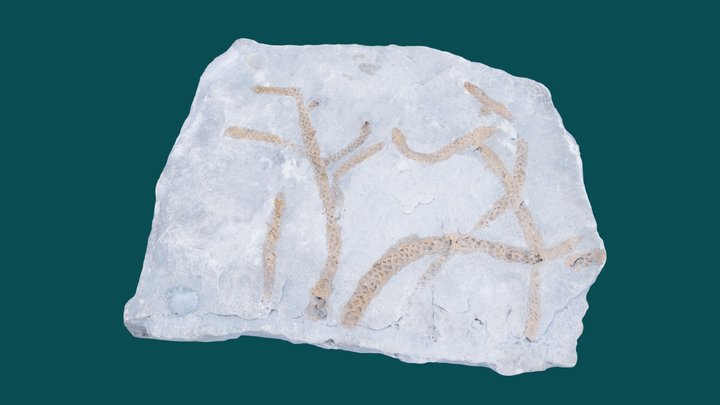
3D model
- Source
- Sketchfab
- Licence
- CC Attribution-NonCommercial-ShareAlike
- Commercial use
- the licence does not allow it
Smithsonian Open Access and MorphoSource were not reached for this taxon, so this list is what the others held rather than everything there is.
The description on this site
- Licence
- CC BY-SA 4.0
This is what the site found, which is not the same as what exists.
Keep going
What may have been alongside itPinidae through timeFormations of the Early CretaceousThe world it lived on
Occurrence data from the Paleobiology Database, CC BY 4.0. Turutanova-Ketova 1963