Camerisma

via iDigBio · CC0 · via iDigBio. May be a photograph of a specimen, or an artist’s reconstruction — an interpretation of a skeleton, since colour and soft tissue are almost never preserved.
On record
Recorded, not inferred- Sits inside
- StenoscismatinaePBDB
- Diet
- suspension feederPBDB, for Rhynchonellida
- Life habit
- epifaunalPBDB, for Rhynchonellida
- Motility
- stationaryPBDB, for Rhynchonellida
- Vision
- blindPBDB, for Rhynchonellata
- Environment
- marinePBDB, for Lophophorata
Time the record covers
At least 56 million years on record.
The record covers at least 323.4 Mya to 266.9 Mya. No occurrence read is dated outside 358.86 Mya to 264.28 Mya.
27 occurrences of Camerisma on record, most of them in the Permian. Bar height is expected occurrences, not a count: each fossil is spread across the span it is dated to, so a tall narrow bar means tight dating and a low wide one means loose.
When
27 occurrences- Carboniferous26%
- Permian74%
These are dates about fossils, not the animal: the record can only begin after it arose and end before it died out, so either end may reach further. Shares are expected occurrences: a fossil dated to a span is counted partly in each period it straddles. More on what this infers.
Found in
7 formations
- Callytharra Formation11
- Kizildjilginskii Formation3
- Dolzanova Soteska Formation2
- Zhesi Formation2
- Rechitsy Formation1
- Buttle Lake Formation1
Loading coastlines…
The named rock units Camerisma has been recovered from, largest first. Drawn where the rock is now, not where it formed. 6 occurrences have no formation on record, which is common for older literature.
Camerisma and its relatives
PermianWhere Camerisma and its relatives were recorded in the Permian.
Found in the same rock
243 taxa- Calcitornella11 sites
- Cimmeriella foordi11 sites
- Cleiothyridina11 sites
- Etherilosia etheridgei11 sites
- Geinitzina11 sites
- Koenigoria neoaustralis11 sites
- Lamnaespina papilionata11 sites
- Neochonetes (Sommeriella) pratti11 sites
- Protonodosaria11 sites
- Sansabaina11 sites
- Spiriferella hoskingae11 sites
- Spiroplectammina11 sites
- Taeniothaerus11 sites
- Trochammina11 sites
- Vervilleina11 sites
- Ammodiscus10 sites
- Cleiothyridina ovalis10 sites
- Calceolispongia9 sites
- Camptocrinus9 sites
- Hemigordius9 sites
- Placopsilina9 sites
- Tezaquina9 sites
- Trepeilopsis9 sites
- Callytharrella callytharrensis8 sites
The Paleobiology Database records 26 sites for Camerisma, and this reads all of them. The number is how many of those sites it was catalogued from too. The 24 sharing the most are listed.
This is not a list of everything alive at the time. It is only what has come out of the same ground as this animal and been written down.
Entered from
7 references- Foraminifera and their habitats within a cool-water carbonate succession following glaciation, Early Permian (Sakmarian), Western Australia11
- Middle- and Late Carboniferous Stenoscismatacea (Brachiopoda) of the Moscow syneclise.5
- The brachiopod superfamily Stenoscismatacea4
- Permian Brachiopoda of the Pamir3
- Permian strata and brachiopods from Xiujimqinqi region of Neimongol (Inner Mongolia) autonomous region, China2
- Brakhiopody nizhney Permi i iz znachenie dlya stratigrahii vostochno-Ukrainskogo Neftegazonosnogo basseyna1
- An Early Permian fauna from Vancouver Island, British Columbia1
Each of the 27 occurrences read was entered from one of these publications, ordered by how many each accounts for. This is not a search for papers mentioning the name. Entries link to doi.org where the Paleobiology Database holds an identifier, and to its own record where it does not. Relayed as the Paleobiology Database holds them, not checked against what they resolve to.
Media and terms
Media content2
Picture of Camerisma
- Source
- iDigBio
- Credit
- via iDigBio
- Licence
- CC0
- Commercial use
- the licence allows it
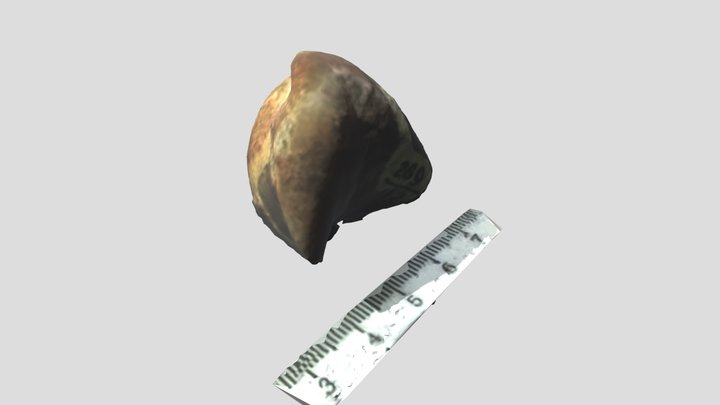
Smithsonian Open Access and MorphoSource were not reached for this taxon, so this list is what the others held rather than everything there is.
This is what the site found, which is not the same as what exists.
Keep going
What may have been alongside itStenoscismatinae through timeFormations of the PermianThe world it lived on
Occurrence data from the Paleobiology Database, CC BY 4.0. Grant 1965