Balaenoptera borealis
The sei whale is a baleen whale. It is one of ten rorqual species, and the third-largest member after the blue and fin whales. It can grow to 19.5 m (64 ft) in length and weigh as much as 28 t. Two subspecies are recognized: B. b. borealis and B. b. schlegelii. The whale's ventral surface has sporadic markings ranging from light grey to white, and its body is usually dark steel grey in colour. It is among the fastest of all cetaceans, and can reach speeds of up to 50–55 km/h (31–34 mph) over short distances.

Christin Khan , NOAA / NEFSC · Public Domain · via Wikipedia/Commons. May be a photograph of a specimen, or an artist’s reconstruction — an interpretation of a skeleton, since colour and soft tissue are almost never preserved.
On record
Recorded, not inferred- Also called
- sei whalePBDB
- Sits inside
- BalaenopteraPBDB
- Diet
- suspension feederPBDB, for Balaenopteridae
- Life habit
- aquaticPBDB, for Mysticeti
- Motility
- actively mobilePBDB, for Cetacea
- Environment
- marinePBDB, for Mysticeti
Time the record covers
At least 11 million years on record.
The record covers at least 11.63 Mya to 11.7 ka. No occurrence read is dated outside 15.98 Mya to 0 Mya.
9 occurrences of Balaenoptera borealis on record. The Paleobiology Database records this as a living group. Bar height is expected occurrences, not a count: each fossil is spread across the span it is dated to, so a tall narrow bar means tight dating and a low wide one means loose.
When
9 occurrences- Miocene11%
- Pliocene11%
- Pleistocene33%
- Holocene44%
These are dates about fossils, not the animal: the record can only begin after it arose and end before it died out, so either end may reach further. Shares are expected occurrences: a fossil dated to a span is counted partly in each period it straddles. More on what this infers.
Found in
3 formations
Loading coastlines…
The named rock units Balaenoptera borealis has been recovered from, largest first. Drawn where the rock is now, not where it formed. 6 occurrences have no formation on record, which is common for older literature.
Found in the same rock
18 taxa- Anadara1 site
- Aptenodytes forsteri1 site
- Balaena mysticetus1 site
- Balaenoptera physalus1 site
- Crassostrea1 site
- Diomedea exulans1 site
- Fulmarus glacialoides1 site
- Leptonychotes weddellii1 site
- Lobodon carcinophaga1 site
- Macoma (Macoma) incongrua1 site
- Macronectes giganteus1 site
- Ocadia1 site
- Oceanites oceanicus1 site
- Orcinus orca1 site
- Pagodroma nivea1 site
- Pygoscelis adeliae1 site
- Stercorarius antarcticus1 site
- Thalassoica antarctica1 site
The Paleobiology Database records 9 sites for Balaenoptera borealis, and this reads all of them. The number is how many of those sites it was catalogued from too.
This is not a list of everything alive at the time. It is only what has come out of the same ground as this animal and been written down.
Entered from
6 references- A list of fossil cetaceans in Japan3
- Determining the ages of sub-fossil cetacean remains, found in the Carse of Stirling, Scotland2
- Holocene environmental changes and the seal (Phocidae) fauna of the Baltic Sea: coming, going and staying1
- Marine mammal strandings in the New Caledonia region, Southwest Pacific1
- Discovery of Balaenoptera cf. borealis from the Middle Miocene in the Fukushima Prefecture1
- Catalog of Living Whales1
Each of the 9 occurrences read was entered from one of these publications, ordered by how many each accounts for. This is not a search for papers mentioning the name. Entries link to doi.org where the Paleobiology Database holds an identifier, and to its own record where it does not. Relayed as the Paleobiology Database holds them, not checked against what they resolve to.
Media and terms
Media content2

Picture of Balaenoptera borealis
- Source
- Wikipedia/Commons
- Credit
- Christin Khan , NOAA / NEFSC
- Licence
- Public Domain
- Commercial use
- the licence allows it
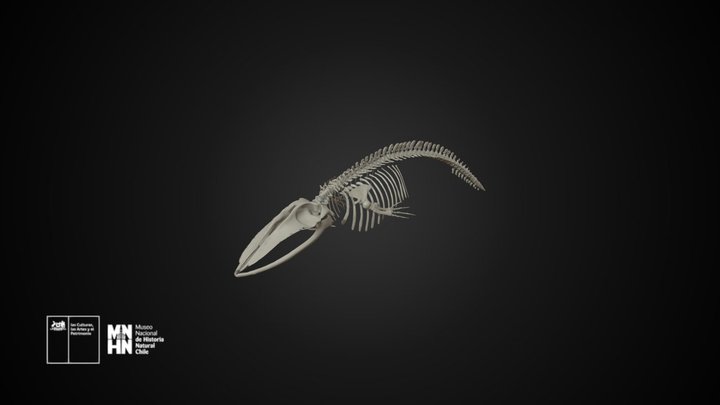
3D model
- Source
- Sketchfab
- Licence
- CC Attribution
- Commercial use
- cannot be read from the licence given — check the record
MorphoSource was not reached for this taxon, so this list is what the others held rather than everything there is.
The description on this site
- Source
- Wikipedia, “Sei whale”
- Licence
- CC BY-SA 4.0
This is what the site found, which is not the same as what exists.
Keep going
What may have been alongside itBalaenoptera through timeThe world it lived on
Occurrence data from the Paleobiology Database, CC BY 4.0. (Lesson 1828)