Astreopora listeri
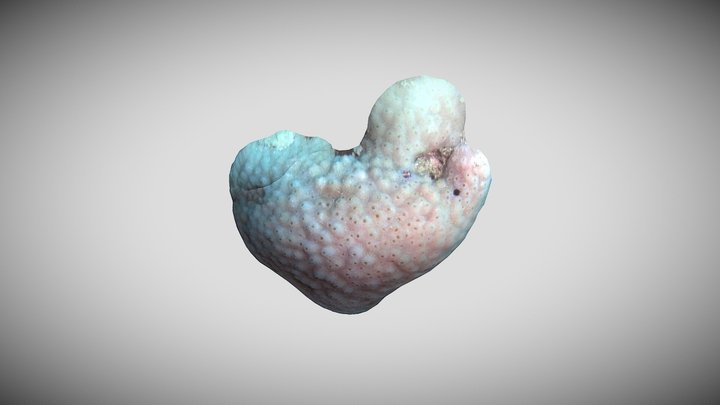
Astreopora listeri is a species of hard coral found in shallow water in the tropical Indian and Pacific Oceans. It is an uncommon species with a wide range and is tolerant of turbid water, making it more resilient than some other corals to habitat disturbance. The International Union for Conservation of Nature has assessed its conservation status as being of "least concern".

Philippe Bourjon · CC BY-SA 4.0 · via Wikipedia/Commons. May be a photograph of a specimen, or an artist’s reconstruction — an interpretation of a skeleton, since colour and soft tissue are almost never preserved.
On record
Recorded, not inferred- Sits inside
- AstreoporaPBDB
- Diet
- photosymbiotic, suspension feederPBDB, for Acroporidae
- Life habit
- colonial, clonalPBDB, for Acroporidae
- Motility
- stationary, attachedPBDB, for Scleractinia
- Vision
- blindPBDB, for Anthozoa
- Environment
- marinePBDB, for Scleractinia
Time the record covers
At least 2.5 million years on record.
The record covers at least 2.58 Mya to 11.7 ka. No occurrence read is dated outside 5.333 Mya to 0 Mya.
9 occurrences of Astreopora listeri on record, most of them in the Pleistocene. The Paleobiology Database records this as a living group. Bar height is expected occurrences, not a count: each fossil is spread across the span it is dated to, so a tall narrow bar means tight dating and a low wide one means loose.
When
9 occurrences- Pliocene11%
- Pleistocene78%
- Holocene11%
These are dates about fossils, not the animal: the record can only begin after it arose and end before it died out, so either end may reach further. Shares are expected occurrences: a fossil dated to a span is counted partly in each period it straddles. More on what this infers.
Astreopora listeri and its relatives
PleistoceneWhere Astreopora listeri and its relatives were recorded in the Pleistocene.
Found in the same rock
62 taxa- Acropora4 sites
- Favia4 sites
- Porites4 sites
- Galaxea fascicularis2 sites
- Isopora palifera2 sites
- Platygyra lamellina2 sites
- Pocillopora2 sites
- Acanthastrea1 site
- Acanthastrea echinata1 site
- Acropora hyacinthus1 site
- Alveopora daedalea1 site
- Alveopora verrilliana1 site
- Astreopora profunda1 site
- Balanophyllia oppenheimi1 site
- Caryophyllia (Caryophyllia)1 site
- Cyphastrea cymotoma1 site
- Cyphastrea microphthalma1 site
- Dictyaraea anomala1 site
- Diploastrea heliopora1 site
- Dipsastraea favus1 site
- Echinopora1 site
- Euphyllia1 site
- Favia denticulata1 site
- Favia macrocalyx1 site
The Paleobiology Database records 5 sites for Astreopora listeri, and this reads all of them. The number is how many of those sites it was catalogued from too. The 24 sharing the most are listed.
This is not a list of everything alive at the time. It is only what has come out of the same ground as this animal and been written down.
Entered from
6 references- Limited membership in Pleistocene reef coral assemblages from the Huon Peninsula, Papua New Guinea: constancy during global change3
- Succession and diversity in the Pleistocene coral reefs of the Kenya Coast2
- Nearshore fringing reefs in North Queensland1
- Ecological stratification in the Pleistocene coral reefs of the Kenya coast1
- Ricerche eseguite negli anni 1941-1942 sopra i Coralli delle scogliere emerse di Massaua e Gibuti [Research done between 1941 and 1942 on emersed coral reefs of Massawa and Djibouti]1
- Die fossilen Anthozoen aus der Umgebung von Trinil [Fossil Anthozoa from Trinil area]1
Each of the 9 occurrences read was entered from one of these publications, ordered by how many each accounts for. This is not a search for papers mentioning the name. Entries link to doi.org where the Paleobiology Database holds an identifier, and to its own record where it does not. Relayed as the Paleobiology Database holds them, not checked against what they resolve to.
Media and terms
Media content2

Picture of Astreopora listeri
- Source
- Wikipedia/Commons
- Credit
- Philippe Bourjon
- Licence
- CC BY-SA 4.0
- Commercial use
- the licence allows it
The description on this site
- Licence
- CC BY-SA 4.0
This is what the site found, which is not the same as what exists.
Keep going
What may have been alongside itAstreopora through timeFormations of the PleistoceneThe world it lived on
Occurrence data from the Paleobiology Database, CC BY 4.0. Bernard 1896