Arietitidae
Arietitidae is a family of true ammonites that make up part of the superfamily Psiloceratoidea, named after the type genus Arietites. They comprise medium-size to large or gigantic genera which in general are strongly ribbed, tuberculate in some, with keeled or grooved and keeled venters, and well differentiated ammonitic sutures. The aptycus is single valved with a shiny, concentrically striated surface.

Hectonichus · CC BY-SA 3.0 · via Wikipedia/Commons. May be a photograph of a specimen, or an artist’s reconstruction — an interpretation of a skeleton, since colour and soft tissue are almost never preserved.
On record
Recorded, not inferred- Sits inside
- PsiloceratoideaPBDB
- Diet
- carnivorePBDB, for Ammonoidea
- Life habit
- nektonicPBDB, for Ammonoidea
- Motility
- fast-movingPBDB, for Ammonoidea
- Vision
- well-developedPBDB, for Cephalopoda
- Environment
- marinePBDB, for Cephalopoda
Time the record covers
At least 16 million years on record.
The record covers at least 199.5 Mya to 183.5 Mya. No occurrence read is dated outside 237 Mya to 161.5 Mya.
1,000 occurrences of Arietitidae on record, most of them in the Early Jurassic. Bar height is expected occurrences, not a count: each fossil is spread across the span it is dated to, so a tall narrow bar means tight dating and a low wide one means loose.
When
1,000 occurrences- Late Triassicunder 1%
- Early Jurassic100%
- Middle Jurassicunder 1%
These are dates about fossils, not the animal: the record can only begin after it arose and end before it died out, so either end may reach further. Shares are expected occurrences: a fossil dated to a span is counted partly in each period it straddles. More on what this infers.
Found in
49 formations
- Sunrise Formation104
- Inklin Formation · Laberge Group73
- Last Creek Formation64
- Lower Lias Formation · Lias Group52
- Sandilands Formation · Kunga Group41
- Graylock Formation34
Loading coastlines…
The named rock units Arietitidae has been recovered from, largest first. Drawn where the rock is now, not where it formed. 25 further formations hold fewer occurrences each and are not listed. 362 occurrences have no formation on record, which is common for older literature.
Arietitidae and its relatives
Early JurassicWhere Arietitidae and its relatives were recorded in the Early Jurassic.
Found in the same rock
563 taxa- Arnioceras43 sites
- Badouxia canadensis33 sites
- Paracaloceras rursicostatum32 sites
- Vermiceras (Paracaloceras)18 sites
- Alsatites proaries17 sites
- Gryphaea arcuata17 sites
- Coroniceras16 sites
- Arietites15 sites
- Eolytoceras tasekoi14 sites
- Plagiostoma14 sites
- Sunrisites brimblecombei14 sites
- Vermiceras13 sites
- Discamphiceras silberlingi12 sites
- Schreinbachites laqueoides12 sites
- Chlamys textoria11 sites
- Entolium lunare11 sites
- Phylloceras11 sites
- Phylloceras psilomorphum11 sites
- Entolium10 sites
- Gastropoda10 sites
- Pseudaetomoceras castagnolai10 sites
- Entolium (Entolium) corneolum9 sites
- Eolytoceras chongi9 sites
- Geyeroceras cylindricum9 sites
The Paleobiology Database records 311 sites for Arietitidae, and this reads 240 of them. The number is how many of those sites it was catalogued from too. The 24 sharing the most are listed.
This is not a list of everything alive at the time. It is only what has come out of the same ground as this animal and been written down.
Entered from
90 references- Hettangian and Sinemurian ammonoid zonation for the western Cordillera of North America76
- Die Ammoniten-Fauna des südamerikanischen Hettangium (basaler Jura), Teil 173
- Paléontologie Française - Description zoologique et géologique de tous les animaux mollusques et rayonnés fossiles de France - Terrains jurassiques. [Céphalopodes]58
- The Liassic Ammonite Faunas of the Stowell Park Borehole52
- Late Hettangian (Early Jurassic) ammonites from Taseko Lakes, British Columbia, Canada49
- Dynamische Palaookologie und taxonomische Bearbeitung des Unterjura (Hettangium bis unteres Sinemurium) auf der Schwabischen Alb43
- Early Jurassic evolution of the northern Stikinian arc: evidence from the Laberge Group, northwestern British Columbia40
- Middle and late Hettangian (Early Jurassic) ammonites from the Queen Charlotte Islands, British Columbia, Canada36
- On Lower Lias ammonites from Skye34
- Provenance Constraints on Early Jurassic Evolution of the Northern Stikinian Arc: Laberge Group, Whitehorse Trough, Northwestern British Columbia33
- Les ammonites du Sinémurien et du Pliensbachien inférieur de la montagne du Bakony (Hongrie)31
- Frühe Arietitidae (Ammonoidea) aus dem Hettangium (Angulata-Zone, Unt. Lias) von Württemberg (SW-Deutschland)31
Each of the 1,000 occurrences read was entered from one of these publications, ordered by how many each accounts for. This is not a search for papers mentioning the name. 78 further references are not listed. Entries link to doi.org where the Paleobiology Database holds an identifier, and to its own record where it does not. Relayed as the Paleobiology Database holds them, not checked against what they resolve to.
Media and terms
Media content2
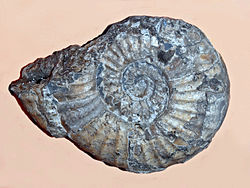
Picture of Arietitidae
- Source
- Wikipedia/Commons
- Credit
- Hectonichus
- Licence
- CC BY-SA 3.0
- Commercial use
- the licence allows it
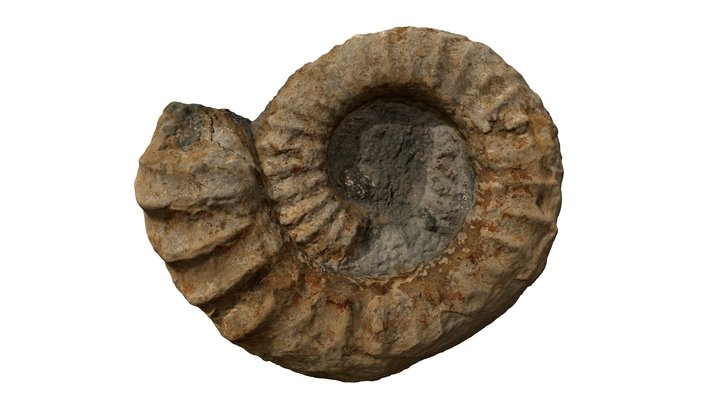
3D model
- Source
- Sketchfab
- Licence
- CC Attribution
- Commercial use
- cannot be read from the licence given — check the record
Smithsonian Open Access and MorphoSource were not reached for this taxon, so this list is what the others held rather than everything there is.
The description on this site
- Source
- Wikipedia, “Arietitidae”
- Licence
- CC BY-SA 4.0
This is what the site found, which is not the same as what exists.
Keep going
What may have been alongside itPsiloceratoidea through timeFormations of the Early JurassicThe world it lived on
Occurrence data from the Paleobiology Database, CC BY 4.0. Hyatt 1875