Ardea purpurea
The purple heron is a wide-ranging heron species. It breeds in Africa, central and southern Europe, and southern and eastern Palearctic. The Western Palearctic populations migrate between breeding and wintering habitats whereas the African and tropical-Asian populations are primarily sedentary, except for occasional dispersive movements. It is similar in appearance to the more common grey heron but is slightly smaller, more slender and has darker plumage. It is also a more evasive bird, favouring densely vegetated habitats near water, particularly reed beds. It hunts for a range of prey including fish, rodents, frogs and insects, either stalking them or standing waiting in ambush.

Pierre Dalous · CC BY-SA 3.0 · via Wikipedia/Commons. May be a photograph of a specimen, or an artist’s reconstruction — an interpretation of a skeleton, since colour and soft tissue are almost never preserved.
On record
Recorded, not inferred- Also called
- purple heronPBDB
- Sits inside
- ArdeaPBDB
- Diet
- piscivorePBDB, for Ardeidae
- Life habit
- volantPBDB, for Ardeidae
- Motility
- actively mobilePBDB, for Theropoda
- Environment
- terrestrialPBDB, for Ardeidae
- Mass
- 51 gWikidata
Time the record covers
At most 12 thousand years on record.
The one occurrence read is dated to somewhere between 11.7 ka and 0 Mya, which is a dating window rather than a span.
1 occurrence of Ardea purpurea on record, most of them in the Holocene. The Paleobiology Database records this as a living group. Bar height is expected occurrences, not a count: each fossil is spread across the span it is dated to, so a tall narrow bar means tight dating and a low wide one means loose.
When
1 occurrences- Holocene100%
These are dates about fossils, not the animal: the record can only begin after it arose and end before it died out, so either end may reach further. Shares are expected occurrences: a fossil dated to a span is counted partly in each period it straddles. More on what this infers.
Ardea purpurea and its relatives
HoloceneWhere Ardea purpurea and its relatives were recorded in the Holocene.
Found in the same rock
19 taxa- Aepyornis1 site
- Alopochen sirabensis1 site
- Anas1 site
- Anas bernieri1 site
- Anastomus lamelligerus1 site
- Ardea cinerea1 site
- Ardea humbloti1 site
- Brachypteracias langrandi1 site
- Dendrocygna1 site
- Fulica cristata1 site
- Larus1 site
- Lophotibis cristata1 site
- Mullerornis1 site
- Phoenicopterus roseus1 site
- Platalea alba1 site
- Porphyrio porphyrio1 site
- Pterocles personatus1 site
- Threskiornis aethiopicus1 site
- Vanellus madagascariensis1 site
The Paleobiology Database records 1 site for Ardea purpurea, and this reads all of them. The number is how many of those sites it was catalogued from too.
This is not a list of everything alive at the time. It is only what has come out of the same ground as this animal and been written down.
Entered from
1 referenceEach of the 1 occurrence read was entered from one of these publications, ordered by how many each accounts for. This is not a search for papers mentioning the name. Each entry links to the Paleobiology Database's own record for the work.
Media and terms
Media content2

Picture of Ardea purpurea
- Source
- Wikipedia/Commons
- Credit
- Pierre Dalous
- Licence
- CC BY-SA 3.0
- Commercial use
- the licence allows it
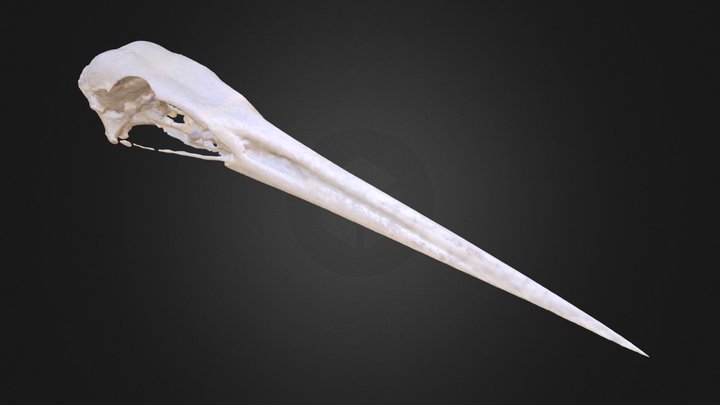
3D model
- Source
- Sketchfab
- Licence
- CC Attribution
- Commercial use
- cannot be read from the licence given — check the record
Smithsonian Open Access and MorphoSource were not reached for this taxon, so this list is what the others held rather than everything there is.
The description on this site
- Licence
- CC BY-SA 4.0
This is what the site found, which is not the same as what exists.
Keep going
What may have been alongside itArdea through timeFormations of the HoloceneThe world it lived on
Occurrence data from the Paleobiology Database, CC BY 4.0. Linnaeus 1766