Aptychus

via iDigBio · CC0 · via iDigBio. May be a photograph of a specimen, or an artist’s reconstruction — an interpretation of a skeleton, since colour and soft tissue are almost never preserved.
On record
Recorded, not inferred- Sits inside
- AmmonoideaPBDB
- Diet
- carnivorePBDB, for Ammonoidea
- Life habit
- nektonicPBDB, for Ammonoidea
- Motility
- fast-movingPBDB, for Ammonoidea
- Vision
- well-developedPBDB, for Cephalopoda
- Environment
- marinePBDB, for Cephalopoda
Time the record covers
At least 91 million years on record.
The record covers at least 174.7 Mya to 83.6 Mya. No occurrence read is dated outside 201.4 Mya to 72.2 Mya.
12 occurrences of Aptychus on record, most of them in the Late Jurassic. Bar height is expected occurrences, not a count: each fossil is spread across the span it is dated to, so a tall narrow bar means tight dating and a low wide one means loose.
When
12 occurrencesThese are dates about fossils, not the animal: the record can only begin after it arose and end before it died out, so either end may reach further. Shares are expected occurrences: a fossil dated to a span is counted partly in each period it straddles. More on what this infers.
Found in
3 formations
Loading coastlines…
The named rock units Aptychus has been recovered from, largest first. Drawn where the rock is now, not where it formed. 9 occurrences have no formation on record, which is common for older literature.
Aptychus and its relatives
Late JurassicWhere Aptychus and its relatives were recorded in the Late Jurassic.
Found in the same rock
126 taxa- Perisphinctes5 sites
- Aspidoceras4 sites
- Ichthyosaurus3 sites
- Crioceratites2 sites
- Kosmoceras2 sites
- Lima2 sites
- Macrocephalites2 sites
- Ochetoceras2 sites
- Oppelia2 sites
- Peltoceras2 sites
- Phyllopachyceras infundibulum2 sites
- Punctaptychus punctatus2 sites
- Aconeceras nisum1 site
- Acrioceras (Paraspinoceras)1 site
- Anahamulina subcylindrica1 site
- Ancyloceras1 site
- Aspidoceras iphiceroides1 site
- Aspidoceras longispinum antsalovensis1 site
- Astarte1 site
- Aulacosphinctes1 site
- Aulacosphinctoides1 site
- Baculites1 site
- Baculites aquilaensis1 site
- Balanocrinus subteres1 site
The Paleobiology Database records 10 sites for Aptychus, and this reads all of them. The number is how many of those sites it was catalogued from too. The 24 sharing the most are listed.
This is not a list of everything alive at the time. It is only what has come out of the same ground as this animal and been written down.
Entered from
9 references- El Jurásico de Cerritos Bayos [The Jurassic of Cerritos Bayos]3
- Das Westliche Süd-Tirol: geologisch dargestellt2
- Geología de las áreas Ovalle y Peña Blanca, Región de Coquimbo Nos. 208-2091
- Campanian and Maastrichtian ammonites from the Mons Basin and adajcent areas (Belgium)1
- Geologie de Madagascar I. Les Terrains Sedimentaires1
- Le Crétacé inférieur de l'arc subalpin de Castellane entre l'Asse et le Var: Stratigraphy et Sédimentologie1
- Nuova fauna ad ammoniti del Barremiano superiore Lombardo [A new Upper Barremian ammonite fauna from Lombardy]1
- Contribution a l'etude du Jurassique superieur (facies Corallien) en Ethiopie et en Arabie meridionale [Studies about the Upper Jurassic (Corallian facies) in Ethiopia and southern Arabia]1
- Les dépôts jurassiques près la station Checiny et leur faune1
Each of the 12 occurrences read was entered from one of these publications, ordered by how many each accounts for. This is not a search for papers mentioning the name. Each entry links to the Paleobiology Database's own record for the work.
Media and terms
Media content2
Picture of Aptychus
- Source
- iDigBio
- Credit
- via iDigBio
- Licence
- CC0
- Commercial use
- the licence allows it
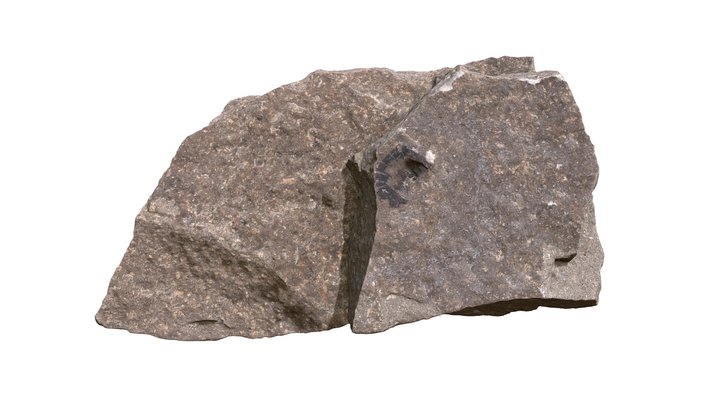
3D model
- Source
- Sketchfab
- Licence
- CC Attribution
- Commercial use
- cannot be read from the licence given — check the record
Smithsonian Open Access was not reached for this taxon, so this list is what the others held rather than everything there is.
This is what the site found, which is not the same as what exists.
Keep going
What may have been alongside itAmmonoidea through timeFormations of the Late JurassicThe world it lived on
Occurrence data from the Paleobiology Database, CC BY 4.0. von Meyer 1861