Anomalocaris
Anomalocaris is an extinct genus of radiodont, an order of early-diverging stem-group marine arthropods. It is best known from the type species A. canadensis, found in the Stephen Formation of British Columbia, Canada. The other named species A. daleyae is known from the somewhat older Emu Bay Shale of Australia. Other unnamed Anomalocaris species are known from China and the United States.

Chris Woodrich · CC BY-SA 4.0 · via Wikipedia/Commons. May be a photograph of a specimen, or an artist’s reconstruction — an interpretation of a skeleton, since colour and soft tissue are almost never preserved.
On record
Recorded, not inferred- Sits inside
- AnomalocarididaePBDB
- Diet
- carnivorePBDB
- Life habit
- nektonicPBDB
- Motility
- actively mobilePBDB
Time the record covers
At least 11 million years on record.
The record covers at least 516 Mya to 504.5 Mya. No occurrence read is dated outside 538.8 Mya to 497 Mya.
34 occurrences of Anomalocaris on record, most of them in the Cambrian. Bar height is expected occurrences, not a count: each fossil is spread across the span it is dated to, so a tall narrow bar means tight dating and a low wide one means loose.
When
34 occurrences- Cambrian100%
These are dates about fossils, not the animal: the record can only begin after it arose and end before it died out, so either end may reach further. Shares are expected occurrences: a fossil dated to a span is counted partly in each period it straddles. More on what this infers.
Found in
15 formations
- Kinzers Formation7
- Burgess Shale Formation6
- Pioche Shale Formation3
- Yuanshan Formation3
- Parker Slate Formation2
- Pioche Formation2
Loading coastlines…
The named rock units Anomalocaris has been recovered from, largest first. Drawn where the rock is now, not where it formed.
Anomalocaris and its relatives
CambrianWhere Anomalocaris and its relatives were recorded in the Cambrian.
Found in the same rock
339 taxa- Selkirkia6 sites
- Hyolithes5 sites
- Olenellus roddyi5 sites
- Tuzoia5 sites
- Canadaspis4 sites
- Esmeraldina macer4 sites
- Hazelia4 sites
- Hyolithes wanneri4 sites
- Lingulella4 sites
- Naraoia4 sites
- Ottoia4 sites
- Paterina4 sites
- Sidneyia4 sites
- Wanneria walcottana4 sites
- Arthropoda3 sites
- Bolbolenellus brevispinus3 sites
- Bonnia3 sites
- Brachiopoda3 sites
- Chancelloria3 sites
- Heliomedusa3 sites
- Isoxys3 sites
- Kutorgina3 sites
- Leanchoilia3 sites
- Lepidocystis wanneri3 sites
The Paleobiology Database records 27 sites for Anomalocaris, and this reads all of them. The number is how many of those sites it was catalogued from too. The 24 sharing the most are listed.
This is not a list of everything alive at the time. It is only what has come out of the same ground as this animal and been written down.
Entered from
18 references- Lower Cambrian Olenellus zone of the Appalachians6
- New anomalocaridid appendages from the Burgess Shale, Canada4
- Community palaeoecology of the early Cambrian Maotianshan Shale biota: Ecological dominance of priapulid worms3
- Exceptionally preserved nontrilobite arthropods and Anomalocaris from the Middle Cambrian of Utah3
- The diverse radiodont fauna from the Marjum Formation of Utah, USA (Cambrian: Drumian)2
- The Burgess Shale and associated Cambrian formations west of the Fossil Gully Fault Zone on Mount Stephen, British Columbia2
- Oryctocephalids (Corynexochida: Trilobita) of the Lower-Middle Cambrian boundary interval from California and Nevada2
- Paleontology of Northwestern Vermont. V. The Lower Cambrian Fauna2
- Anomalocaridid trunk limb homology revealed by a giant filter-feeder with paired flaps1
- The first discovery of anomalocaridid appendages from the Balang Formation (Cambrian Series 2) in Hunan, China1
- Middle Cambrian arthropods from Utah1
- Early Cambrian arthropods from the Emu Bay Shale Lagerstätte, South Australia1
Each of the 34 occurrences read was entered from one of these publications, ordered by how many each accounts for. This is not a search for papers mentioning the name. 6 further references are not listed. Entries link to doi.org where the Paleobiology Database holds an identifier, and to its own record where it does not. Relayed as the Paleobiology Database holds them, not checked against what they resolve to.
Media and terms
Media content2

Picture of Anomalocaris
- Source
- Wikipedia/Commons
- Credit
- Chris Woodrich
- Licence
- CC BY-SA 4.0
- Commercial use
- the licence allows it
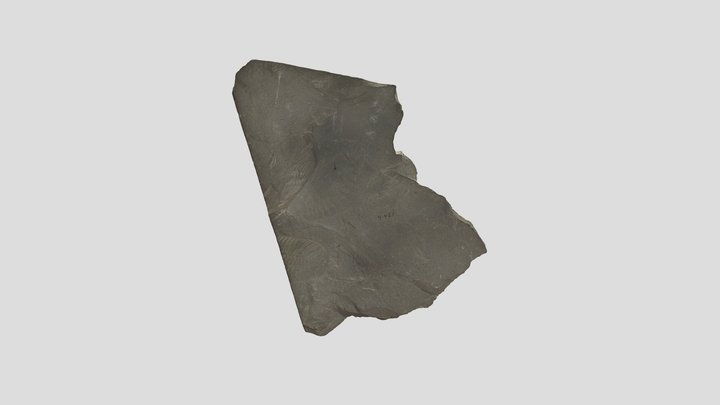
3D model
- Source
- Sketchfab
- Credit
- UIPaleoRepository
- Licence
- CC Attribution
- Commercial use
- cannot be read from the licence given — check the record
The description on this site
- Licence
- CC BY-SA 4.0
This is what the site found, which is not the same as what exists.
Keep going
What may have been alongside itAnomalocarididae through timeFormations of the CambrianThe world it lived on
Occurrence data from the Paleobiology Database, CC BY 4.0.