Anahoplites
Anahoplites is a genus of rather involute, compressed hoplitid ammonites with flat sides, narrow flat or grooved venters, and flexious ribs or striae arising from weak umbilicle tubercles that end in fine dense ventrolateral nodes. The elements of their sutures are short, wide and jaggedy. Specimens of Annahoplites have diameters typically in the range of 4–6 centimetres (1.6–2.4 in) although some with diameters of as much as 19 centimetres (7.5 in) have been reported. The genus lived during the Cretaceous, from the Middle to the late Albian.

Geni · CC BY-SA 4.0 · via Wikipedia/Commons. May be a photograph of a specimen, or an artist’s reconstruction — an interpretation of a skeleton, since colour and soft tissue are almost never preserved.
On record
Recorded, not inferred- Sits inside
- AnahoplitinaePBDB
- Diet
- carnivorePBDB, for Ammonoidea
- Life habit
- nektonicPBDB, for Ammonoidea
- Motility
- fast-movingPBDB, for Ammonoidea
- Vision
- well-developedPBDB, for Cephalopoda
- Environment
- marinePBDB, for Cephalopoda
Time the record covers
At least 9.6 million years on record.
The record covers at least 110.1 Mya to 100.5 Mya. No occurrence read is dated outside 113.2 Mya to 93.9 Mya.
20 occurrences of Anahoplites on record, most of them in the Early Cretaceous. Bar height is expected occurrences, not a count: each fossil is spread across the span it is dated to, so a tall narrow bar means tight dating and a low wide one means loose.
When
20 occurrencesThese are dates about fossils, not the animal: the record can only begin after it arose and end before it died out, so either end may reach further. Shares are expected occurrences: a fossil dated to a span is counted partly in each period it straddles. More on what this infers.
Found in
8 formations
- Grès verts helvétiques Formation5
- Haida Formation4
- Argiles Tegulines de Courcelles Formation3
- Perte-du-Rhône Formation2
- Aitamir Formation2
- Mogilno Formation1
Loading coastlines…
The named rock units Anahoplites has been recovered from, largest first. Drawn where the rock is now, not where it formed. 1 occurrence has no formation on record, which is common for older literature.
Anahoplites and its relatives
Early CretaceousWhere Anahoplites and its relatives were recorded in the Early Cretaceous.
Found in the same rock
109 taxa- Anagaudryceras sacya4 sites
- Brewericeras hulenense4 sites
- Epihoplites4 sites
- Holaster4 sites
- Hysteroceras4 sites
- Paranahoplites intermedius4 sites
- Prohysteroceras4 sites
- Anisoceras3 sites
- Beudanticeras beudanti3 sites
- Calliphylloceras nizinanum3 sites
- Desmoceras (Desmoceras) latidorsatum3 sites
- Discoides3 sites
- Douvilleiceras spiniferum3 sites
- Hamites3 sites
- Hemiaster3 sites
- Hysteroceras orbignyi3 sites
- Mortoniceras3 sites
- Mortoniceras pricei3 sites
- Phylloceras (Goretophylloceras) subalpinum3 sites
- Pseudhelicoceras3 sites
- Puzosia (Puzosia) mayoriana3 sites
- Scaphites (Scaphites) hugardianus3 sites
- Arca2 sites
- Birostrina2 sites
The Paleobiology Database records 16 sites for Anahoplites, and this reads all of them. The number is how many of those sites it was catalogued from too. The 24 sharing the most are listed.
This is not a list of everything alive at the time. It is only what has come out of the same ground as this animal and been written down.
Entered from
8 references- Les grès verts helvétiques (Aptien moyen-Albien supérieur) de Haute-Savoie, Valais et Vaud (Alpes occidentales franco-suisses)6
- Ammonoids of the lower Cretaceous sandstone member of the Haida Formation, Skidgate Inlet, Queen Charlotte Islands, western British Columbia4
- Microcrinoids from the lower and middle Albian of the Anglo-Paris Basin (southern England, UK, Seine Maritime, Pas de Calais and Aube, France)3
- Late Albian ammonites from the Aitamir Formation (Koppeh Dagh, northeast Iran)2
- Description de quelques gastéropdes albiens du Sud-Est de la France2
- Sedimentaere und palaeotektonische Entwicklung der epikontinentalen Unterkreide Polens1
- Maury, 19361
- A Monograph of the Ammonoidea of the Gault. Part III. Pages 111–146; Plates IX–XII1
Each of the 20 occurrences read was entered from one of these publications, ordered by how many each accounts for. This is not a search for papers mentioning the name. Entries link to doi.org where the Paleobiology Database holds an identifier, and to its own record where it does not. Relayed as the Paleobiology Database holds them, not checked against what they resolve to.
Media and terms
Media content2

Picture of Anahoplites
- Source
- Wikipedia/Commons
- Credit
- Geni
- Licence
- CC BY-SA 4.0
- Commercial use
- the licence allows it
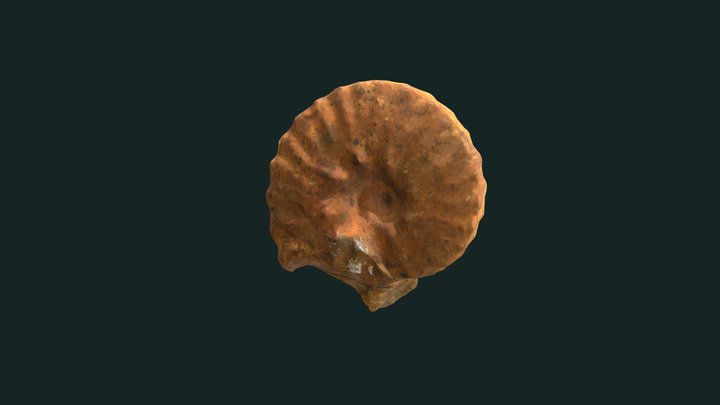
3D model
- Source
- Sketchfab
- Credit
- Shellie Luallin
- Licence
- CC Attribution
- Commercial use
- cannot be read from the licence given — check the record
Smithsonian Open Access was not reached for this taxon, so this list is what the others held rather than everything there is.
The description on this site
- Source
- Wikipedia, “Anahoplites”
- Licence
- CC BY-SA 4.0
This is what the site found, which is not the same as what exists.
Keep going
What may have been alongside itAnahoplitinae through timeFormations of the Early CretaceousThe world it lived on
Occurrence data from the Paleobiology Database, CC BY 4.0. Hyatt 1900