Acropora gemmifera
Acropora gemmifera is a species of acroporid coral found in the Gulf of Aden, the Red Sea, the central Indo-Pacific, the southwest and northern Indian Ocean, southeastern Asia, Australia, the East China Sea, Japan, the oceanic central and western Pacific Ocean, and northwestern Hawaiʻi. It occurs on exposed upper reef flats and slopes, from depths of 1–15 m. It was described by Brook in 1892.

MDC Seamarc Maldives · CC BY-SA 4.0 · via Wikipedia/Commons. May be a photograph of a specimen, or an artist’s reconstruction — an interpretation of a skeleton, since colour and soft tissue are almost never preserved.
On record
Recorded, not inferred- Sits inside
- AcroporaPBDB
- Diet
- photosymbiotic, suspension feederPBDB, for Acroporidae
- Life habit
- colonial, clonalPBDB, for Acroporidae
- Motility
- stationary, attachedPBDB, for Scleractinia
- Vision
- blindPBDB, for Anthozoa
- Environment
- marinePBDB, for Scleractinia
Time the record covers
At least 117 thousand years on record.
The record covers at least 129 ka to 11.7 ka. No occurrence read is dated outside 774 ka to 0 Mya.
28 occurrences of Acropora gemmifera on record, most of them in the Pleistocene. The Paleobiology Database records this as a living group. Bar height is expected occurrences, not a count: each fossil is spread across the span it is dated to, so a tall narrow bar means tight dating and a low wide one means loose.
When
28 occurrences- Pleistocene89%
- Holocene11%
These are dates about fossils, not the animal: the record can only begin after it arose and end before it died out, so either end may reach further. Shares are expected occurrences: a fossil dated to a span is counted partly in each period it straddles. More on what this infers.
Acropora gemmifera and its relatives
PleistoceneWhere Acropora gemmifera and its relatives were recorded in the Pleistocene.
Found in the same rock
13 taxa- Goniastrea stelligera2 sites
- Isopora cuneata2 sites
- Isopora palifera2 sites
- Platygyra daedalea2 sites
- Acropora hyacinthus1 site
- Dipsastraea laxa1 site
- Fungiidae1 site
- Goniastrea retiformis1 site
- Platygyra1 site
- Platygyra sinensis1 site
- Pocillopora1 site
- Porites1 site
- Stylophora pistillata1 site
The Paleobiology Database records 2 sites for Acropora gemmifera, and this reads all of them. The number is how many of those sites it was catalogued from too.
This is not a list of everything alive at the time. It is only what has come out of the same ground as this animal and been written down.
Entered from
6 references- Limited membership in Pleistocene reef coral assemblages from the Huon Peninsula, Papua New Guinea: constancy during global change19
- Holocene key coral species in the Northwest Pacific: indicators of reef formation and reef ecosystem responses to global climate change and anthropogenic stresses in the near future3
- Les Madreporaires fossiles de Mare [The fossil corals from Mare]3
- The evolution of the Great Barrier Reef during the Last Interglacial Period1
- Escaping the heat: range shifts of reef coral taxa in coastal Western Australia1
- Geomorphology of the uplifted Pleistocene atoll at Henderson Island, Pitcairn Group1
Each of the 28 occurrences read was entered from one of these publications, ordered by how many each accounts for. This is not a search for papers mentioning the name. Entries link to doi.org where the Paleobiology Database holds an identifier, and to its own record where it does not. Relayed as the Paleobiology Database holds them, not checked against what they resolve to.
Media and terms
Media content2

Picture of Acropora gemmifera
- Source
- Wikipedia/Commons
- Credit
- MDC Seamarc Maldives
- Licence
- CC BY-SA 4.0
- Commercial use
- the licence allows it
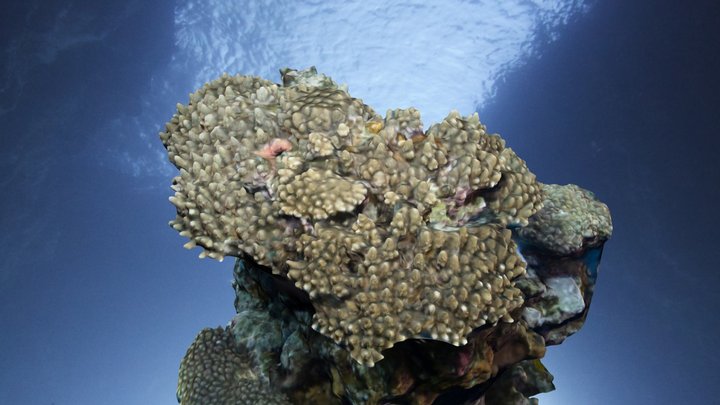
3D model
- Source
- Sketchfab
- Credit
- thehydrous
- Licence
- CC Attribution-NonCommercial-ShareAlike
- Commercial use
- the licence does not allow it
Smithsonian Open Access was not reached for this taxon, so this list is what the others held rather than everything there is.
The description on this site
- Licence
- CC BY-SA 4.0
This is what the site found, which is not the same as what exists.
Keep going
What may have been alongside itAcropora through timeFormations of the PleistoceneThe world it lived on
Occurrence data from the Paleobiology Database, CC BY 4.0. (Brook 1892)