Acrocephalus
The Acrocephalus warblers are small, insectivorous passerine birds belonging to the genus Acrocephalus. Formerly in the paraphyletic Old World warbler assemblage, they are now separated as the namesake of the marsh and tree warbler family Acrocephalidae. They are sometimes called marsh warblers or reed warblers, but this invites confusion with marsh warbler and reed warbler.

Carles Pastor · CC BY-SA 3.0 · via Wikipedia/Commons. May be a photograph of a specimen, or an artist’s reconstruction — an interpretation of a skeleton, since colour and soft tissue are almost never preserved.
On record
Recorded, not inferred- Sits inside
- AcrocephalidaePBDB
- Diet
- carnivorePBDB, for Coelurosauria
- Life habit
- ground dwelling, solitaryPBDB, for Theropoda
- Motility
- actively mobilePBDB, for Theropoda
- Environment
- terrestrialPBDB, for Theropoda
Time the record covers
At least 9.6 million years on record.
The record covers at least 9.67 Mya to 11.7 ka. No occurrence read is dated outside 11.1 Mya to 0 Mya.
20 occurrences of Acrocephalus on record. The Paleobiology Database records this as a living group. Bar height is expected occurrences, not a count: each fossil is spread across the span it is dated to, so a tall narrow bar means tight dating and a low wide one means loose.
When
20 occurrencesThese are dates about fossils, not the animal: the record can only begin after it arose and end before it died out, so either end may reach further. Shares are expected occurrences: a fossil dated to a span is counted partly in each period it straddles. More on what this infers.
Found in
1 formation
Loading coastlines…
The named rock units Acrocephalus has been recovered from, largest first. Drawn where the rock is now, not where it formed. 19 occurrences have no formation on record, which is common for older literature.
Found in the same rock
287 taxa- Gygis alba10 sites
- Puffinus nativitatis9 sites
- Anous8 sites
- Fregata minor8 sites
- Gallicolumba leonpascoi8 sites
- Phaethon rubricauda8 sites
- Pterodroma8 sites
- Ptilinopus insularis8 sites
- Zapornia atra8 sites
- Anous ceruleus7 sites
- Nesofregetta fuliginosa7 sites
- Numenius tahitiensis7 sites
- Ducula harrisoni6 sites
- Prosobonia sauli6 sites
- Puffinus5 sites
- Bountyphaps obsoleta4 sites
- Ducula galeata4 sites
- Phaethon lepturus4 sites
- Pterodroma nigripennis4 sites
- Sula dactylatra4 sites
- Vini stepheni4 sites
- Alopecoenas erythropterus3 sites
- Anous stolidus3 sites
- Gallus gallus3 sites
The Paleobiology Database records 20 sites for Acrocephalus, and this reads all of them. The number is how many of those sites it was catalogued from too. The 24 sharing the most are listed.
This is not a list of everything alive at the time. It is only what has come out of the same ground as this animal and been written down.
Entered from
9 references- The fossil birds of Henderson Island, Pitcairn Group: natural turnover and human impact, a synopsis8
- A synopsis of the pre-human avifauna of the Mascarene Islands3
- The prehistory of vertebrates, especially birds, on Tinian, Aguiguan, and Rota, Northern Mariana Islands2
- Extinction of birds in eastern Polynesia: A review of the record, and comparison with other Pacific island groups2
- Recent Advances on Multidisciplinary Research at Rudabánya, Late Miocene (MN9), Hungary: a compendium1
- Biostratigraphy of amphibians, reptiles, birds and mammals in Corsica and the role of man in the Holocene faunal turnover1
- A chronostratigraphic analysis of landbird extinction on Tahuata, Marquesas Islands1
- Extinction and biogeography of birds on Huahine, Society Islands, French Polynesia1
- Prehistoric extinction of birds on Mangaia, Cook Islands, Polynesia1
Each of the 20 occurrences read was entered from one of these publications, ordered by how many each accounts for. This is not a search for papers mentioning the name. Entries link to doi.org where the Paleobiology Database holds an identifier, and to its own record where it does not. Relayed as the Paleobiology Database holds them, not checked against what they resolve to.
Media and terms
Media content3

Picture of Acrocephalus
- Source
- Wikipedia/Commons
- Credit
- Carles Pastor
- Licence
- CC BY-SA 3.0
- Commercial use
- the licence allows it
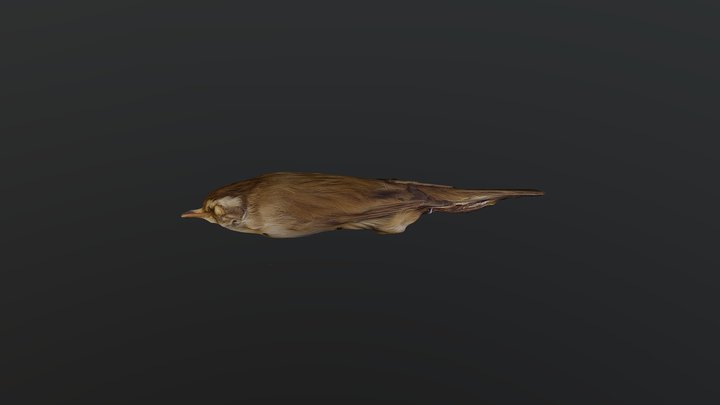
Photogrammetry
- Source
- MorphoSource
- Credit
- Moore Lab of Zoology
- Licence
- not stated by the source
- Commercial use
- cannot be read from the licence given — check the record
- Specimen
- Acrocephalus schoenobaenus · MLZ:Bird:MLZ:Bird:68952
The description on this site
- Licence
- CC BY-SA 4.0
This is what the site found, which is not the same as what exists.
Keep going
What may have been alongside itAcrocephalidae through timeThe world it lived on
Occurrence data from the Paleobiology Database, CC BY 4.0. Naumann and Naumann 1811