Verruculina

via iDigBio · CC0 · via iDigBio. May be a photograph of a specimen, or an artist’s reconstruction — an interpretation of a skeleton, since colour and soft tissue are almost never preserved.
On record
Recorded, not inferred- Sits inside
- AmphithelioninaePBDB
- Diet
- suspension feederPBDB, for Lithistida
- Life habit
- epifaunalPBDB, for Lithistida
- Motility
- stationary, attachedPBDB, for Lithistida
- Vision
- blindPBDB, for Porifera
- Environment
- marinePBDB, for Lithistida
Time the record covers
At least 149 million years on record.
The record covers at least 161.5 Mya to 11.63 Mya. No occurrence read is dated outside 165.3 Mya to 7.246 Mya.
68 occurrences of Verruculina on record, most of them in the Late Cretaceous. Bar height is expected occurrences, not a count: each fossil is spread across the span it is dated to, so a tall narrow bar means tight dating and a low wide one means loose.
When
68 occurrencesThese are dates about fossils, not the animal: the record can only begin after it arose and end before it died out, so either end may reach further. Shares are expected occurrences: a fossil dated to a span is counted partly in each period it straddles. More on what this infers.
Found in
7 formations
- "Scaphiten-Pläner" Formation6
- Ahlen Formation5
- "Siphonia Marl" Formation4
- Bilá Formation3
- "Cuvieri-Pläner" Formation3
- Ilsenburg Formation3
Loading coastlines…
The named rock units Verruculina has been recovered from, largest first. Drawn where the rock is now, not where it formed. 43 occurrences have no formation on record, which is common for older literature.
Verruculina and its relatives
Late CretaceousWhere Verruculina and its relatives were recorded in the Late Cretaceous.
Found in the same rock
624 taxa- Seliscothon13 sites
- Pachinion scriptum12 sites
- Ventriculites radiatus12 sites
- Aulosoma radiciformis10 sites
- Doryderma (Brochodora) roemeri10 sites
- Jereica polystoma10 sites
- Heterostinia obliqua9 sites
- Pachycothon giganteum9 sites
- Ragadinia rimosa9 sites
- Scytalia terebrata9 sites
- Callopegma acaule8 sites
- Eustrobilus callosus8 sites
- Phymatella bulbosa8 sites
- Siphonia8 sites
- Amphithelion (Amphithelion) macrommata7 sites
- Aulaxinia sulcifera7 sites
- Chonella tenuis7 sites
- Coeloptychium deciminum7 sites
- Coscinostoma fragilis7 sites
- Doryderma (Brochodora) ramusculus7 sites
- Leiochonia cryptoporosa7 sites
- Leptophragma murchisoni7 sites
- Plinthosella squamosa7 sites
- Seliscothon mantelli7 sites
The Paleobiology Database records 33 sites for Verruculina, and this reads all of them. The number is how many of those sites it was catalogued from too. The 24 sharing the most are listed.
This is not a list of everything alive at the time. It is only what has come out of the same ground as this animal and been written down.
Entered from
11 references- Die Kieselspongien der oberen Kreide von Nordwestdeutschland, Teil 1 Tetraxonia, Monaxonia und Silicea incert. sedis [Upper Cretaceous sponges from north-western Germany, part 1 Tetraxonia, Monaxonia and Silicea incert. sedis]24
- Siliceous sponges from the Upper Cretaceous of Poland, part II: Monaxonia and Triaxonia16
- Catalogue of the fossil sponges in the Geological Department of the British Museum (Natural History)8
- Die Großfauna der Mukronatenkreide (unteres Obercampan) im östlichen Münsterland5
- Contribution a l'etude des spongiaires siliceux du Cretace inferieur4
- Late Cretaceous environments and communities as recorded at Chrtníky (Bohemian Cretaceous Basin, Czech Republic)3
- Die Spongien der Ilsenburg-Entwicklung (Oberes Unter-Campan) der Subherzynen Kreidemulde [Sponges of the Ilsenburg Formation (Upper Lower Campanian) of the Subhercynian Cretaceous Basin3
- The La Voulte Lagerstätte (Callovian): Evidence for a deep water setting from sponge and crinoid communities2
- A highly diverse siliceous sponge fauna (Porifera: Hexactinellida, Demospongiae) from the Eocene of north-eastern Italy: systematics and palaeoecology1
- Etude preliminaire des Spongiaires tortoniens du bassin de Sorbas (Espagne meridionale), indications bathymetriques [Preliminary studies about Tortonian sponges of the Sorbas Basin (Spain)]1
- Contribution a l'etude des spongiaires siliceux du Miocene de l'Algerie [Miocene siliceous sponges from Algeria]1
Each of the 68 occurrences read was entered from one of these publications, ordered by how many each accounts for. This is not a search for papers mentioning the name. Entries link to doi.org where the Paleobiology Database holds an identifier, and to its own record where it does not. Relayed as the Paleobiology Database holds them, not checked against what they resolve to.
Media and terms
Media content2
Picture of Verruculina
- Source
- iDigBio
- Credit
- via iDigBio
- Licence
- CC0
- Commercial use
- the licence allows it
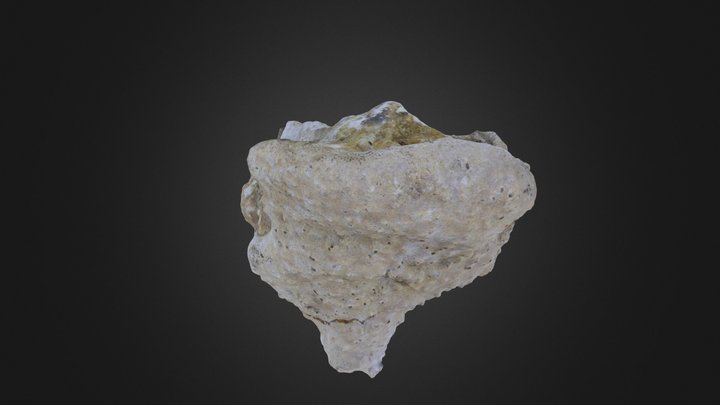
3D model
- Source
- Sketchfab
- Licence
- CC0 Public Domain
- Commercial use
- the licence allows it
Smithsonian Open Access and MorphoSource were not reached for this taxon, so this list is what the others held rather than everything there is.
This is what the site found, which is not the same as what exists.
Keep going
What may have been alongside itAmphithelioninae through timeFormations of the Late CretaceousThe world it lived on
Occurrence data from the Paleobiology Database, CC BY 4.0. Zittel 1878