Vascoceras
Vascoceras is an extinct genus of Cretaceous ammonites included in the family Vascoceratidae. These fast-moving nektonic carnivores lived in the Cretaceous period from the late Cenomanian to the early Turonian. The type species of the genus is Vascoceras gamai from Portugal.

Hectonichus · CC BY-SA 3.0 · via Wikipedia/Commons. May be a photograph of a specimen, or an artist’s reconstruction — an interpretation of a skeleton, since colour and soft tissue are almost never preserved.
On record
Recorded, not inferred- Sits inside
- VascoceratinaePBDB
- Diet
- carnivorePBDB, for Ammonoidea
- Life habit
- nektonicPBDB, for Ammonoidea
- Motility
- fast-movingPBDB, for Ammonoidea
- Vision
- well-developedPBDB, for Cephalopoda
- Environment
- marinePBDB, for Cephalopoda
Time the record covers
At most 11 million years on record.
Every occurrence read is dated to somewhere between 100.5 Mya and 89.8 Mya, and nothing in the dating separates them, so that window is what the record shows rather than a span.
244 occurrences of Vascoceras on record, most of them in the Late Cretaceous. Bar height is expected occurrences, not a count: each fossil is spread across the span it is dated to, so a tall narrow bar means tight dating and a low wide one means loose.
When
244 occurrences- Late Cretaceous100%
These are dates about fossils, not the animal: the record can only begin after it arose and end before it died out, so either end may reach further. Shares are expected occurrences: a fossil dated to a span is counted partly in each period it straddles. More on what this infers.
Found in
31 formations
- Pindiga Formation25
- Gongila Formation24
- Rhoundjaïa Formation23
- Abu Qada Formation21
- Dukul Formation11
- Colorado Formation11
Loading coastlines…
The named rock units Vascoceras has been recovered from, largest first. Drawn where the rock is now, not where it formed. 7 further formations hold fewer occurrences each and are not listed. 53 occurrences have no formation on record, which is common for older literature.
Vascoceras and its relatives
Late CretaceousWhere Vascoceras and its relatives were recorded in the Late Cretaceous.
Found in the same rock
346 taxa- Pseudaspidoceras flexuosum15 sites
- Thomasites gongilensis15 sites
- Fagesia catinus12 sites
- Pseudaspidoceras pseudonodosoides12 sites
- Pseudotissotia nigeriensis11 sites
- Costagyra olisiponensis10 sites
- Mammites nodosoides10 sites
- Mytiloides9 sites
- Neoptychites cephalotus9 sites
- Pseudaspidoceras8 sites
- Pseudovascoceras nigeriense8 sites
- Paravascoceras tectiforme7 sites
- Thomasites wallsi7 sites
- Watinoceras coloradoense7 sites
- Whiteinella baltica7 sites
- Calycoceras (Calycoceras) naviculare6 sites
- Fagesia6 sites
- Globigerina planispira6 sites
- Guembelina moremani6 sites
- Ilymatogyra africana6 sites
- Whiteinella archaeocretacea6 sites
- Choffaticeras (Choffaticeras) segne5 sites
- Dicarinella5 sites
- Granocardium productum5 sites
The Paleobiology Database records 136 sites for Vascoceras, and this reads all of them. The number is how many of those sites it was catalogued from too. The 24 sharing the most are listed.
This is not a list of everything alive at the time. It is only what has come out of the same ground as this animal and been written down.
Entered from
50 references- Lower Turonian ammonites from north-eastern Nigeria40
- Late Cenomanian-early Turonian ammonites from the Western Saharan Atlas (Algeria)23
- Les ammonites du Crétacé supérieur d'Ashaka, Nigéria: analyse taxonomique, ontogénétique, biostratigraphique et évolutive16
- Upper Cretaceous rocks and ammonite faunas of southwestern New Mexico11
- The Geology of parts of Adamawa, Bauchi and Bornu Provinces in North-Eastern Nigeria11
- The ammonite genus Vascoceras Choffat, 1898 (family Vascoceratidae Douvillé, 1912) in the Iberian Trough, Spain10
- Renz, 19828
- Late Cenomanian-Early Turonian ammonites of Jordan7
- Integrated biostratigraphy and inter-regional correlation of the Cenomanian–Turonian deposits of Wadi Feiran, Sinai, Egypt7
- Paleontology of the Greenhorn cylcothem (Cretaceous: late Cenomanian to middle Turonian) at Black Mesa, northeastern Arizona7
- Cenomanian-Turonian ammonite successions in the Tinrhert Basin (Southeastern Algeria): Revision and new data5
- Stratigraphy of the Cenomanian-Turonian Oceanic Anoxic Event OAE2 in shallow shelf sequences of NE Egypt5
Each of the 244 occurrences read was entered from one of these publications, ordered by how many each accounts for. This is not a search for papers mentioning the name. 38 further references are not listed. Entries link to doi.org where the Paleobiology Database holds an identifier, and to its own record where it does not. Relayed as the Paleobiology Database holds them, not checked against what they resolve to.
Media and terms
Media content2

Picture of Vascoceras
- Source
- Wikipedia/Commons
- Credit
- Hectonichus
- Licence
- CC BY-SA 3.0
- Commercial use
- the licence allows it
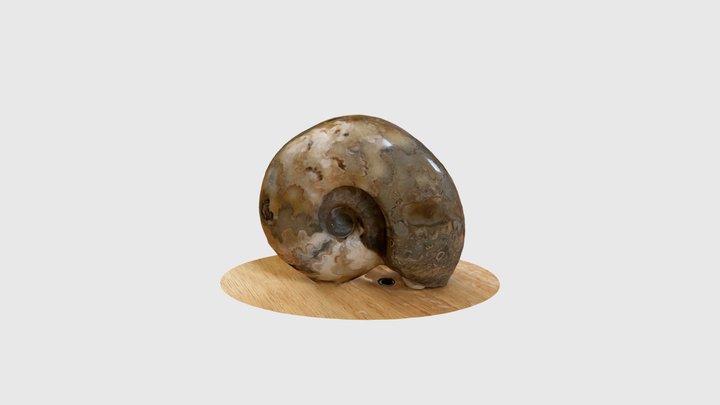
3D model
- Source
- Sketchfab
- Credit
- UBC_universite
- Licence
- CC Attribution-NonCommercial-ShareAlike
- Commercial use
- the licence does not allow it
Smithsonian Open Access and MorphoSource were not reached for this taxon, so this list is what the others held rather than everything there is.
The description on this site
- Source
- Wikipedia, “Vascoceras”
- Licence
- CC BY-SA 4.0
This is what the site found, which is not the same as what exists.
Keep going
What may have been alongside itVascoceratinae through timeFormations of the Late CretaceousThe world it lived on
Occurrence data from the Paleobiology Database, CC BY 4.0. Choffat 1898