Tullimonstrum gregarium
Tullimonstrum, colloquially known as the Tully monster or sometimes Tully's monster, is an extinct genus of soft-bodied bilaterian marine animal that lived in shallow tropical coastal waters of muddy estuaries during the Pennsylvanian, about 310 million years ago. A single species, T. gregarium, is known. Examples of Tullimonstrum have been found only in sediments deposited far from the palaeocoast, in the Mazon Creek fossil beds of Illinois, United States. Its classification has been the subject of controversy, and interpretations of the fossil have likened it to molluscs, arthropods, conodonts, worms, tunicates, and vertebrates. This creature had a mostly cigar-shaped body, with a triangular tail fin, two long stalked eyes, and a proboscis tipped with a mouth-like appendage. Based on the fossils, it seems this creature was a nektonic carnivore that hunted in the ocean's water column. When Tullimonstrum was alive, Illinois was a mixture of ecosystems like muddy estuaries, marine environments, rivers and lakes.

Ghedoghedo · CC BY-SA 3.0 · via Wikipedia/Commons. May be a photograph of a specimen, or an artist’s reconstruction — an interpretation of a skeleton, since colour and soft tissue are almost never preserved.
On record
Recorded, not inferred- Sits inside
- TullimonstrumPBDB
- Motility
- actively mobilePBDB, for Chordata
Time the record covers
At most 6.8 million years on record.
Every occurrence read is dated to somewhere between 312.8 Mya and 306 Mya, and nothing in the dating separates them, so that window is what the record shows rather than a span.
2 occurrences of Tullimonstrum gregarium on record, most of them in the Carboniferous. Bar height is expected occurrences, not a count: each fossil is spread across the span it is dated to, so a tall narrow bar means tight dating and a low wide one means loose.
When
2 occurrences- Carboniferous100%
These are dates about fossils, not the animal: the record can only begin after it arose and end before it died out, so either end may reach further. Shares are expected occurrences: a fossil dated to a span is counted partly in each period it straddles. More on what this infers.
Found in
1 formation
- Carbondale Formation · Kewanee Group2
Loading coastlines…
The named rock units Tullimonstrum gregarium has been recovered from, largest first. Drawn where the rock is now, not where it formed.
Tullimonstrum gregarium and its relatives
CarboniferousWhere Tullimonstrum gregarium and its relatives were recorded in the Carboniferous.
Found in the same rock
30 taxa- Amphibamus grandiceps1 site
- Anthracomedusa turnbulli1 site
- Archisymplectes rhothon1 site
- Bactrites1 site
- Conostichus1 site
- Eoctonus miniatus1 site
- Essexella asherae1 site
- Eubleptus danielsi1 site
- Eucaenus ovalis1 site
- Gilpichthys greeni1 site
- Hexecontasoma carinatum1 site
- Lascoa mesostaurata1 site
- Mazonia woodiana1 site
- Octomedusa pieckorum1 site
- Paleocadmus1 site
- Paleocadmus pohli1 site
- Paucijaculum samamithion1 site
- Pipiscius zangerli1 site
- Poliochera gibbsi1 site
- Priapulites konecniorum1 site
- Prochoroptera calopteryx1 site
- Saundersites illinoisiensis1 site
- Schistoceratidae1 site
- Squirmarius testai1 site
The Paleobiology Database records 2 sites for Tullimonstrum gregarium, and this reads all of them. The number is how many of those sites it was catalogued from too. The 24 sharing the most are listed.
This is not a list of everything alive at the time. It is only what has come out of the same ground as this animal and been written down.
Entered from
2 references- Pseudocoelomates and a nemertine from the Illinois Pennsylvanian1
- Pennsylvanian invertebrates of the Mazon Creek area, Illinois: Essex fauna and Medusae1
Each of the 2 occurrences read was entered from one of these publications, ordered by how many each accounts for. This is not a search for papers mentioning the name. Entries link to doi.org where the Paleobiology Database holds an identifier, and to its own record where it does not. Relayed as the Paleobiology Database holds them, not checked against what they resolve to.
Media and terms
Media content2

Picture of Tullimonstrum gregarium
- Source
- Wikipedia/Commons
- Credit
- Ghedoghedo
- Licence
- CC BY-SA 3.0
- Commercial use
- the licence allows it
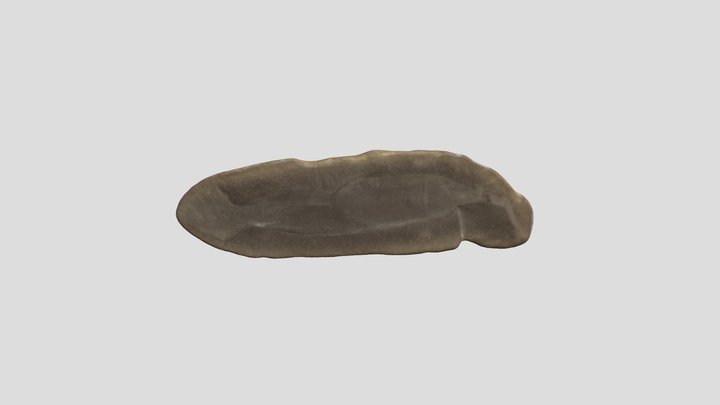
3D model
- Source
- Sketchfab
- Credit
- UIPaleoRepository
- Licence
- CC Attribution
- Commercial use
- cannot be read from the licence given — check the record
Smithsonian Open Access and MorphoSource were not reached for this taxon, so this list is what the others held rather than everything there is.
The description on this site
- Licence
- CC BY-SA 4.0
This is what the site found, which is not the same as what exists.
Keep going
What may have been alongside itTullimonstrum through timeFormations of the CarboniferousThe world it lived on
Occurrence data from the Paleobiology Database, CC BY 4.0. Richardson 1966