Tegula
Tegula is a genus of small to medium-sized sea snails, marine gastropod molluscs in the family Tegulidae.

Steve Lonhart (SIMoN / MBNMS) · Public Domain · via Wikipedia/Commons. May be a photograph of a specimen, or an artist’s reconstruction — an interpretation of a skeleton, since colour and soft tissue are almost never preserved.
On record
Recorded, not inferred- Sits inside
- TegulidaePBDB
- Diet
- grazerPBDB, for Trochoidea
- Life habit
- epifaunalPBDB, for Trochoidea
- Motility
- actively mobilePBDB, for Trochoidea
- Vision
- limitedPBDB, for Gastropoda
Time the record covers
At least 72 million years on record.
The record covers at least 72.2 Mya to 11.7 ka. No occurrence read is dated outside 83.6 Mya to 0 Mya.
164 occurrences of Tegula on record, most of them in the Pleistocene. The Paleobiology Database records this as a living group. Bar height is expected occurrences, not a count: each fossil is spread across the span it is dated to, so a tall narrow bar means tight dating and a low wide one means loose.
When
164 occurrences- Late Cretaceousunder 1%
- Eoceneunder 1%
- Oligocene3%
- Miocene16%
- Pliocene13%
- Pleistocene53%
- Holocene14%
These are dates about fossils, not the animal: the record can only begin after it arose and end before it died out, so either end may reach further. Shares are expected occurrences: a fossil dated to a span is counted partly in each period it straddles. More on what this infers.
Found in
47 formations
- Discovery Point Formation16
- Palos Verdes Sand Formation12
- Mare Formation · Cabo Blanco Group8
- Santa Margarita Formation7
- Temblor Formation4
- Grotto Beach Formation4
Loading coastlines…
The named rock units Tegula has been recovered from, largest first. Drawn where the rock is now, not where it formed. 23 further formations hold fewer occurrences each and are not listed. 59 occurrences have no formation on record, which is common for older literature.
Tegula and its relatives
PleistoceneWhere Tegula and its relatives were recorded in the Pleistocene.
Found in the same rock
2,564 taxa- Agathistoma eiseni26 sites
- Fissurella volcano23 sites
- Hipponix17 sites
- Californiconus californicus15 sites
- Littorina (Neritrema) keenae15 sites
- Anomia peruviana14 sites
- Chlorostoma gallina14 sites
- Lottia limatula14 sites
- Argopecten ventricosus13 sites
- Cryptomya californica13 sites
- Norrisia norrisii13 sites
- Chama arcana12 sites
- Glossaulax reclusiana12 sites
- Lottia scabra12 sites
- Lucinisca nuttalli12 sites
- Pocillopora guadalupensis12 sites
- Antisabia panamensis11 sites
- Chione californiensis11 sites
- Donax (Donax) gouldii11 sites
- Epilucina californica11 sites
- Laevicardium substriatum11 sites
- Cerithideopsis californica10 sites
- Crepidula10 sites
- Crucibulum spinosum10 sites
The Paleobiology Database records 105 sites for Tegula, and this reads all of them. Of that, one read hit the database's own return limit, so every count below is a floor rather than a total. The number is how many of those sites it was catalogued from too. The 24 sharing the most are listed.
This is not a list of everything alive at the time. It is only what has come out of the same ground as this animal and been written down.
Entered from
66 references- Invertebrate megafossils of Pleistocene (Sangamon Interglacial) age from Isla de Guadalupe, Baja California, Mexico17
- Paleontologia de los sedimentos marinos holocenos de los alrededores de Bahia Blanca, Provincia de Buenos Aires10
- Unpublished notes on Caribbean collection of Jack and Winifred Gibson-Smith, Naturhistorisches Museum Basel9
- Cenozoic Mollusks from the drillholes Cassino and Palmares do Sul of the Coastal Plain of Rio Grande do Sul8
- Fauna of the Santa Margarita beds in the North Coalinga region of California7
- A review of the Quaternary Mollusca of the Palos Verdes Peninsula6
- Late Cenozoic Tegulinae (Gastropoda: Trochidae) from southern Peru6
- Tertiary Marine Molluscan Assemblages of Eastern Patagonia (Argentina): A Biostratigraphic Analysis6
- Late Cenozoic gastropods from northern Venezuela6
- Marine Pleistocene Invertebrates from near Puerto Penasco, Sonora, Mexico5
- The paleontology of the Pleistocene molluscan fauna of the Newport Bay area, California5
- Paleoecologic analysis and age of a late Pleistocene fossil assemblage from Upper Newport Bay, Newport Beach, Orange County, California4
Each of the 164 occurrences read was entered from one of these publications, ordered by how many each accounts for. This is not a search for papers mentioning the name. 54 further references are not listed. Each entry links to the Paleobiology Database's own record for the work.
Media and terms
Media content2

Picture of Tegula
- Source
- Wikipedia/Commons
- Credit
- Steve Lonhart (SIMoN / MBNMS)
- Licence
- Public Domain
- Commercial use
- the licence allows it
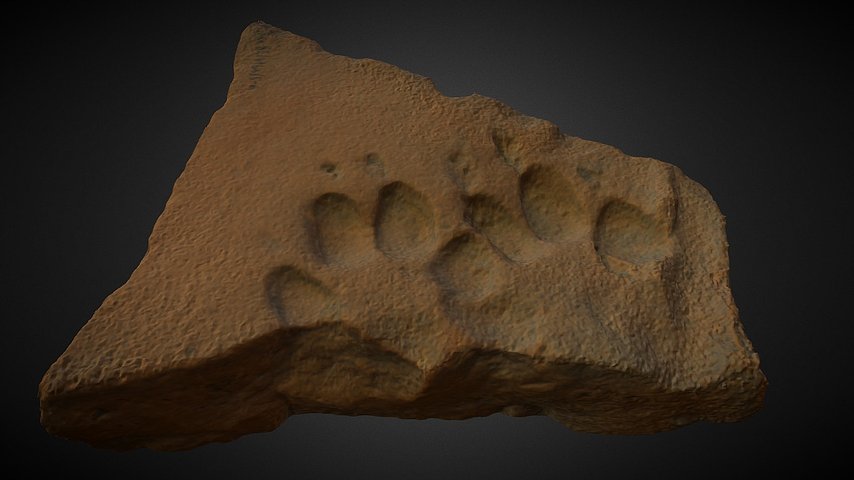
3D model
- Source
- Sketchfab
- Credit
- Hendrik Hameeuw
- Licence
- CC Attribution
- Commercial use
- cannot be read from the licence given — check the record
Smithsonian Open Access was not reached for this taxon, so this list is what the others held rather than everything there is.
The description on this site
- Licence
- CC BY-SA 4.0
This is what the site found, which is not the same as what exists.
Keep going
What may have been alongside itTegulidae through timeFormations of the PleistoceneThe world it lived on
Occurrence data from the Paleobiology Database, CC BY 4.0. Lesson 1835