Sympetrum
Sympetrum is a genus of small to medium-sized skimmer dragonflies, known as darters in Europe and as meadowhawks in North America. The more than 50 species predominantly live in the temperate zone of the Northern Hemisphere; 11 species are native to Europe and 15 species native to North America, and most of the rest in Asia. A few species also occur in tropical and southern Africa and in South America, but none is native to Australasia.

Alvesgaspar · CC BY 2.5 · via Wikipedia/Commons. May be a photograph of a specimen, or an artist’s reconstruction — an interpretation of a skeleton, since colour and soft tissue are almost never preserved.
On record
Recorded, not inferred- Sits inside
- SympetrinaePBDB
- Diet
- carnivore, insectivorePBDB, for Odonata
- Life habit
- volantPBDB, for Odonata
- Motility
- fast-movingPBDB, for Odonata
- Vision
- well-developedPBDB, for Odonata
- Environment
- freshwater,terrestrialPBDB, for Odonata
Time the record covers
At least 15 million years on record.
The record covers at least 23.04 Mya to 7.246 Mya. No occurrence read is dated outside 27.3 Mya to 5.333 Mya.
8 occurrences of Sympetrum on record, most of them in the Miocene. The Paleobiology Database records this as a living group, and the chart stops with its fossils rather than at the present. Bar height is expected occurrences, not a count: each fossil is spread across the span it is dated to, so a tall narrow bar means tight dating and a low wide one means loose.
When
8 occurrencesThese are dates about fossils, not the animal: the record can only begin after it arose and end before it died out, so either end may reach further. Shares are expected occurrences: a fossil dated to a span is counted partly in each period it straddles. More on what this infers.
Found in
3 formations
Loading coastlines…
The named rock units Sympetrum has been recovered from, largest first. Drawn where the rock is now, not where it formed. 2 occurrences have no formation on record, which is common for older literature.
Sympetrum and its relatives
MioceneWhere Sympetrum and its relatives were recorded in the Miocene.
Found in the same rock
133 taxa- Lestes3 sites
- Bibio2 sites
- Penthetria2 sites
- Acrididae1 site
- Aeshna oligocenica1 site
- Aeshna stavropolensis1 site
- Aglais karaganica1 site
- Aphididae1 site
- Aphodius bosniaskii1 site
- Apidae1 site
- Apis1 site
- Arctiites deletus1 site
- Arginae1 site
- Bombylius1 site
- Boyeria europaea1 site
- Cainocups aixensis1 site
- Calopterygidae1 site
- Calopterygoidea1 site
- Carabidae1 site
- Carabus (Tachypus) cancellatus1 site
- Caussanelia papaziani1 site
- Celithemis cantalensis1 site
- Celithemis zavattinii1 site
- Chrysomelidae1 site
The Paleobiology Database records 5 sites for Sympetrum, and this reads all of them. The number is how many of those sites it was catalogued from too. The 24 sharing the most are listed.
This is not a list of everything alive at the time. It is only what has come out of the same ground as this animal and been written down.
Entered from
6 references- The upper Miocene dragonflies of Monte Castellaro (Marche, central Italy)3
- New fossil Odonata from the European Cenozoic (Insecta: Odonata: Thaumatoneuridae, Aeshnidae, Idionychidae, Libellulidae)1
- Nuove libellule fossili del Miocene superiore di Monte Castellaro, Pesaro (Marche, Italia centrale) (Insecta Odonata Libellulidae)1
- New fossil Odonata (Insecta) from the upper Miocene of France and Spain (Anisoptera and Zygoptera)1
- Description d'une nouvelle espèce d'odonate fossile du Stampien d'Aix-en-Provence (Odon., Libellulidae)1
- Die Fossilen Insekten und die Phylogenie der Rezenten Formen, parts V-VII1
Each of the 8 occurrences read was entered from one of these publications, ordered by how many each accounts for. This is not a search for papers mentioning the name. Entries link to doi.org where the Paleobiology Database holds an identifier, and to its own record where it does not. Relayed as the Paleobiology Database holds them, not checked against what they resolve to.
Media and terms
Media content2

Picture of Sympetrum
- Source
- Wikipedia/Commons
- Credit
- Alvesgaspar
- Licence
- CC BY 2.5
- Commercial use
- the licence allows it
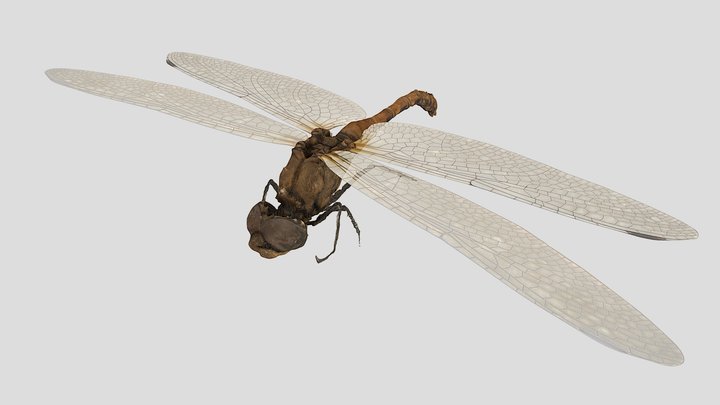
3D model
- Source
- Sketchfab
- Credit
- EvoBiomech
- Licence
- CC Attribution-NonCommercial
- Commercial use
- the licence does not allow it
Smithsonian Open Access was not reached for this taxon, so this list is what the others held rather than everything there is.
The description on this site
- Source
- Wikipedia, “Sympetrum”
- Licence
- CC BY-SA 4.0
This is what the site found, which is not the same as what exists.
Keep going
What may have been alongside itSympetrinae through timeFormations of the MioceneThe world it lived on
Occurrence data from the Paleobiology Database, CC BY 4.0. Newman 1833