Sawdonia acanthotheca n. sp.
Sawdonia is an extinct genus of early vascular plants, known from the Upper Silurian to the Lower Carboniferous. Sawdonia is best recognized by the large number of spikes (enations) covering the plant. These are vascular plants that do not have vascular systems in their enations. The first species of this genus was described in 1859 by Sir J. William Dawson and, was originally attributed to the genus Psilophyton. He named this plant Psilophyton princeps. In 1971 Francis Hueber proposed a new genus for this species due to its "Divergent technical characters from the generic description for Psilophyton." The holotype used for description is Dawson Collection Number 48, pro parte, Museum Specimen Number 3243. Sir J. William Dawson Collection, Peter Redpath Museum, McGill University, Montreal, Quebec, Canada.

Jonathan Chen · CC BY-SA 4.0 · via Wikipedia/Commons. May be a photograph of a specimen, or an artist’s reconstruction — an interpretation of a skeleton, since colour and soft tissue are almost never preserved.
Time the record covers
At most 27 million years on record.
The one occurrence read is dated to somewhere between 419.62 Mya and 393.47 Mya, which is a dating window rather than a span.
1 occurrence of Sawdonia acanthotheca n. sp. on record, most of them in the Devonian. Bar height is expected occurrences, not a count: each fossil is spread across the span it is dated to, so a tall narrow bar means tight dating and a low wide one means loose.
When
1 occurrences- Devonian100%
These are dates about fossils, not the animal: the record can only begin after it arose and end before it died out, so either end may reach further. Shares are expected occurrences: a fossil dated to a span is counted partly in each period it straddles. More on what this infers.
Found in
1 formation
Loading coastlines…
The named rock units Sawdonia acanthotheca n. sp. has been recovered from, largest first. Drawn where the rock is now, not where it formed.
Sawdonia acanthotheca n. sp. and its relatives
DevonianWhere Sawdonia acanthotheca n. sp. and its relatives were recorded in the Devonian.
Found in the same rock
2 taxa- Taeniocrada1 site
- Zosterophyllum divaricatum1 site
The Paleobiology Database records 1 site for Sawdonia acanthotheca n. sp., and this reads all of them. The number is how many of those sites it was catalogued from too.
This is not a list of everything alive at the time. It is only what has come out of the same ground as this animal and been written down.
Entered from
1 referenceEach of the 1 occurrence read was entered from one of these publications, ordered by how many each accounts for. This is not a search for papers mentioning the name. Each entry links to doi.org. Relayed as the Paleobiology Database holds them, not checked against what they resolve to.
Media and terms
Media content2

Picture of Sawdonia acanthotheca n. sp.
- Source
- Wikipedia/Commons
- Credit
- Jonathan Chen
- Licence
- CC BY-SA 4.0
- Commercial use
- the licence allows it
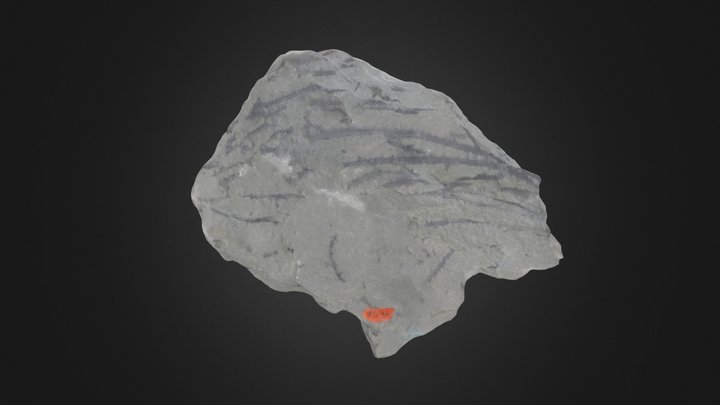
3D model
- Source
- Sketchfab
- Licence
- CC0 Public Domain
- Commercial use
- the licence allows it
Smithsonian Open Access was not reached for this taxon, so this list is what the others held rather than everything there is.
The description on this site
- Source
- Wikipedia, “Sawdonia”
- Licence
- CC BY-SA 4.0
This is what the site found, which is not the same as what exists.
Keep going
What may have been alongside itFormations of the DevonianThe world it lived on
Occurrence data from the Paleobiology Database, CC BY 4.0.