Sacabambaspis
Sacabambaspis is an extinct genus of armored jawless fish which lived in the Ordovician period. Sacabambaspis inhabited shallow waters on the continental margins of the southern supercontinent Gondwana. The most complete specimens have been found in Bolivia, while armor fragments are also known from Argentina, Australia, and Oman. Sacabambaspis vaguely resembles a slender tadpole, with an oversized armor-plated head, flat body, and no discernible fins outside of its narrow tail. The eyes are closely spaced and positioned at the very front of the head, akin to car headlamps. It was about 35 cm long in total, including its distinctively thin scaly tail.

Baranov, Gennadi · CC BY 4.0 · via Wikipedia/Commons. May be a photograph of a specimen, or an artist’s reconstruction — an interpretation of a skeleton, since colour and soft tissue are almost never preserved.
On record
Recorded, not inferred- Sits inside
- ArandaspididaePBDB
- Motility
- actively mobilePBDB, for Chordata
Time the record covers
At most 22 million years on record.
Every occurrence read is dated to somewhere between 471.3 Mya and 449.5 Mya, and nothing in the dating separates them, so that window is what the record shows rather than a span.
9 occurrences of Sacabambaspis on record, most of them in the Ordovician. Bar height is expected occurrences, not a count: each fossil is spread across the span it is dated to, so a tall narrow bar means tight dating and a low wide one means loose.
When
9 occurrences- Ordovician100%
These are dates about fossils, not the animal: the record can only begin after it arose and end before it died out, so either end may reach further. Shares are expected occurrences: a fossil dated to a span is counted partly in each period it straddles. More on what this infers.
Found in
5 formations
- Anzaldo Formation · Cochabamba Group4
- Amdeh Formation2
- La Cantera Formation1
- Carmichael Sandstone Formation1
- Stokes Siltstone Formation1
Loading coastlines…
The named rock units Sacabambaspis has been recovered from, largest first. Drawn where the rock is now, not where it formed.
Sacabambaspis and its relatives
OrdovicianWhere Sacabambaspis and its relatives were recorded in the Ordovician.
Found in the same rock
16 taxa- Dignomia munsterii3 sites
- Belonechitina2 sites
- Huemacaspis bistrami2 sites
- Apedolepis tomlinsonae1 site
- Areyongalepis oervigi1 site
- Bistramia1 site
- Drepanoistodus1 site
- Eoplacognathus1 site
- Erismodus1 site
- Euconochitina1 site
- Lagenochitina1 site
- Laufeldochitina1 site
- Panderodus1 site
- Phragmodus1 site
- Rhodesognathus1 site
- Vertebrata indet.1 site
The Paleobiology Database records 9 sites for Sacabambaspis, and this reads all of them. The number is how many of those sites it was catalogued from too.
This is not a list of everything alive at the time. It is only what has come out of the same ground as this animal and been written down.
Entered from
6 references- Ordovician fish from the Arabian Peninsula2
- Ordovician Microvertebrate Remains from the Amadeus Basin, Central Australia2
- New paleontological and geological data on the Ordovician and Silurian of Bolivia2
- The tail of the Ordovician fish Scabambaspis1
- Dignomia munsterii (Brachiopoda, Lingulata) from the Ordovician of Bolivia, with redescription of the genus1
- Sacabambaspis janvieri (Vertebrata) y conodontes del Llandeiliano temprano en la Formacion La Cantera, Precordillera de San Juan, Argentina1
Each of the 9 occurrences read was entered from one of these publications, ordered by how many each accounts for. This is not a search for papers mentioning the name. Entries link to doi.org where the Paleobiology Database holds an identifier, and to its own record where it does not. Relayed as the Paleobiology Database holds them, not checked against what they resolve to.
Media and terms
Media content2

Picture of Sacabambaspis
- Source
- Wikipedia/Commons
- Credit
- Baranov, Gennadi
- Licence
- CC BY 4.0
- Commercial use
- the licence allows it
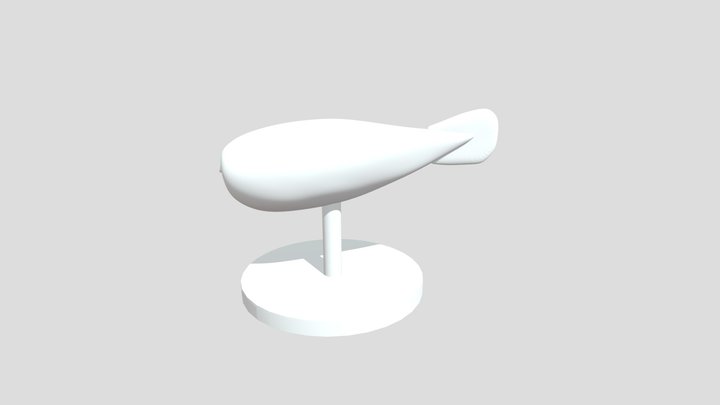
3D model
- Source
- Sketchfab
- Credit
- that raccoon
- Licence
- CC Attribution
- Commercial use
- cannot be read from the licence given — check the record
Smithsonian Open Access was not reached for this taxon, so this list is what the others held rather than everything there is.
The description on this site
- Licence
- CC BY-SA 4.0
This is what the site found, which is not the same as what exists.
Keep going
What may have been alongside itArandaspididae through timeFormations of the OrdovicianThe world it lived on
Occurrence data from the Paleobiology Database, CC BY 4.0.