Reinhardtites
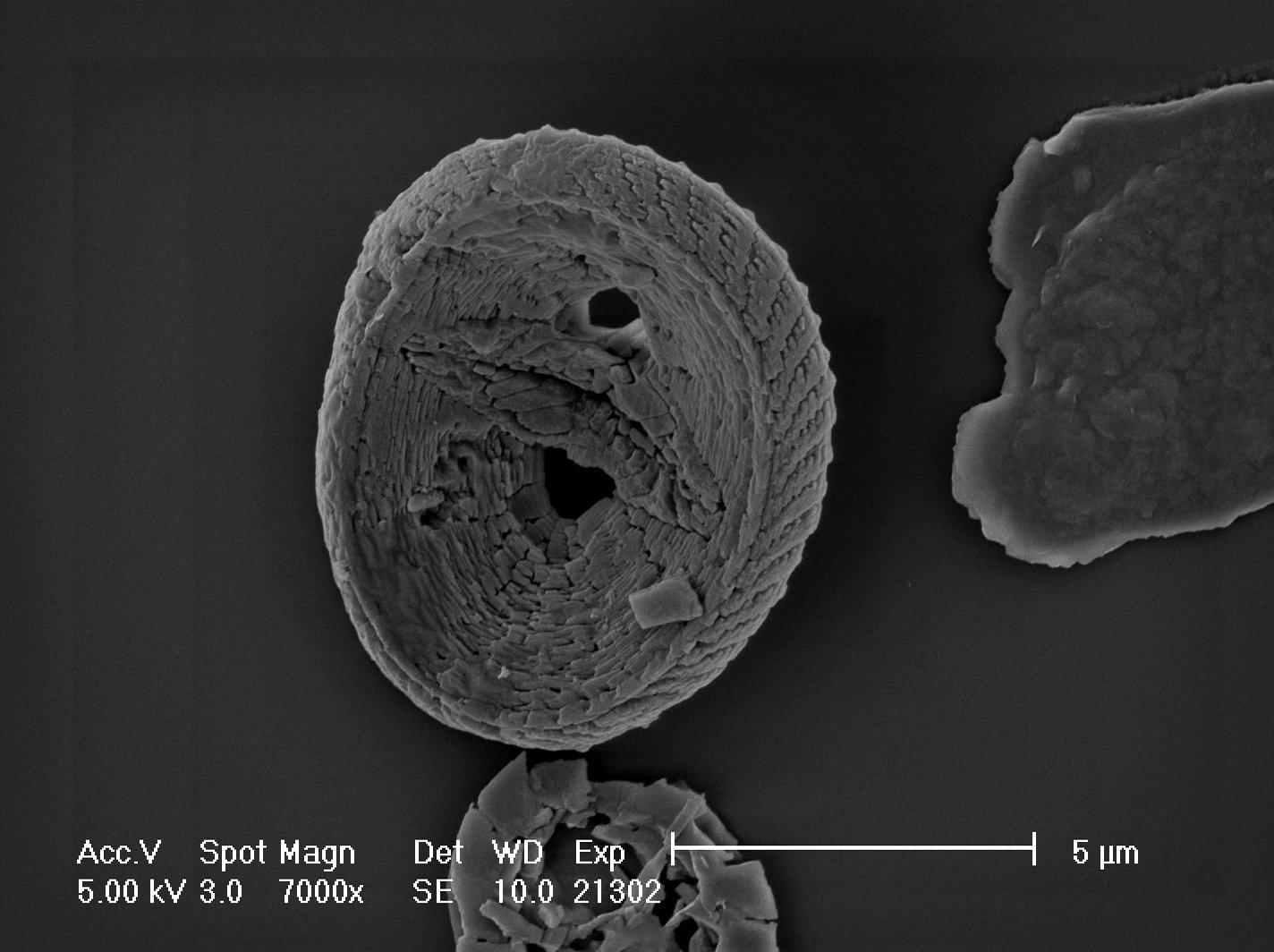
Thomas Ehrendorfer · CC0 · via GBIF. May be a photograph of a specimen, or an artist’s reconstruction — an interpretation of a skeleton, since colour and soft tissue are almost never preserved.
On record
Recorded, not inferred- Sits inside
- ChiastozygaceaePBDB
- Diet
- "photoautotroph"PBDB, for Haptophyta
- Life habit
- planktonic, depth=surfacePBDB, for Haptophyta
- Motility
- passively mobilePBDB, for Haptophyta
- Environment
- oceanic,oligotrophic,marine,brackishPBDB, for Haptophyta
Time the record covers
At least 17 million years on record.
The record covers at least 89.8 Mya to 72.2 Mya. No occurrence read is dated outside 100.5 Mya to 66 Mya.
64 occurrences of Reinhardtites on record, most of them in the Late Cretaceous. Bar height is expected occurrences, not a count: each fossil is spread across the span it is dated to, so a tall narrow bar means tight dating and a low wide one means loose.
When
64 occurrences- Late Cretaceous100%
These are dates about fossils, not the animal: the record can only begin after it arose and end before it died out, so either end may reach further. Shares are expected occurrences: a fossil dated to a span is counted partly in each period it straddles. More on what this infers.
Found in
8 formations
- Pedro Luro Formation3
- Prairie Bluff Chalk Formation2
- Demopolis Chalk Formation · Selma Group2
- Mishash Formation2
- Bozeş Formation1
- Avezac Formation1
Loading coastlines…
The named rock units Reinhardtites has been recovered from, largest first. Drawn where the rock is now, not where it formed. 51 occurrences have no formation on record, which is common for older literature.
Reinhardtites and its relatives
Late CretaceousWhere Reinhardtites and its relatives were recorded in the Late Cretaceous.
Found in the same rock
228 taxa- Micula staurophora32 sites
- Kamptnerius magnificus31 sites
- Eiffellithus turriseiffelii28 sites
- Tranolithus orionatus28 sites
- Watznaueria barnesiae25 sites
- Ahmuellerella octoradiata22 sites
- Prediscosphaera cretacea22 sites
- Eiffellithus eximius21 sites
- Arkhangelskiella cymbiformis20 sites
- Gartnerago obliquum20 sites
- Micula concava19 sites
- Seribiscutum primitivum19 sites
- Marthasterites furcatus17 sites
- Quadrum gartneri17 sites
- Repagulum parvidentatum17 sites
- Broinsonia signata16 sites
- Gartnerago segmentatum16 sites
- Zeugrhabdotus16 sites
- Chiastozygus litterarius15 sites
- Eiffellithus15 sites
- Prediscosphaera14 sites
- Prediscosphaera columnata14 sites
- Broinsonia furtiva12 sites
- Cribrosphaerella ehrenbergii12 sites
The Paleobiology Database records 53 sites for Reinhardtites, and this reads all of them. The number is how many of those sites it was catalogued from too. The 24 sharing the most are listed.
This is not a list of everything alive at the time. It is only what has come out of the same ground as this animal and been written down.
Entered from
15 references- Site U151320
- Site U151219
- Site U14034
- Site U15143
- Site U14433
- Nanofósiles calcáreos del Cretácico tardío - Terciario, del Pozo BB III A x-1 (Bahía Blanca), cuenca del Colorado, Argentina3
- Rediscovery of “Liodon” asiaticum Répelin, 1915, a Mosasaurini (Squamata, Mosasauridae, Mosasaurinae) from the Upper Cretaceous of the vicinity of Jerusalem – Biostratigraphical insights from microfossils2
- Asmodochelys parhami, a new fossil marine turtle from the Campanian Demopolis Chalk and the stratigraphic congruence of competing marine turtle phylogenies2
- Upper Maastrichtian ammonite biostratigraphy of the Gulf Coastal Plain (Mississippi Embayment, southern USA)2
- Site U15151
- Calcareous nannofossil events in the late cretaceous at Pedro Luro borehole, Colorado basin, Argentina1
- Petreşti-Arini – An important but ephemeral Upper Cretaceous continental vertebrate site in the southwestern Transylvanian Basin, Romania1
Each of the 64 occurrences read was entered from one of these publications, ordered by how many each accounts for. This is not a search for papers mentioning the name. 3 further references are not listed. Entries link to doi.org where the Paleobiology Database holds an identifier, and to its own record where it does not. Relayed as the Paleobiology Database holds them, not checked against what they resolve to.
Media and terms
Media content1
Picture of Reinhardtites
- Source
- GBIF
- Credit
- Thomas Ehrendorfer
- Licence
- CC0
- Commercial use
- the licence allows it
No 3D scan was found. Smithsonian Open Access, MorphoSource and Sketchfab were all searched.
This is what the site found, which is not the same as what exists.
Keep going
What may have been alongside itChiastozygaceae through timeFormations of the Late CretaceousThe world it lived on
Occurrence data from the Paleobiology Database, CC BY 4.0. Perch-Nielsen 1968