Quetzalcoatlus
Quetzalcoatlus is a genus of azhdarchid pterosaur that lived during the Maastrichtian age of the Late Cretaceous in North America. The type specimen, recovered in 1971 from the Javelina Formation of Texas, United States, consists of several wing fragments and was described as Quetzalcoatlus northropi in 1975 by Douglas Lawson. The generic name refers to the Aztec serpent god of the sky, Quetzalcōātl, while the specific name honors Jack Northrop, designer of a tailless fixed-wing aircraft. The remains of a second species were found between 1972 and 1974, also by Lawson, around 40 km (25 mi) from the Q. northropi locality. In 2021, these remains were assigned to the name Quetzalcoatlus lawsoni by Brian Andres and (posthumously) Wann Langston Jr., as part of a series of publications on the genus.

Ghedoghedo · CC BY-SA 3.0 · via Wikipedia/Commons. May be a photograph of a specimen, or an artist’s reconstruction — an interpretation of a skeleton, since colour and soft tissue are almost never preserved.
On record
Recorded, not inferred- Sits inside
- QuetzalcoatlinaePBDB
- Diet
- carnivorePBDB
- Life habit
- volantPBDB
- Motility
- fast-movingPBDB
- Vision
- well-developedPBDB
- Environment
- terrestrialPBDB
- Mass
- 250 kgWikidata
Time the record covers
At most 6.2 million years on record.
Every occurrence read is dated to somewhere between 72.2 Mya and 66 Mya, and nothing in the dating separates them, so that window is what the record shows rather than a span.
8 occurrences of Quetzalcoatlus on record, most of them in the Late Cretaceous. Bar height is expected occurrences, not a count: each fossil is spread across the span it is dated to, so a tall narrow bar means tight dating and a low wide one means loose.
When
8 occurrences- Late Cretaceous100%
These are dates about fossils, not the animal: the record can only begin after it arose and end before it died out, so either end may reach further. Shares are expected occurrences: a fossil dated to a span is counted partly in each period it straddles. More on what this infers.
Found in
2 formations
- Javelina Formation · Tornillo Group7
- Black Peaks Formation · Tornillo Group1
Loading coastlines…
The named rock units Quetzalcoatlus has been recovered from, largest first. Drawn where the rock is now, not where it formed.
Quetzalcoatlus and its relatives
Late CretaceousWhere Quetzalcoatlus and its relatives were recorded in the Late Cretaceous.
Found in the same rock
1 taxon- Alamosaurus sanjuanensis2 sites
The Paleobiology Database records 8 sites for Quetzalcoatlus, and this reads all of them. The number is how many of those sites it was catalogued from too.
This is not a list of everything alive at the time. It is only what has come out of the same ground as this animal and been written down.
Entered from
3 references- Morphology and taxonomy of Quetzalcoatlus Lawson 1975 (Pterodactyloidea: Azhdarchoidea)5
- Could pterosaurs fly?2
- A juvenile specimen of the sauropod dinosaur Alamosaurus sanjuanensis from the Upper Cretaceous of Big Bend National Park, Texas1
Each of the 8 occurrences read was entered from one of these publications, ordered by how many each accounts for. This is not a search for papers mentioning the name. Each entry links to doi.org. Relayed as the Paleobiology Database holds them, not checked against what they resolve to.
Media and terms
Media content2

Picture of Quetzalcoatlus
- Source
- Wikipedia/Commons
- Credit
- Ghedoghedo
- Licence
- CC BY-SA 3.0
- Commercial use
- the licence allows it
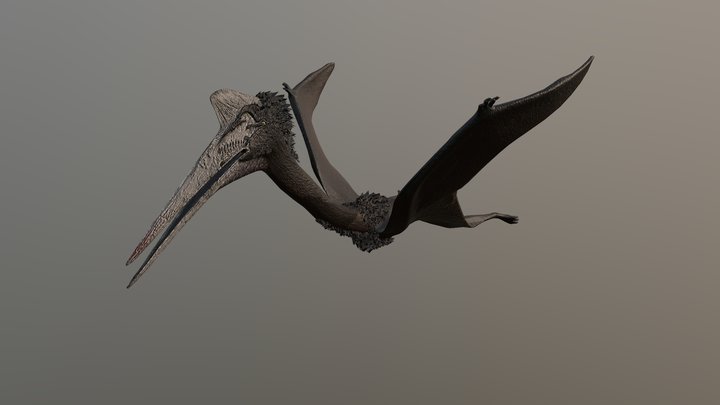
Smithsonian Open Access and MorphoSource were not reached for this taxon, so this list is what the others held rather than everything there is.
The description on this site
- Licence
- CC BY-SA 4.0
This is what the site found, which is not the same as what exists.
Keep going
What may have been alongside itQuetzalcoatlinae through timeFormations of the Late CretaceousThe world it lived on
Occurrence data from the Paleobiology Database, CC BY 4.0. Lawson 1975