Psammotreta (Leporimetis)
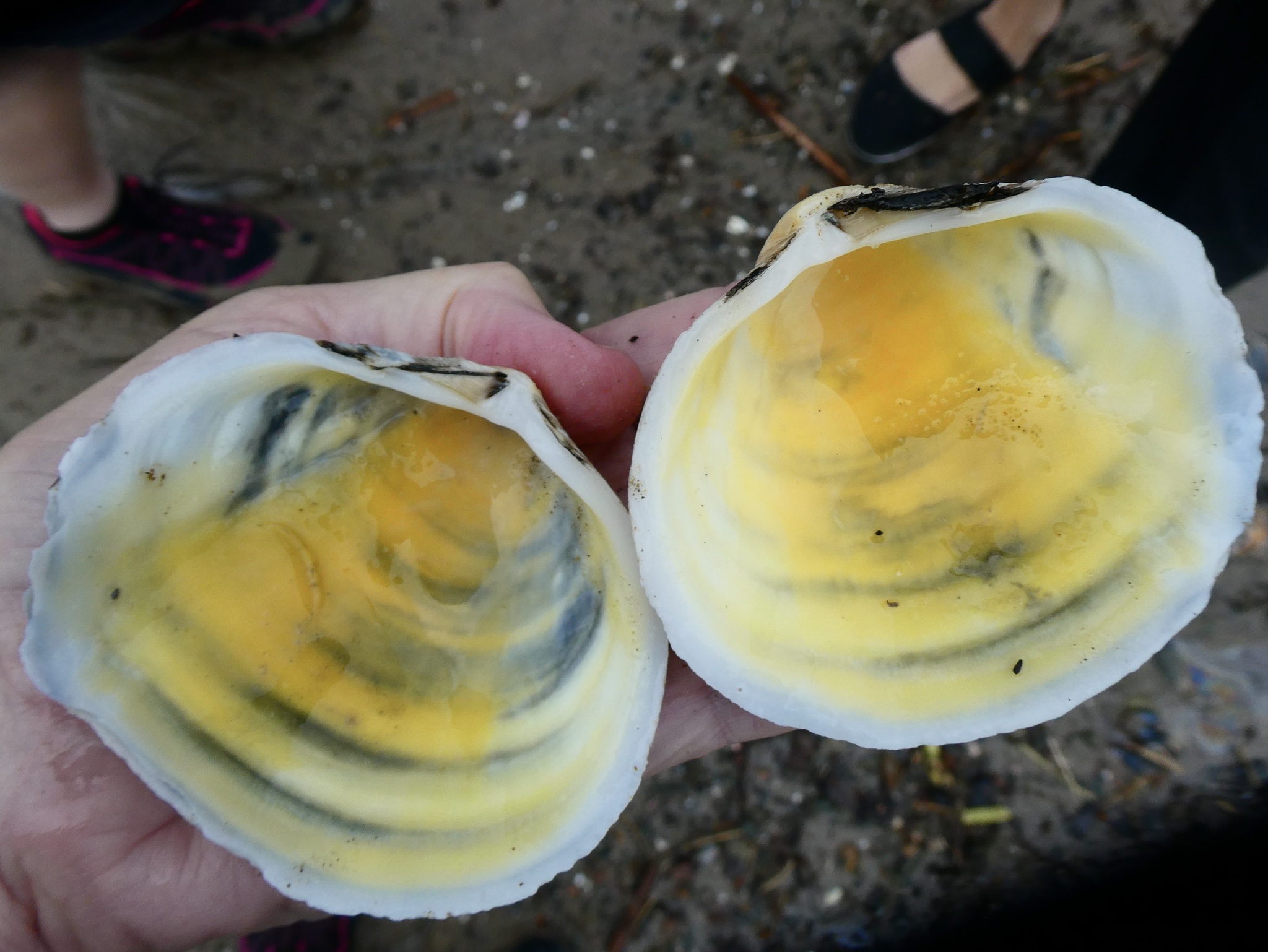
Not Psammotreta (Leporimetis). This is Leporimetis obesa (Deshayes, 1855), a relative — both are Tellinidae.
dlbowls · CC BY-NC 4.0 · via GBIF. May be a photograph of a specimen, or an artist’s reconstruction — an interpretation of a skeleton, since colour and soft tissue are almost never preserved.
On record
Recorded, not inferred- Sits inside
- PsammotretaPBDB
- Diet
- deposit feederPBDB, for Psammotreta
- Life habit
- infaunalPBDB, for Psammotreta
- Motility
- facultatively mobilePBDB, for Psammotreta
- Vision
- blindPBDB, for Bivalvia
Time the record covers
At least 33 million years on record.
The record covers at least 33.9 Mya to 129 ka. No occurrence read is dated outside 56 Mya to 0 Mya.
134 occurrences of Psammotreta (Leporimetis) on record, most of them in the Miocene. The Paleobiology Database records this as a living group. Bar height is expected occurrences, not a count: each fossil is spread across the span it is dated to, so a tall narrow bar means tight dating and a low wide one means loose.
When
134 occurrencesThese are dates about fossils, not the animal: the record can only begin after it arose and end before it died out, so either end may reach further. Shares are expected occurrences: a fossil dated to a span is counted partly in each period it straddles. More on what this infers.
Found in
32 formations
- Temblor Formation18
- Pancho Rico Formation17
- Vaqueros Formation14
- Palos Verdes Sand Formation14
- Pico Formation12
- Jacalitos Formation4
Loading coastlines…
The named rock units Psammotreta (Leporimetis) has been recovered from, largest first. Drawn where the rock is now, not where it formed. 8 further formations hold fewer occurrences each and are not listed. 16 occurrences have no formation on record, which is common for older literature.
Psammotreta (Leporimetis) and its relatives
MioceneWhere Psammotreta (Leporimetis) and its relatives were recorded in the Miocene.
Found in the same rock
2,095 taxa- Leporimetis obesa48 sites
- Macoma nasuta25 sites
- Cryptomya californica22 sites
- Lucinoma acutilineata20 sites
- Glossaulax reclusiana19 sites
- Tresus nuttallii18 sites
- Crepidula onyx15 sites
- Lucinisca nuttalli15 sites
- Rexithaerus secta15 sites
- Turritella cooperi15 sites
- Anomia peruviana14 sites
- Argopecten ventricosus14 sites
- Callithaca tenerrima14 sites
- Crepidula13 sites
- Crepidula nummaria13 sites
- Dallocardia quadragenarium13 sites
- Forreria belcheri13 sites
- Leptopecten latiauratus13 sites
- Mitrella gausapata13 sites
- Saccella taphria13 sites
- Saxidomus nuttalli13 sites
- Sinum scopulosum13 sites
- Californiconus californicus12 sites
- Laevicardium substriatum12 sites
The Paleobiology Database records 120 sites for Psammotreta (Leporimetis), and this reads all of them. Of that, one read hit the database's own return limit, so every count below is a floor rather than a total. The number is how many of those sites it was catalogued from too. The 24 sharing the most are listed.
This is not a list of everything alive at the time. It is only what has come out of the same ground as this animal and been written down.
Entered from
49 references- Pancho Rico Formation, Salinas Valley17
- The Vaqueros Formation, Lower Miocene of California. I. Paleontology14
- Oligocene molluscan biostratigraphy and paleontology of the Lower Part of the type Temblor Formation, California12
- Stratigraphy and paleontology of the marine Neogene formations of the Coalinga region, California6
- The paleontology of the Pleistocene molluscan fauna of the Newport Bay area, California6
- The Etchegoin Pliocene of middle California6
- Late Pliocene megafossils of the Pico Formation, Newhall area, Los Angeles County, Southern California5
- The Paleontology and Stratigraphy of the Marine Pliocene and Pleistocene of San Pedro, California5
- Neogene and Paleogene Molluscan (Bivalvia) Cenozones of the Russian Northeast.4
- The San Lorenzo Group of the San Emigdio region, California4
- New information on molluscan paleontology and depositional environments of the Upper Pliocene Pico Formation, Valencia area, Los Angeles County, southern California3
- Age and paleoenvironmental significance of mega-invertebrates from the "San Pedro" Formation in the Coyote Hills, Fullerton and Buena Park, Orange County, Southern California3
Each of the 134 occurrences read was entered from one of these publications, ordered by how many each accounts for. This is not a search for papers mentioning the name. 37 further references are not listed. Entries link to doi.org where the Paleobiology Database holds an identifier, and to its own record where it does not. Relayed as the Paleobiology Database holds them, not checked against what they resolve to.
Media and terms
Media content1
Picture of Leporimetis obesa (Deshayes, 1855)
- Source
- GBIF
- Credit
- dlbowls
- Licence
- CC BY-NC 4.0
- Commercial use
- the licence does not allow it
No 3D scan of Psammotreta (Leporimetis) was found in Sketchfab.
Smithsonian Open Access and MorphoSource were not reached for this taxon, so this list is what the others held rather than everything there is.
This is what the site found, which is not the same as what exists.
Keep going
What may have been alongside itPsammotreta through timeFormations of the MioceneThe world it lived on
Occurrence data from the Paleobiology Database, CC BY 4.0. (Iredale 1930)