Phorusrhacidae
No picture of Phorusrhacidae was found. iDigBio was searched and had none. Wikipedia has a picture filed under this name, but nothing tied it to Phorusrhacidae itself, so it was not used. Wikidata and Smithsonian Open Access did not answer, so this is what the others held rather than everything there is. GBIF was asked, and what came back is not recorded: nothing, or a picture this site could not tie to Phorusrhacidae, or no answer at all. This entry cannot say which.
On record
Recorded, not inferred- Also called
- terror birdPBDB
- Sits inside
- CariamaePBDB
- Diet
- carnivorePBDB
- Life habit
- ground dwellingPBDB
- Motility
- actively mobilePBDB, for Theropoda
- Environment
- terrestrialPBDB
Time the record covers
At least 47 million years on record.
The record covers at least 48.07 Mya to 400 ka. No occurrence read is dated outside 56 Mya to 11.7 ka.
109 occurrences of Phorusrhacidae on record, most of them in the Miocene. Bar height is expected occurrences, not a count: each fossil is spread across the span it is dated to, so a tall narrow bar means tight dating and a low wide one means loose.
When
109 occurrences- Eocene6%
- Oligocene8%
- Miocene76%
- Pliocene4%
- Pleistocene6%
These are dates about fossils, not the animal: the record can only begin after it arose and end before it died out, so either end may reach further. Shares are expected occurrences: a fossil dated to a span is counted partly in each period it straddles. More on what this infers.
Found in
29 formations
- Santa Cruz Formation50
- Ituzaingo Formation6
- Sarmiento Formation5
- Epecuén Formation4
- Monte Leon Formation3
- Dolores Formation3
Loading coastlines…
The named rock units Phorusrhacidae has been recovered from, largest first. Drawn where the rock is now, not where it formed. 5 further formations hold fewer occurrences each and are not listed. 7 occurrences have no formation on record, which is common for older literature.
Phorusrhacidae and its relatives
MioceneWhere Phorusrhacidae and its relatives were recorded in the Miocene.
Found in the same rock
957 taxa- Cladosictis patagonica11 sites
- Psilopterus lemoinei11 sites
- Sipalocyon gracilis10 sites
- Palaeothentes lemoinei9 sites
- Phorusrhacos longissimus9 sites
- Acdestis oweni8 sites
- Adinotherium8 sites
- Borhyaena tuberata8 sites
- Nesodon8 sites
- Hegetotherium mirabile7 sites
- Interatherium7 sites
- Neoreomys australis7 sites
- Palaeothentes intermedius7 sites
- Stenotatus7 sites
- Acarechimys minutus6 sites
- Astrapotherium6 sites
- Caviomorpha6 sites
- Microbiotherium tehuelchum6 sites
- Neoreomys6 sites
- Palaeothentes minutus6 sites
- Patagornis marshi6 sites
- Propalaehoplophoridae6 sites
- Protypotherium6 sites
- Protypotherium praerutilum6 sites
The Paleobiology Database records 62 sites for Phorusrhacidae, and this reads all of them. The number is how many of those sites it was catalogued from too. The 24 sharing the most are listed.
This is not a list of everything alive at the time. It is only what has come out of the same ground as this animal and been written down.
Entered from
51 references- Systematic revision of the Phorusrhacidae (Avies: Ralliformes)18
- Catálogo de los pájaros fósiles de la República Argentina conservados en el Museo de La Plata [Catalogue of the fossil birds from the Argentine Republic housed in the Museo de La Plata]17
- Diversity and paleobiology of the Santacrucian birds5
- Fossil vertebrates of the early-middle Miocene Cerro Boleadoras Formation, northwestern Santa Cruz Province, Patagonia, Argentina3
- New records of birds from the Santa Cruz Formation (Early-Middle Miocene) at the Río Santa Cruz Valley, Patagonia, Argentina3
- Tertiary ground birds from Patagonia (Argentina) in the Tournouër collection of the Muséum National d’Histoire Naturelle, Paris3
- Late Miocene continental birds from the Cerro Azul Formation in the Pampean region (central- southern Argentina)3
- El registro paleontológico de las Aves del “Mesopo- tamiense” (Formación Ituzaingó; Mioceno tardío- Plioceno) de la provincia de Entre Ríos, Argentina3
- Miocene vertebrates from Entre Rios province, eastern Argentina3
- New skull remains of Phorusrhacos longissimus (Aves, Cariamiformes) from the Miocene of Argentina: implications for the morphology of Phorusrhacidae2
- New records of birds from the Santa Cruz Formation (Early-Middle Miocene) at the Río Santa Cruz Valley, Patagonia2
- The last terror birds (Aves, Phorusrhacidae): new evidence from the late Pleistocene of Uruguay2
Each of the 109 occurrences read was entered from one of these publications, ordered by how many each accounts for. This is not a search for papers mentioning the name. 39 further references are not listed. Entries link to doi.org where the Paleobiology Database holds an identifier, and to its own record where it does not. Relayed as the Paleobiology Database holds them, not checked against what they resolve to.
Media and terms
Media content1
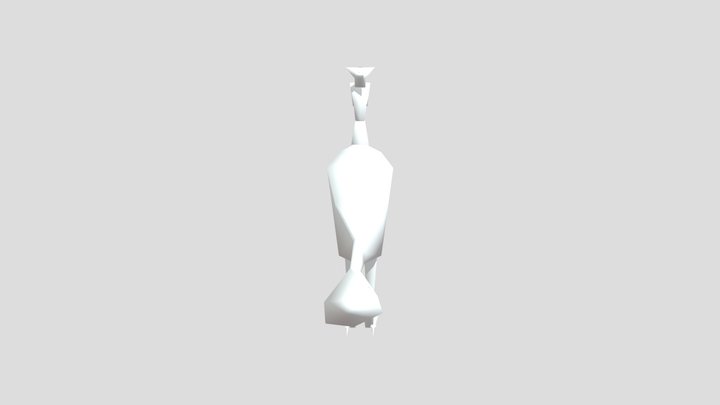
3D model
- Source
- Sketchfab
- Credit
- Zhzjzhzbzbd
- Licence
- CC Attribution
- Commercial use
- cannot be read from the licence given — check the record
No picture of Phorusrhacidae was found. iDigBio was searched and had none.
Wikipedia has a picture filed under this name, but nothing tied it to Phorusrhacidae itself, so it was not used.
Wikidata and Smithsonian Open Access did not answer, so this is what the others held rather than everything there is.
GBIF was asked, and what came back is not recorded: nothing, or a picture this site could not tie to Phorusrhacidae, or no answer at all. This entry cannot say which.
Smithsonian Open Access and MorphoSource were not reached for this taxon, so this list is what the others held rather than everything there is.
This is what the site found, which is not the same as what exists.
Keep going
What may have been alongside itCariamae through timeFormations of the MioceneThe world it lived on
Occurrence data from the Paleobiology Database, CC BY 4.0. Ameghino 1889