Perse
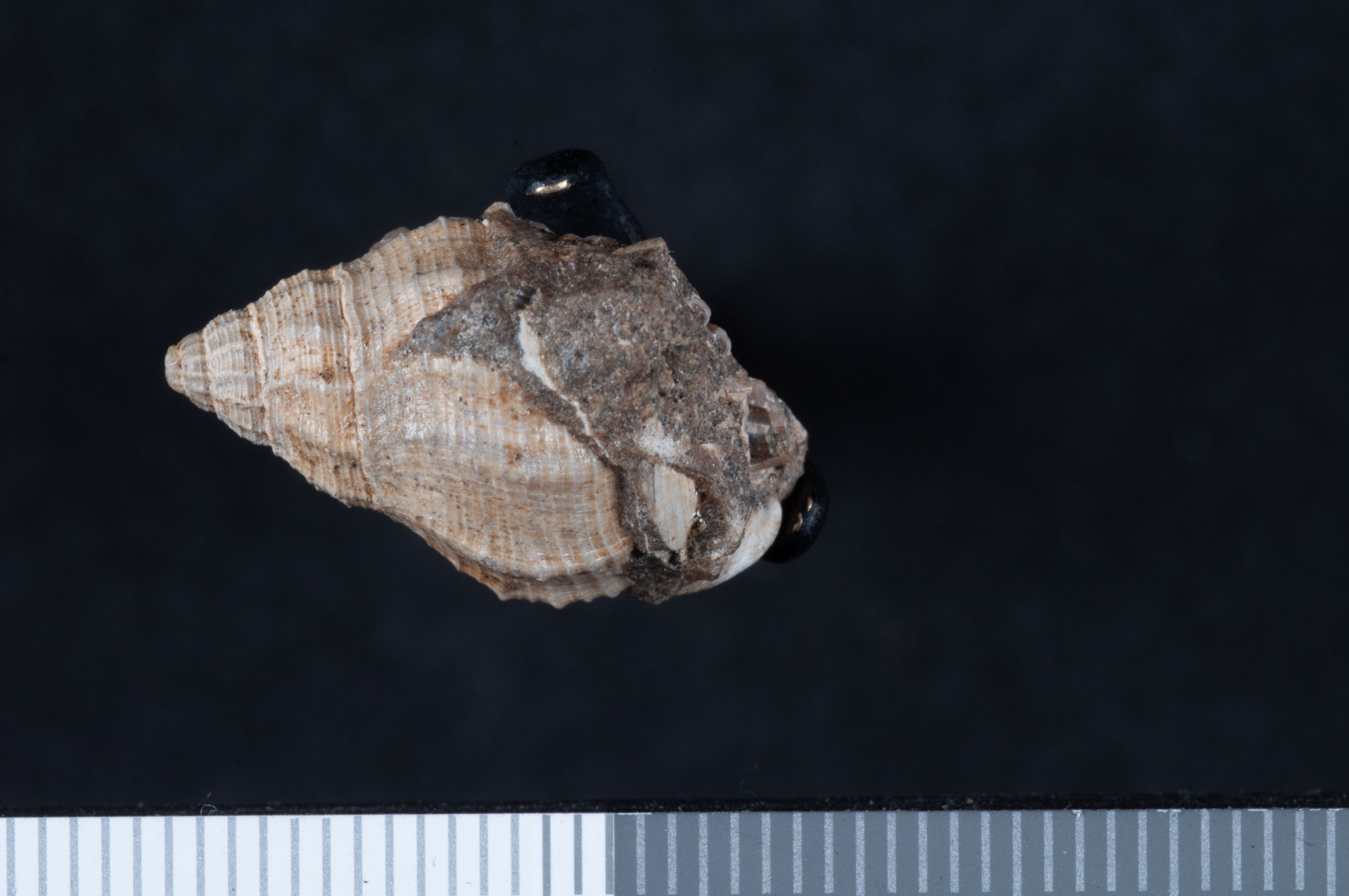
via iDigBio · via iDigBio. May be a photograph of a specimen, or an artist’s reconstruction — an interpretation of a skeleton, since colour and soft tissue are almost never preserved.
On record
Recorded, not inferred- Sits inside
- FasciolariinaePBDB
- Diet
- carnivorePBDB, for Fasciolariidae
- Life habit
- epifaunalPBDB, for Fasciolariidae
- Motility
- actively mobilePBDB, for Fasciolariidae
- Vision
- limitedPBDB, for Gastropoda
Time the record covers
At least 28 million years on record.
The record covers at least 56 Mya to 27.3 Mya. No occurrence read is dated outside 66 Mya to 23.04 Mya.
77 occurrences of Perse on record, most of them in the Eocene. Bar height is expected occurrences, not a count: each fossil is spread across the span it is dated to, so a tall narrow bar means tight dating and a low wide one means loose.
When
77 occurrencesThese are dates about fossils, not the animal: the record can only begin after it arose and end before it died out, so either end may reach further. Shares are expected occurrences: a fossil dated to a span is counted partly in each period it straddles. More on what this infers.
Found in
25 formations
- Pittsburg Bluff Formation17
- Cowlitz Formation9
- Quimper Formation7
- Tejon Formation6
- Scripps Formation · La Jolla Group6
- Pittsburg Formation3
Loading coastlines…
The named rock units Perse has been recovered from, largest first. Drawn where the rock is now, not where it formed. One further formation holds fewer occurrences and is not listed. 3 occurrences have no formation on record, which is common for older literature.
Perse and its relatives
EoceneWhere Perse and its relatives were recorded in the Eocene.
Found in the same rock
645 taxa- Nuculana (Saccella) washingtonensis22 sites
- Acila (Truncacila) shumardi18 sites
- Glossaulax reclusiana16 sites
- Macrocallista pittsburgensis16 sites
- Molopophorus gabbi15 sites
- Calyptraea diegoana14 sites
- Mactromeris pittsburgensis14 sites
- Scaphander stewarti14 sites
- Solen townsendensis13 sites
- Bruclarkia columbiana12 sites
- Neverita (Neverita) washingtonensis12 sites
- Polinices (Euspira) nuciformis12 sites
- Schedocardia brewerii12 sites
- Solena (Eosolen) eugenensis12 sites
- Priscoficus cowlitzensis11 sites
- Tellina pittsburgensis11 sites
- Whitneyella martinez11 sites
- Dentalium stramineum10 sites
- Neverita (Neverita) globosa10 sites
- Tejonia moragai10 sites
- Cadulus (Platyschides) gabbi9 sites
- Ficopsis remondii9 sites
- Spirocrypta pileum9 sites
- Turritella uvasana9 sites
The Paleobiology Database records 68 sites for Perse, and this reads all of them. The number is how many of those sites it was catalogued from too. The 24 sharing the most are listed.
This is not a list of everything alive at the time. It is only what has come out of the same ground as this animal and been written down.
Entered from
23 references- Oligocene marine mollusks from the Pittsburg Bluff Formation in Oregon20
- Megafaunal zones of the Oligocene of northwestern Washington8
- Eocene molluscan stages and their correlation, San Diego area, California7
- Fauna of the Type Tejon: Its relation to the Cowlitz Phase of the Tejon Group of Washington7
- Paleoecological anlaysis of molluscan assemblages from the Middle Eocene Cowlitz Formation, southwestern Washington6
- Stratigraphy and Mollusca of the Eocene of western Oregon5
- Geology of the Alaska Peninsula-island arc and continental margin (Part 1)3
- Stratigraphy and sedimentology of the Eocene Tejon Formation, western Tehachapi and San Emigdio mountains, California2
- Geology of the Northern Santa Ana Mountains, California2
- Tumey Sandstone (Tertiary), Fresno County, California2
- Fauna from the Markley Formation (Upper Eocene) on Pleasant Creek, California2
- Fauna of the Martinez Eocene of California2
Each of the 77 occurrences read was entered from one of these publications, ordered by how many each accounts for. This is not a search for papers mentioning the name. 11 further references are not listed. Entries link to doi.org where the Paleobiology Database holds an identifier, and to its own record where it does not. Relayed as the Paleobiology Database holds them, not checked against what they resolve to.
Media and terms
Media content1
Picture of Perse
- Source
- iDigBio
- Credit
- via iDigBio
- Licence
- not stated by the source
- Commercial use
- cannot be read from the licence given — check the record
No 3D scan was found. Smithsonian Open Access, MorphoSource and Sketchfab were all searched.
This is what the site found, which is not the same as what exists.
Keep going
What may have been alongside itFasciolariinae through timeFormations of the EoceneThe world it lived on
Occurrence data from the Paleobiology Database, CC BY 4.0. Clark 1918