Pentamerid sp.
No picture of Pentamerid sp. was found. Wikidata was searched and had none. Wikipedia has a picture filed under this name, but nothing tied it to Pentamerid sp. itself, so it was not used. iDigBio and GBIF were not searched: the Paleobiology Database does not place Pentamerid sp. firmly enough to tell it from something else bearing the same name, and a search on the name alone returns whichever of them was photographed. Smithsonian Open Access did not answer, so this is what the others held rather than everything there is.
Time the record covers
At least 25 million years on record.
The record covers at least 458.2 Mya to 432.9 Mya. No occurrence read is dated outside 469.4 Mya to 422.7 Mya.
2 occurrences of Pentamerid sp. on record, most of them in the Ordovician. Bar height is expected occurrences, not a count: each fossil is spread across the span it is dated to, so a tall narrow bar means tight dating and a low wide one means loose.
When
2 occurrences- Ordovician50%
- Silurian50%
These are dates about fossils, not the animal: the record can only begin after it arose and end before it died out, so either end may reach further. Shares are expected occurrences: a fossil dated to a span is counted partly in each period it straddles. More on what this infers.
Found in
2 formations
Loading coastlines…
The named rock units Pentamerid sp. has been recovered from, largest first. Drawn where the rock is now, not where it formed.
Pentamerid sp. and its relatives
OrdovicianWhere Pentamerid sp. and its relatives were recorded in the Ordovician.
Found in the same rock
15 taxa- <pentamerid>1 site
- Anomalorthis rossi1 site
- Atrypella borealis1 site
- Atrypella scheii1 site
- Atrypella tenuis1 site
- Atrypoidea1 site
- Cyrtina1 site
- Favosites1 site
- Howellella1 site
- Nothorthis subpyramidalis1 site
- Pachyglossella1 site
- Plectambonitid sp.1 site
- Scaphelasma lamellosum1 site
- Schuchertella1 site
- Syringopora1 site
The Paleobiology Database records 2 sites for Pentamerid sp., and this reads all of them. The number is how many of those sites it was catalogued from too.
This is not a list of everything alive at the time. It is only what has come out of the same ground as this animal and been written down.
Entered from
2 references- Taxonomy and biostratigraphy of Ordovician brachiopods from northeastern Ny Friesland, Spitsbergen1
- Cornwallis and Little Cornwallis Islands, District of Franklin, Northwest Territories1
Each of the 2 occurrences read was entered from one of these publications, ordered by how many each accounts for. This is not a search for papers mentioning the name. Each entry links to doi.org. Relayed as the Paleobiology Database holds them, not checked against what they resolve to.
Media and terms
Media content1
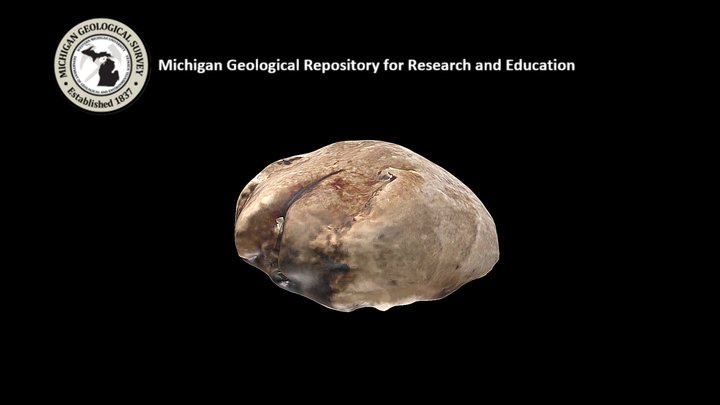
No picture of Pentamerid sp. was found. Wikidata was searched and had none.
Wikipedia has a picture filed under this name, but nothing tied it to Pentamerid sp. itself, so it was not used.
iDigBio and GBIF were not searched: the Paleobiology Database does not place Pentamerid sp. firmly enough to tell it from something else bearing the same name, and a search on the name alone returns whichever of them was photographed.
Smithsonian Open Access did not answer, so this is what the others held rather than everything there is.
Smithsonian Open Access and MorphoSource were not reached for this taxon, so this list is what the others held rather than everything there is.
This is what the site found, which is not the same as what exists.
Keep going
What may have been alongside itFormations of the OrdovicianThe world it lived on
Occurrence data from the Paleobiology Database, CC BY 4.0.