Owenites
Owenites is a genus of a ceratite ammonoid that lived during the Early Triassic.
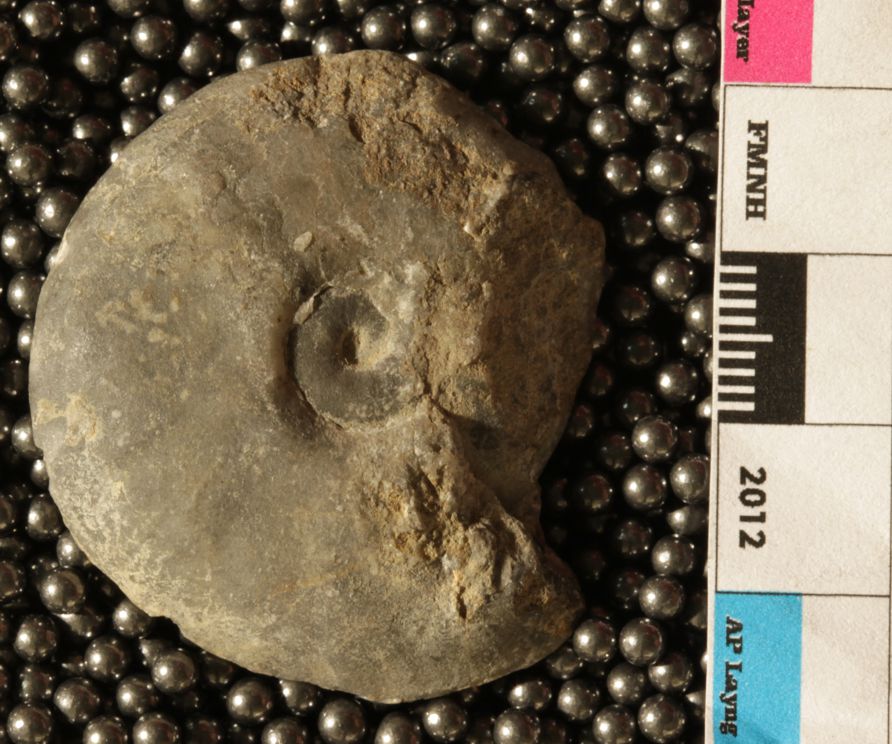
The Field Museum of Natural History · CC0 · via GBIF. May be a photograph of a specimen, or an artist’s reconstruction — an interpretation of a skeleton, since colour and soft tissue are almost never preserved.
On record
Recorded, not inferred- Sits inside
- ParanannitidaePBDB
- Diet
- carnivorePBDB, for Ceratitida
- Life habit
- nektonicPBDB, for Ceratitida
- Motility
- actively mobilePBDB, for Ceratitida
- Vision
- well-developedPBDB, for Cephalopoda
- Environment
- marinePBDB, for Cephalopoda
Time the record covers
At most 5 million years on record.
Every occurrence read is dated to somewhere between 251.902 Mya and 247 Mya, and nothing in the dating separates them, so that window is what the record shows rather than a span.
192 occurrences of Owenites on record, most of them in the Early Triassic. Bar height is expected occurrences, not a count: each fossil is spread across the span it is dated to, so a tall narrow bar means tight dating and a low wide one means loose.
When
192 occurrences- Early Triassic100%
These are dates about fossils, not the animal: the record can only begin after it arose and end before it died out, so either end may reach further. Shares are expected occurrences: a fossil dated to a span is counted partly in each period it straddles. More on what this infers.
Found in
20 formations
- Kangshare Formation28
- Thaynes Formation20
- Bac Thuy Formation12
- Zhitkov Formation10
- Tulong Formation8
- Mikin Formation7
Loading coastlines…
The named rock units Owenites has been recovered from, largest first. Drawn where the rock is now, not where it formed. 78 occurrences have no formation on record, which is common for older literature.
Owenites and its relatives
Early TriassicWhere Owenites and its relatives were recorded in the Early Triassic.
Found in the same rock
333 taxa- Pseudosageceras multilobatum36 sites
- Parussuria compressa32 sites
- Dieneroceras dieneri30 sites
- Lanceolites compactus21 sites
- Aspenites acutus20 sites
- Nyalamites angustecostatus20 sites
- Meekoceras gracilitatis19 sites
- Juvenites18 sites
- Juvenites sinuosus17 sites
- Anaxenaspis orientale16 sites
- Inyoites oweni15 sites
- Preflorianites radians14 sites
- Dieneroceras goudemandi13 sites
- Juvenites spathi12 sites
- Arctoceras septentrionale11 sites
- Juvenites septentrionalis11 sites
- Lanceolites bicarinatus11 sites
- Paranannites aspenensis11 sites
- Prosphingitoides ovalis11 sites
- Anaxenaspis lidacensis10 sites
- Juvenites thermarum10 sites
- Leyeceras rothi10 sites
- Nammalites pilatoides10 sites
- Pseudosageceras10 sites
The Paleobiology Database records 157 sites for Owenites, and this reads all of them. The number is how many of those sites it was catalogued from too. The 24 sharing the most are listed.
This is not a list of everything alive at the time. It is only what has come out of the same ground as this animal and been written down.
Entered from
40 references- High-resolution Early Triassic ammonoid biostratigraphy of South Tibet, China and implications for global correlations28
- Smithian (Early Triassic) ammonoid faunas from northwestern Guangxi (South China): taxonomy and biochronology21
- Smithian (Early Triassic) ammonoid faunas from exotic blocks from Oman: taxonomy and biochronology19
- Olenekian (Early Triassic) stratigraphy and fossil assemblages in northeastern Vietnam11
- Die Ammoniten der Unteren Trias von Timor11
- Smithian ammonoid faunas from Utah: implications for Early Triassic biostratigraphy, correlation and basinal paleogeography10
- Triassic Ammonoid succession in South Primorye: 1. Lower Olenekian Hedenstroemia bosphorensis and Anasibirites nevolini Zones10
- Lower Triassic Ammonoids from Western Kwangsi, China10
- Middle and Late Smithian (Early Triassic) ammonoids from Spiti, India8
- Smithian (Early Triassic) ammonoids from Tulong, south Tibet8
- New data on the systematic composition of Early Triassic ammonoids from the Shimanskyites shimanskyi Zone of the Kamenushka River Basin, South Primorye, and their phylogenetic and stratigraphic significance5
- New Smithian (Early Triassic) ammonoids from Crittenden Springs, Elko County, Nevada: implications for taxonomy, biostratigraphy and biogeography5
Each of the 192 occurrences read was entered from one of these publications, ordered by how many each accounts for. This is not a search for papers mentioning the name. 28 further references are not listed. Entries link to doi.org where the Paleobiology Database holds an identifier, and to its own record where it does not. Relayed as the Paleobiology Database holds them, not checked against what they resolve to.
Media and terms
Media content2
Picture of Owenites
- Source
- GBIF
- Credit
- The Field Museum of Natural History
- Licence
- CC0
- Commercial use
- the licence allows it
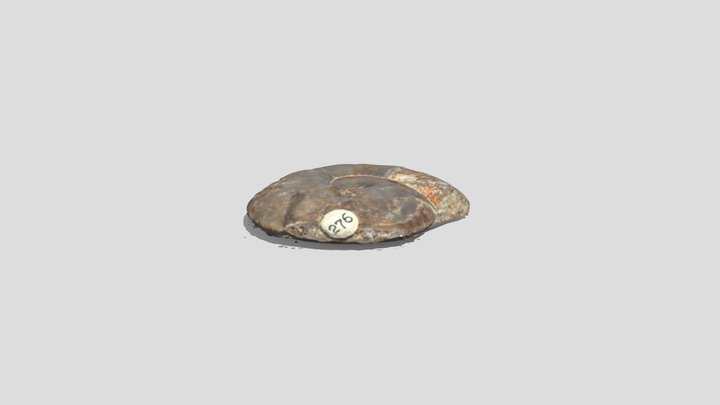
3D model
- Source
- Sketchfab
- Credit
- digimuseum
- Licence
- CC Attribution
- Commercial use
- cannot be read from the licence given — check the record
The description on this site
- Licence
- CC BY-SA 4.0
This is what the site found, which is not the same as what exists.
Keep going
What may have been alongside itParanannitidae through timeFormations of the Early TriassicThe world it lived on
Occurrence data from the Paleobiology Database, CC BY 4.0. Hyatt and Smith 1905