Marsilea
Marsilea is a genus of approximately 65 species of aquatic ferns of the family Marsileaceae. The name honours Italian naturalist Luigi Ferdinando Marsili (1656–1730).

Forest & Kim Starr · CC BY 3.0 · via Wikipedia/Commons. May be a photograph of a specimen, or an artist’s reconstruction — an interpretation of a skeleton, since colour and soft tissue are almost never preserved.
On record
Recorded, not inferred- Also called
- water cloverPBDB
- Sits inside
- MarsileaceaePBDB
- Diet
- "photoautotroph"PBDB, for Streptophyta
Time the record covers
At least 163 million years on record.
The record covers at least 174.7 Mya to 11.63 Mya. No occurrence read is dated outside 201.4 Mya to 5.333 Mya.
18 occurrences of Marsilea on record, most of them in the Miocene. The Paleobiology Database records this as a living group, and the chart stops with its fossils rather than at the present. Bar height is expected occurrences, not a count: each fossil is spread across the span it is dated to, so a tall narrow bar means tight dating and a low wide one means loose.
When
18 occurrencesThese are dates about fossils, not the animal: the record can only begin after it arose and end before it died out, so either end may reach further. Shares are expected occurrences: a fossil dated to a span is counted partly in each period it straddles. More on what this infers.
Found in
7 formations
- Horseshoe Canyon Formation · Edmonton Group2
- Karalda Suite Formation1
- Lower Osinniki Suite Formation1
- Dakota Formation1
- Duaringa Formation1
- Deccan Intertrappean Formation1
Loading coastlines…
The named rock units Marsilea has been recovered from, largest first. Drawn where the rock is now, not where it formed. 10 occurrences have no formation on record, which is common for older literature.
Marsilea and its relatives
MioceneWhere Marsilea and its relatives were recorded in the Miocene.
Found in the same rock
413 taxa- Azolla3 sites
- Coniopteris3 sites
- Annulariopsis2 sites
- Cladophlebis2 sites
- Czekanowskia2 sites
- Equisetites2 sites
- Ginkgo2 sites
- Podozamites2 sites
- Samaropsis2 sites
- Abies1 site
- Acanthaceoxylon mohgaonse1 site
- Acanthus1 site
- Adiantopteris1 site
- Aequitriradites indicus1 site
- Aerorhizos harrisii1 site
- Aesculoxylon deccanensis1 site
- Ailanthoxylon indicum1 site
- Albertarum pueri1 site
- Albertosaurus1 site
- Allocladus biswasianus1 site
- Amesoneuron borassoides1 site
- Andreaeaites ramanujamii1 site
- Anemia1 site
- Anodontosaurus lambei1 site
The Paleobiology Database records 8 sites for Marsilea, and this reads all of them. The number is how many of those sites it was catalogued from too. The 24 sharing the most are listed.
This is not a list of everything alive at the time. It is only what has come out of the same ground as this animal and been written down.
Entered from
10 references- Die mittelmiozaenen und obermiozaenen Floren aus der Meuroer und Raunoer Folge in der Lausitz. III. Fundstellen und Palaeobiologie6
- Tretichnye Flory Zapadnoi Sibiri4
- A fossilized aroid infructescence, Albertarum pueri geno. nov. et sp. nov., of Late Cretaceous (late Campanian) age from the Horseshoe Canyon Formation of southern Alberta, Canada1
- Taxodium wallisii sp. nov.: First occurence of Taxodium from the Upper Cretaceous1
- A new species of Marsilea from the Dakota Formation in central Kansas1
- A Catalogue of Fossil Plants from India Part 2: Palaeozoic and Mesozoic Megafossils1
- A Catalogue of Fossil Plants from India Part 4: Cenozoic (Tertiary) Megafossils1
- Stratigraphy and flora of the Jurassic deposits of the Western and Southern Siberia and Tuva1
- Materials on stratigraphy and correlation of the Jurassic coal-bearing deposits of Kuznetsk, Ulugkhem, and Irkutsk basins1
- Mesozoic and Tertiary Insects of Queensland and New South Wales. Descriptions of the fossil Insects and stratigraphical features1
Each of the 18 occurrences read was entered from one of these publications, ordered by how many each accounts for. This is not a search for papers mentioning the name. Entries link to doi.org where the Paleobiology Database holds an identifier, and to its own record where it does not. Relayed as the Paleobiology Database holds them, not checked against what they resolve to.
Media and terms
Media content2

Picture of Marsilea
- Source
- Wikipedia/Commons
- Credit
- Forest & Kim Starr
- Licence
- CC BY 3.0
- Commercial use
- the licence allows it
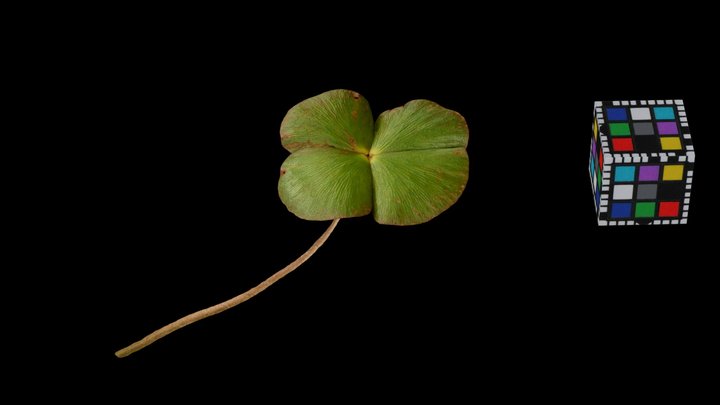
3D model
- Source
- Sketchfab
- Licence
- CC0 Public Domain
- Commercial use
- the licence allows it
Smithsonian Open Access and MorphoSource were not reached for this taxon, so this list is what the others held rather than everything there is.
The description on this site
- Source
- Wikipedia, “Marsilea”
- Licence
- CC BY-SA 4.0
This is what the site found, which is not the same as what exists.
Keep going
What may have been alongside itMarsileaceae through timeFormations of the MioceneThe world it lived on
Occurrence data from the Paleobiology Database, CC BY 4.0. Linnaeus 1753