Malea ringens
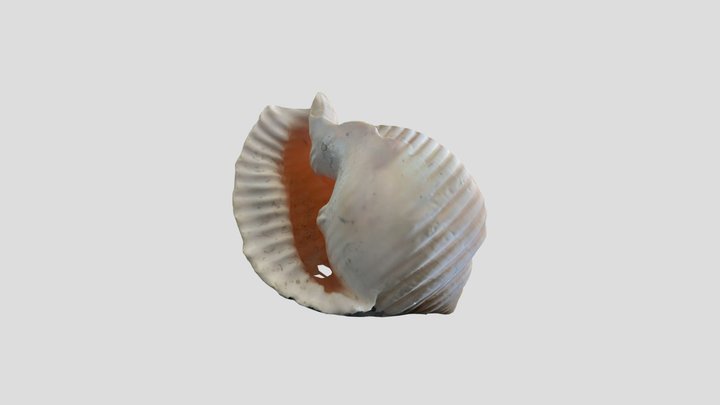
Malea ringens, common name the grinning tun, is a species of large sea snail, a marine gastropod mollusk in the family Tonnidae, the tun shells.

Naturalis Biodiversity Center · CC0 · via Wikipedia/Commons. May be a photograph of a specimen, or an artist’s reconstruction — an interpretation of a skeleton, since colour and soft tissue are almost never preserved.
On record
Recorded, not inferred- Sits inside
- MaleaPBDB
- Diet
- carnivorePBDB, for Tonnidae
- Life habit
- epifaunalPBDB, for Tonnidae
- Motility
- actively mobilePBDB, for Tonnidae
- Vision
- limitedPBDB, for Gastropoda
Time the record covers
At least 15 million years on record.
The record covers at least 15.98 Mya to 129 ka. No occurrence read is dated outside 23.04 Mya to 0 Mya.
73 occurrences of Malea ringens on record, most of them in the Miocene. The Paleobiology Database records this as a living group. Bar height is expected occurrences, not a count: each fossil is spread across the span it is dated to, so a tall narrow bar means tight dating and a low wide one means loose.
When
73 occurrences- Miocene49%
- Pliocene40%
- Pleistocene11%
- Holoceneunder 1%
These are dates about fossils, not the animal: the record can only begin after it arose and end before it died out, so either end may reach further. Shares are expected occurrences: a fossil dated to a span is counted partly in each period it straddles. More on what this infers.
Found in
21 formations
- Gatun Formation22
- Tubará Formation10
- Tuira Formation · Lara Group4
- Charco Azul Formation2
- Imperial Formation2
- Armuelles Formation · Charco Azul Group2
Loading coastlines…
The named rock units Malea ringens has been recovered from, largest first. Drawn where the rock is now, not where it formed. 14 occurrences have no formation on record, which is common for older literature.
Malea ringens and its relatives
MioceneWhere Malea ringens and its relatives were recorded in the Miocene.
Found in the same rock
558 taxa- Architectonica nobilis13 sites
- Conus molis8 sites
- Euvola keepi8 sites
- Anomia peruviana7 sites
- Dendostrea vespertina7 sites
- Persististrombus obliteratus7 sites
- Clypeaster bowersi6 sites
- Lirophora (Panchione) mactropsis6 sites
- Polinices stanislasmeunieri6 sites
- Raeta undulata6 sites
- Turritella (Bactrospira) altilira6 sites
- Turritella imperialis6 sites
- Anodontia edentuloides5 sites
- Argopecten mendenhalli5 sites
- Bulla striata5 sites
- Callocardia (Agriopoma) gatunensis5 sites
- Codakia distinguenda5 sites
- Flabellipecten carrizoensis5 sites
- Stigmaulax guppiana5 sites
- Strombus galeatus5 sites
- Triplofusus princeps5 sites
- Anadara (Rasia) dariensis4 sites
- Antillophos candeanus4 sites
- Cancellaria (Pyruclia) cibarcola4 sites
The Paleobiology Database records 30 sites for Malea ringens, and this reads all of them. The number is how many of those sites it was catalogued from too. The 24 sharing the most are listed.
This is not a list of everything alive at the time. It is only what has come out of the same ground as this animal and been written down.
Entered from
12 references- Neogene Tonnoidean Gastropods of Tropical and South America; contributions to the Dominican Republic and Panama Paleontology Projects and Uplift of the Central American Isthmus37
- Paleontology of Coyote Mountain, Imperial County, California10
- Unpublished notes on Caribbean collection of the Naturhistorisches Museum Basel6
- Marine Miocene and related deposits of North Colombia5
- Algunos moluscos del Terciario Medio de Colombia3
- Tertiary and Quaternary fossils from Burica Peninsula of Panama and Costa Rica3
- A paleobiotic survey of Caribbean faunas from the Neogene of the Isthmus of Panama2
- A Pliocene fauna from Western Ecuador2
- Geology of the Quaternary Period, on a part of the Pacific Coast of Peru2
- Quaternary invertebrate fossil assemblages from coastal marine ecosystems of Bahia de Panama, Panama1
- Pliocene fossils from Baltra (South Seymour) Island, Galápagos Islands1
- Olsson, 19641
Each of the 73 occurrences read was entered from one of these publications, ordered by how many each accounts for. This is not a search for papers mentioning the name. Entries link to doi.org where the Paleobiology Database holds an identifier, and to its own record where it does not. Relayed as the Paleobiology Database holds them, not checked against what they resolve to.
Media and terms
Media content2

Picture of Malea ringens
- Source
- Wikipedia/Commons
- Credit
- Naturalis Biodiversity Center
- Licence
- CC0
- Commercial use
- the licence allows it
Smithsonian Open Access was not reached for this taxon, so this list is what the others held rather than everything there is.
The description on this site
- Licence
- CC BY-SA 4.0
This is what the site found, which is not the same as what exists.
Keep going
What may have been alongside itMalea through timeFormations of the MioceneThe world it lived on
Occurrence data from the Paleobiology Database, CC BY 4.0. (Swainson 1822)